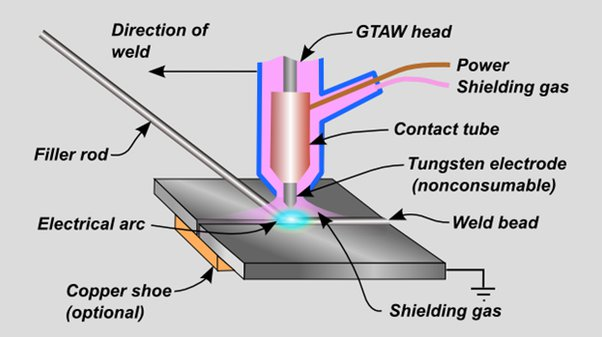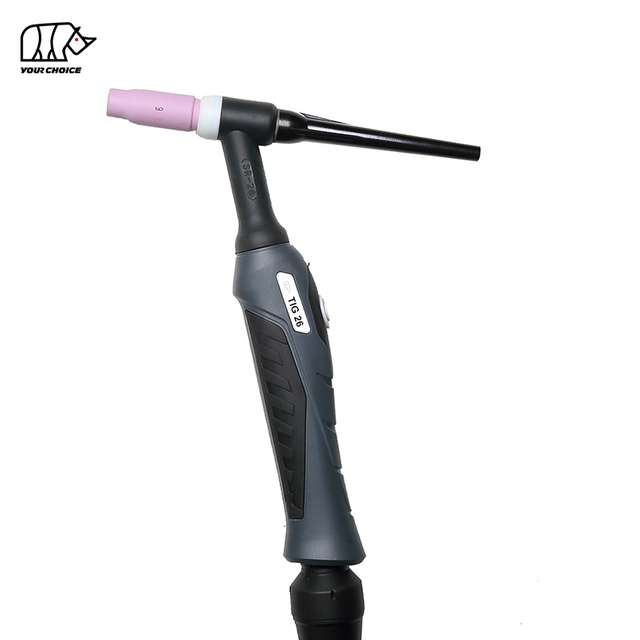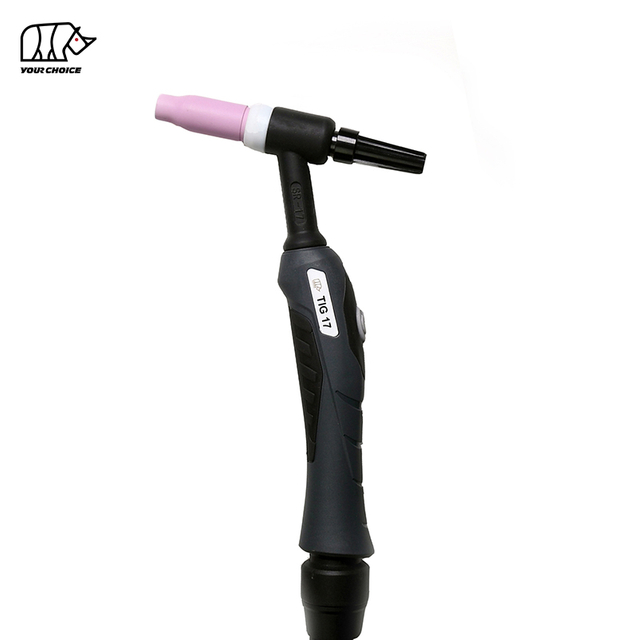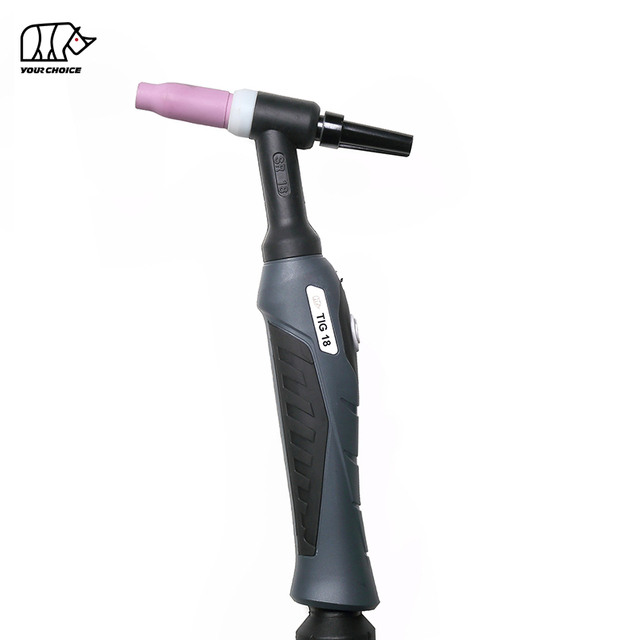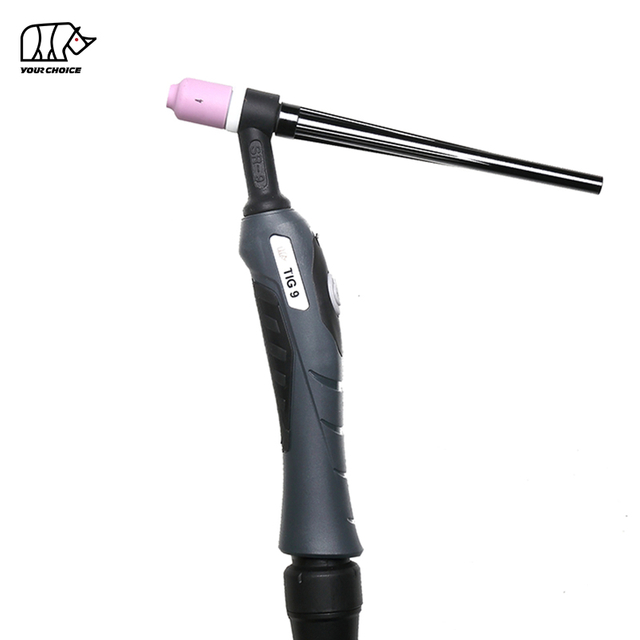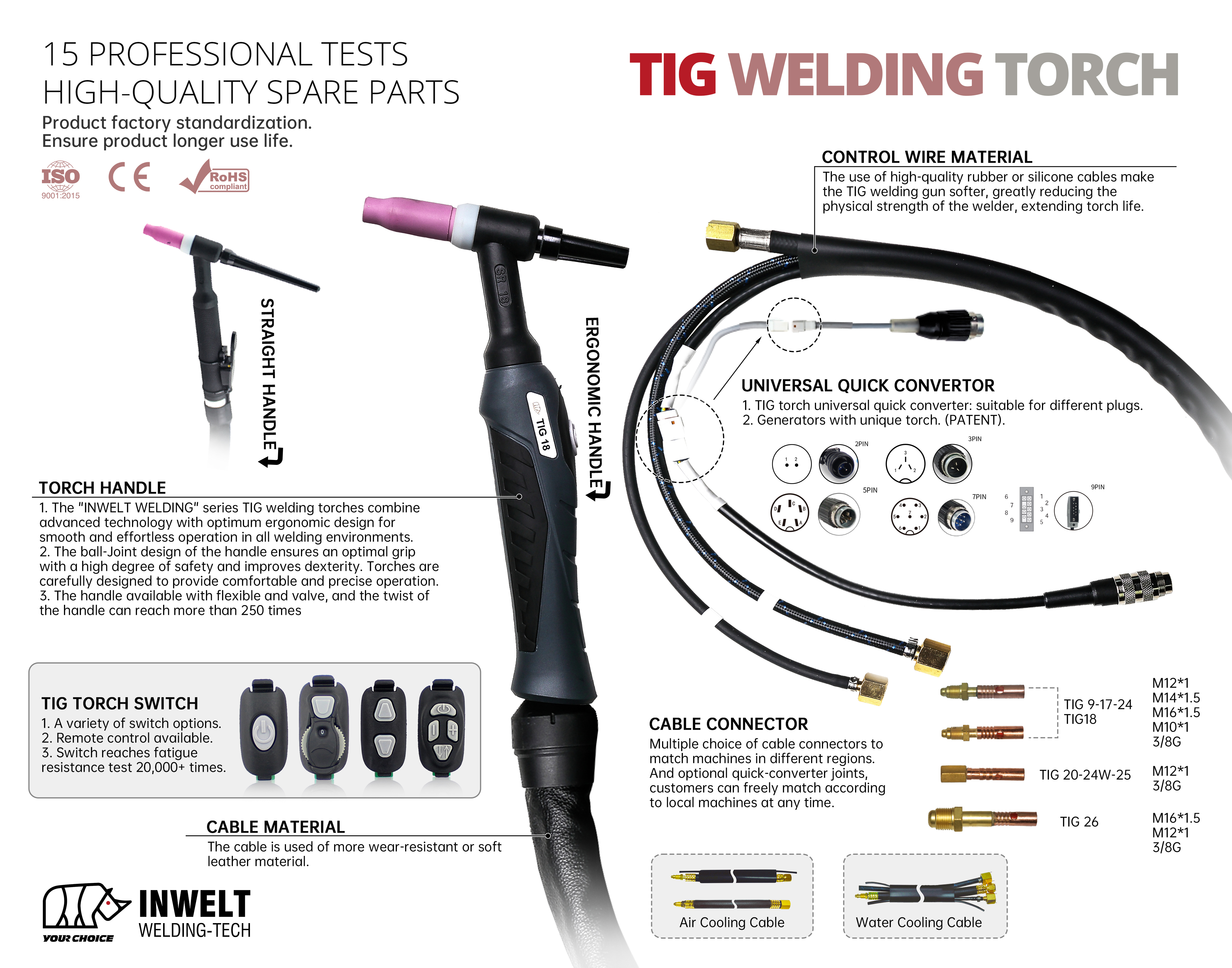
The INWELT TIG Welding Torch range includes gas-cooled and water-cooled GTAW torches designed for precision fabrication, production welding, maintenance and industrial applications.
The current range includes:
WP9 – compact gas-cooled TIG torch
WP17 – general-purpose gas-cooled TIG torch
WP18 – high-current water-cooled TIG torch
WP26 – higher-current gas-cooled TIG torch
These torch platforms cover different current ranges, duty cycles, tungsten-electrode sizes, cooling methods and working environments.
The correct TIG torch should be selected according to:
AC or DC welding current
Duty cycle
Cooling method
Tungsten-electrode diameter
Torch-head size
Joint access
Cable length
Torch-control requirements
Power/gas connection
Welding application
| Model | Cooling | DC Rating | AC Rating | Duty Cycle | Tungsten Range | Cable Length |
|---|---|---|---|---|---|---|
| WP9 | Gas Cooled | 110A | 95A | 35% | Ø0.5–1.6 mm | 4 / 8 m |
| WP17 | Gas Cooled | 140A | 125A | 35% | Ø0.5–2.4 mm | 4 / 8 m |
| WP18 | Water Cooled | 320A | 240A | 100% | Ø0.5–4.0 mm | 4 / 8 m |
| WP26 | Gas Cooled | 180A | 150A | 35% | Ø0.5–4.0 mm | 4 / 8 m |
These are current INWELT product specifications.
Similarly named WP-style TIG torches from other manufacturers may use different current ratings or duty cycles.
Always use the verified INWELT specification when selecting an INWELT torch.
The INWELT WP9 is the most compact torch in the current WP Series range.
Current INWELT specifications include:
110A DC
95A AC
35% duty cycle
Ø0.5–1.6 mm tungsten electrodes
Gas-cooled construction
4 m / 8 m cable assemblies
Rigid and flexible-head configurations
Multiple torch-switch options
M12×1 connection configurations available
The compact WP9 torch head makes it particularly useful where precise torch manipulation and access to restricted joints are more important than high amperage capacity.
Typical applications include:
Thin stainless-steel fabrication
Tube and pipe welding
Precision components
Automotive repair
Motorsport components
Instrumentation
Artistic metalwork
Restricted-access joints
The WP17 provides more current capacity than the WP9 while remaining compact enough for general fabrication and repair.
Current INWELT specifications include:
140A DC
125A AC
35% duty cycle
Ø0.5–2.4 mm tungsten electrodes
Gas-cooled construction
4 m / 8 m cable options
Multiple control-switch configurations
Rigid and flexible-head options depending on configuration
The WP17 is a practical general-purpose TIG torch for welders who require more current than a WP9 but do not need the larger WP26 or a water-cooled system.
Typical applications include:
General metal fabrication
Stainless-steel welding
Pipe and tube fabrication
Automotive repair
Machinery maintenance
HVAC fabrication
Sheet-metal welding
Workshop and field repair
The INWELT WP26 is the highest-current gas-cooled model in the current category.
Current specifications include:
180A DC
150A AC
35% duty cycle
Ø0.5–4.0 mm tungsten electrodes
Gas-cooled construction
4 m / 8 m cable assemblies
Rigid and flexible-head versions
Single-, multi-button and potentiometer control options
Multiple power/gas connection formats
Current connector configurations can include:
M12×1
3/8G
5/8-18UNF
The WP26 is suitable where higher welding current is required but an external water cooler is not practical.
Typical applications include:
Machinery fabrication
Structural fabrication
Industrial repair
Construction equipment
Agricultural equipment
Field maintenance
General higher-current GTAW welding
The INWELT WP18 is designed for continuous high-current GTAW welding where an air-cooled torch would accumulate excessive heat.
Current specifications include:
320A DC
240A AC
100% duty cycle
Ø0.5–4.0 mm tungsten electrodes
Water-cooled construction
4 m / 8 m cable assemblies
Rigid and flexible-head options
Multiple torch-control configurations
A compatible TIG water cooler is required.
The circulating coolant removes heat from the torch head and cable assembly, making the WP18 particularly suitable for longer arc-on times and high-current welding.
Typical applications include:
Heavy fabrication
Pressure vessels
Pipe fabrication
Industrial manufacturing
High-current aluminum TIG welding
Production welding
Long welding cycles
The main differences are torch size, current capacity and tungsten range.
| Feature | WP9 | WP17 | WP26 |
|---|---|---|---|
| Cooling | Gas | Gas | Gas |
| DC Rating | 110A | 140A | 180A |
| AC Rating | 95A | 125A | 150A |
| Duty Cycle | 35% | 35% | 35% |
| Tungsten Range | 0.5–1.6 mm | 0.5–2.4 mm | 0.5–4.0 mm |
| Torch Size | Compact | Medium | Larger |
| Main Positioning | Precision/access | General purpose | Higher-current work |
Choose WP9 when compact size and access are the highest priority.
Choose WP17 when you need a balanced general-purpose TIG torch.
Choose WP26 when higher amperage capacity is required without adding a water-cooling system.
WP18 and WP26 both support larger tungsten-electrode sizes, but they serve different operating conditions.
You require:
Gas-cooled simplicity
Higher intermittent welding current
No external water cooler
Better portability
Field or maintenance use
You require:
Higher continuous current
Longer welding cycles
Better heat removal
100% duty-cycle capability
A smaller high-current water-cooled torch head
The final choice should be based on welding current and arc-on time rather than amperage alone.
Cooling method is one of the most important TIG torch selection factors.
A gas-cooled TIG torch dissipates heat through the torch structure, cable and surrounding environment.
Advantages include:
Simple setup
No water cooler required
Fewer hoses and connections
Better portability
Lower system complexity
Current INWELT gas-cooled models include:
WP9
WP17
WP26
A water-cooled torch circulates coolant through the torch and cable assembly.
Advantages include:
Higher continuous-current capacity
Better heat removal
More comfortable operation during long welds
Compact high-current torch-head design
Current INWELT water-cooled model:
WP18
A TIG torch should not be selected by model number alone.
Consider the following parameters.
Select a torch rated for the actual AC or DC welding current.
Do not exceed the verified torch rating.
Duty cycle describes how long the torch can operate at the stated current within a defined test period.
For example:
WP9 / WP17 / WP26: current INWELT ratings at 35%
WP18: current INWELT rating at 100%
A higher amperage number without the duty cycle is incomplete technical information.
TIG torch ratings may differ between AC and DC.
Always use the correct value for the welding process.
Select a torch and front-end consumables that support the required tungsten-electrode diameter.
Choose gas cooling for portability and simpler installations.
Choose water cooling for higher continuous thermal loads.
Smaller torch heads such as WP9 can provide better access to tight joints.
Larger torches provide greater current capacity but may reduce access in confined spaces.
The current INWELT category specifies separate DC and AC ratings.
This is important because TIG torch thermal loading can differ between AC and DC operation.
Current ratings are:
| Model | DC | AC |
|---|---|---|
| WP9 | 110A | 95A |
| WP17 | 140A | 125A |
| WP26 | 180A | 150A |
| WP18 | 320A | 240A |
Always compare the correct rating with the actual welding process.
Duty cycle should always be shown together with current rating.
For example:
180A DC at 35% duty cycle
does not mean:
180A continuously
Likewise:
320A DC at 100% duty cycle
represents a different thermal operating condition.
Actual torch temperature can also be affected by:
Ambient temperature
Torch cable condition
Coolant flow
Shielding-gas flow
Torch-head configuration
Arc-on time
Welding technique
Different WP models support different tungsten-electrode ranges.
Current INWELT ranges are:
Ø0.5–1.6 mm
Ø0.5–2.4 mm
Ø0.5–4.0 mm
Ø0.5–4.0 mm
The tungsten size should be selected according to:
Welding current
AC or DC operation
Tungsten type
Base material
Welding procedure
The collet, collet body and gas-lens components must match the selected tungsten diameter.
Different TIG applications require different torch-head geometries.
A rigid torch head provides a fixed electrode angle.
Advantages include:
Simple structure
Repeatable torch geometry
Good durability
A flexible torch head can be adjusted to improve access around difficult joints.
It can be useful for:
Pipework
Internal corners
Restricted fabrication
Automotive components
Complex assemblies
Flexible heads should only be bent within the design limits of the specific torch.
Repeated excessive bending can damage the torch head.
Depending on configuration, INWELT TIG torches can be supplied with different operator-control systems.
Available configurations can include:
Basic torch switch
Multi-button switch
Four-button control
Potentiometer control
The exact control functions depend on the welding power source.
Before ordering, confirm:
TIG machine model
Trigger/control connector
Number of control pins
Remote amperage-control requirement
Switch configuration
A torch-control plug that physically fits does not automatically guarantee electrical compatibility.
TIG welding machines use different power, gas and control interfaces.
Current INWELT product configurations include several connector formats.
Examples include:
M12×1
3/8G
5/8-18UNF
Machine-specific power/gas connectors
Dedicated torch-control plugs
Before ordering a replacement TIG torch, provide:
Welding machine manufacturer
Machine model
Current torch model
Power/gas connector photograph
Control connector photograph
Required cable length
This is more reliable than selecting a torch only by WP model number.
Current INWELT WP Series torches are available with:
4 m cable assemblies
8 m cable assemblies
Cable length should be selected according to:
Welding workstation
Machine location
Operator movement
Wire/cable management
Water-cooling requirements
Longer cable assemblies provide additional working reach but can increase weight and handling resistance.
INWELT supplies replacement parts and consumables for WP Series TIG torches.
Depending on the model, components can include:
Tungsten electrodes
Collets
Collet bodies
Gas lenses
Ceramic cups
Gas nozzles
Back caps
Insulators
Torch heads
Handles
Switches
Power cables
Gas hoses
Water hoses
Cable covers
Connector components
Consumables should always be matched to the specific torch family.
The collet grips and positions the tungsten electrode.
The collet body supports the collet and directs shielding gas toward the weld area.
Select both components according to:
Torch model
Tungsten diameter
Standard or gas-lens setup
Using the wrong collet size can result in:
Poor tungsten clamping
Misalignment
Gas leakage
Electrical contact problems
A gas lens uses a diffuser or screen system to straighten and distribute shielding-gas flow.
Potential advantages can include:
More uniform gas coverage
Greater tungsten stick-out in suitable applications
Improved access to some joints
However, gas-lens selection should depend on:
Torch model
Cup size
Gas-flow requirement
Welding application
Do not assume that the largest gas lens or highest gas-flow setting is always better.
Ceramic cups direct shielding gas around the tungsten electrode and weld pool.
Cup selection depends on:
Tungsten diameter
Gas flow
Joint geometry
Electrode stick-out
Welding current
Gas-lens configuration
A damaged or contaminated ceramic cup should be replaced.
Inspect for:
Cracks
Spatter
Mechanical damage
Thread damage
Poor seating
The back cap holds the tungsten assembly in position and seals the rear of the torch head.
Different lengths can be useful for different access requirements.
Common formats can include:
Long back cap
Medium back cap
Short back cap
Shorter back caps are often useful where rear clearance is limited.
WP17, WP18 and WP26 belong to a related larger TIG torch family and can share selected front-end component formats depending on the specific configuration.
However, complete interchangeability should not be assumed.
Always confirm:
Collet
Collet body
Gas lens
Cup
Back cap
Torch head
Insulator
by part number before ordering.
WP9 uses a smaller torch platform and should be treated separately when selecting consumables.
TIG/GTAW can be used on many metals when the welding machine, shielding gas, tungsten and filler metal are correctly selected.
Common materials include:
Stainless steel
Carbon steel
Mild steel
Aluminum
Magnesium
Titanium
Nickel alloys
Copper alloys
The TIG torch itself does not determine whether a material can be welded successfully.
Aluminum TIG welding commonly uses AC-capable TIG equipment.
Torch selection should be based on the required AC current and duty cycle.
For lower-current aluminum work, a gas-cooled torch may be sufficient.
For extended higher-current aluminum welding, a water-cooled WP18 can provide better heat management.
Always use the AC rating rather than the DC rating when evaluating torch capacity for AC aluminum welding.
Stainless-steel TIG welding is commonly performed using DCEN.
Depending on material thickness and welding current:
WP9 can suit precision or thin-section work
WP17 can suit general fabrication
WP26 can suit higher-current work
WP18 can suit continuous high-current production
Final selection should be based on current and duty cycle.
The INWELT WP Series can support professional applications including:
Stainless-steel fabrication
Aluminum fabrication
Pipe and tube welding
Pressure vessels
Food-processing equipment
Pharmaceutical equipment
Automotive fabrication
Motorsport
Aerospace-related fabrication
Heat exchangers
Machinery
Maintenance and repair
Precision metalwork
Actual torch selection should always be based on welding parameters rather than industry name alone.
Routine inspection helps maintain stable electrical and gas performance.
Check for:
Contamination
Excessive erosion
Incorrect preparation
Damage
Replace worn or distorted collets that no longer hold the tungsten securely.
Check gas passages for:
Contamination
Damage
Blockage
Replace cracked or contaminated cups.
Check for:
Heat damage
Gas leakage
Loose components
Mechanical damage
Check for:
Cuts
Abrasion
Heat damage
Loose fittings
Damaged control wiring
Water-cooled systems require additional inspection.
Check:
Coolant level
Coolant flow
Water hoses
Hose fittings
Pump operation
Water cooler condition
Do not operate a water-cooled torch without adequate coolant circulation.
Restricted flow can cause rapid torch overheating.
Use coolant approved for the welding cooler and operating environment.
Check:
Welding current
Duty cycle
Cooling system
Cable condition
Water flow on water-cooled models
Loose electrical connections
Check:
Tungsten condition
Tungsten size
Work connection
Shielding gas
Torch consumables
Welding-machine settings
Check:
Gas flow
Ceramic cup
Gas lens / collet body
Gas hose
Leaks
External drafts
Check:
Electrode contact with weld pool
Filler-wire contact
Gas coverage
Post-flow
Tungsten preparation
Troubleshooting should consider the complete GTAW system rather than the torch alone.
INWELT supplies TIG welding torches and replacement components to professional B2B customers including:
TIG welding machine manufacturers
Welding equipment brands
Importers
Distributors
Wholesalers
Industrial suppliers
Repair companies
Aftermarket consumable brands
OEM and ODM configurations can be developed according to the target welding machine and market requirements.
Customization may include:
Customer branding
Handle marking
Handle color
Cable length
Rigid or flexible torch head
Torch-control switch
Potentiometer control
Power/gas connector
Control plug
Leather cable cover
Consumable kits
Private-label packaging
User manuals
Barcode and carton requirements
For OEM projects, provide the welding-machine model, AC/DC current range, connector requirements, control functions and estimated purchasing quantity.
The current INWELT TIG range combines compact gas-cooled, general-purpose, higher-current air-cooled and high-current water-cooled torch platforms within one supply program.
The current category includes:
WP9
WP17
WP18
WP26
110A–320A DC current classes
Gas-cooled and water-cooled configurations
35% and 100% duty-cycle options
Ø0.5–4.0 mm total tungsten coverage
4 m / 8 m cable options
Rigid and flexible torch heads
Multiple torch-control options
Multiple machine connectors
TIG consumables and replacement parts
OEM/private-label supply
For welding equipment brands and distributors, sourcing complete TIG torches and matching consumables from one manufacturer can simplify purchasing and aftermarket support.
The current main WP Series range includes:
WP9
WP17
WP18
WP26
Current gas-cooled models include:
WP9
WP17
WP26
WP18 is the current water-cooled model in this category.
Current INWELT specification:
110A DC
95A AC
35% duty cycle
Current INWELT specification:
140A DC
125A AC
35% duty cycle
Current INWELT specification:
180A DC
150A AC
35% duty cycle
Current INWELT specification:
320A DC
240A AC
100% duty cycle
WP9 is the most compact torch in the current INWELT WP range and is well suited to precision and restricted-access work within its current rating.
WP17 provides a balanced combination of size and current capacity for many general TIG applications.
The current WP26 has the highest current rating among INWELT's gas-cooled WP9, WP17 and WP26 models.
WP18 is the current water-cooled model and is rated for 320A DC / 240A AC at 100% duty cycle.
Current ranges are:
WP9: Ø0.5–1.6 mm
WP17: Ø0.5–2.4 mm
WP18: Ø0.5–4.0 mm
WP26: Ø0.5–4.0 mm
Current standard cable assemblies include:
4 m
8 m
Yes, when connected to an appropriate AC TIG power source and used with suitable tungsten, shielding gas, filler metal and welding parameters.
Yes.
Stainless-steel GTAW is commonly performed using DCEN and an appropriate shielding gas and filler-metal system.
No.
Similarly named TIG torches can use different current ratings and duty-cycle test conditions.
Always use the technical specification published for the actual torch being purchased.
Yes.
OEM/ODM, private labeling, cable customization, switch configuration, connector customization and consumable-kit options are available for qualified B2B customers.
For faster model selection and compatibility confirmation, provide:
TIG welding-machine manufacturer and model
AC or DC welding process
Required welding current
Required duty cycle
Tungsten diameter
Existing torch model
Power/gas connector photograph
Control-plug photograph
Required cable length
Rigid or flexible-head requirement
Required torch controls
Required consumables
Estimated purchasing quantity
INWELT or private-label branding
INWELT can then recommend the appropriate WP9, WP17, WP18 or WP26 TIG torch configuration for your welding system.