For Products Wholesalers
For Products Manufacturer & Suppliers
For Products Distributer


Burn-through occurs when excessive heat causes the molten weld pool to penetrate completely through the sheet metal. Common causes include high voltage, excessive wire feed speed, slow travel speed, and poor joint fit-up.
To reduce burn-through, use suitable smaller-diameter wire, adjust the welding parameters, and apply short weld segments when appropriate. Proper heat control is especially important in automotive body panels and thin steel fabrication.
Metal distortion results from uneven heating and cooling during welding. Thin automotive panels are particularly sensitive to excessive heat input.
Use properly spaced tack welds, alternate welding locations, and allow the material to cool between short weld segments. Clamping and correct joint preparation also help minimize distortion. Avoid making long continuous welds when the joint design allows an intermittent approach.
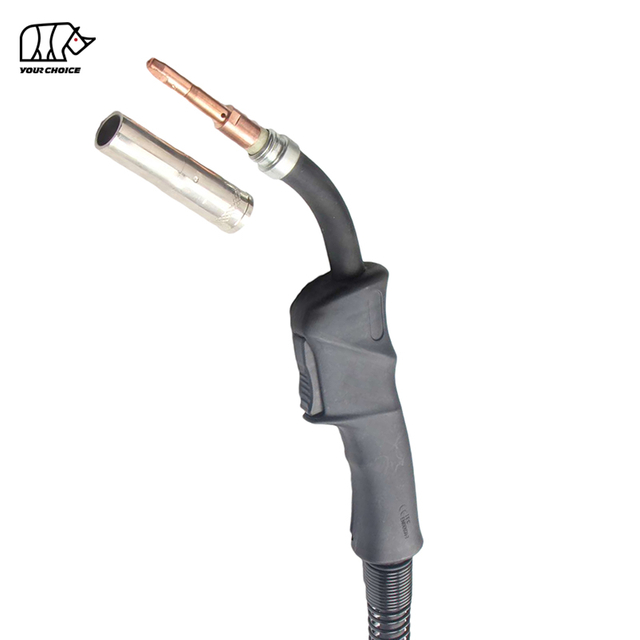
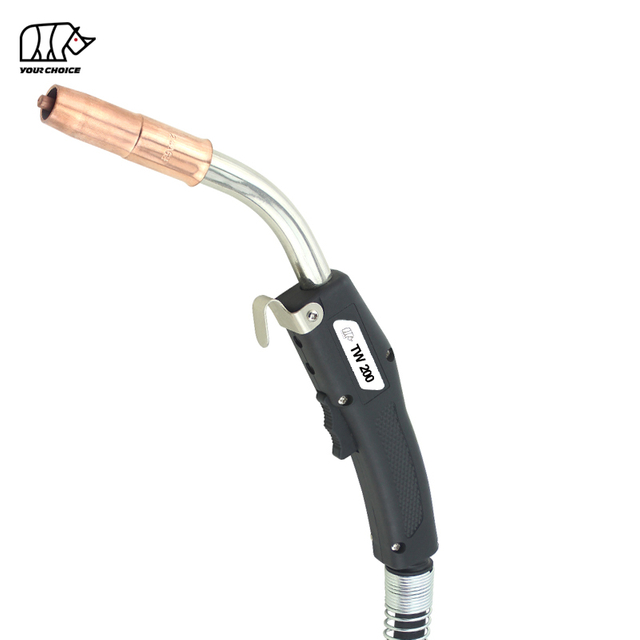
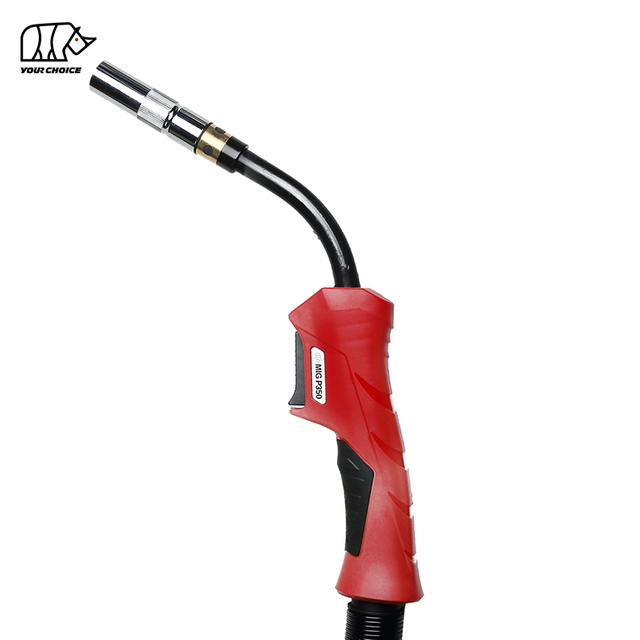
Air-cooled MIG torches are suitable for many general fabrication and intermittent welding applications. They require no external water-cooling circuit and are generally simpler to maintain.
Water-cooled MIG torches are often preferred for sustained high-current welding because circulating coolant helps remove heat from the torch assembly.
The correct choice depends on welding current, duty cycle, operating conditions, cable length, and equipment compatibility rather than amperage alone.
Vertical and overhead welding require careful control of the molten weld pool. Incorrect transfer mode, excessive heat input, poor torch positioning, and inappropriate travel speed may cause sagging, undercut, or incomplete fusion.
Use a welding procedure suitable for the position and material thickness. Short-circuit transfer, controlled pulsed processes, or approved flux-cored wires may be suitable for specific applications. Verify the procedure before production welding.
Stainless steel MIG welding commonly uses application-specific argon-based shielding gas mixtures. The correct composition depends on the stainless steel grade, filler wire, transfer mode, and desired weld properties.
Do not assume that a shielding gas mixture used for mild steel is automatically suitable for stainless steel. Follow the filler metal manufacturer's recommendations and the applicable welding procedure.
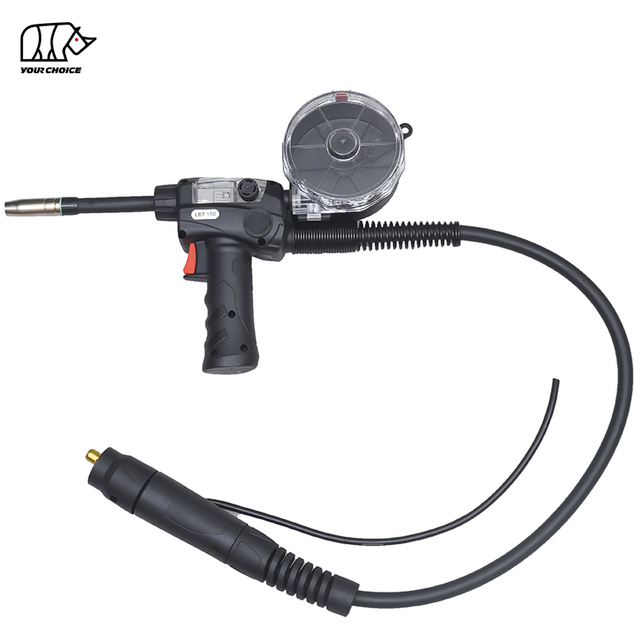
A spool gun positions the welding wire spool close to the torch, reducing the distance the soft aluminum wire must travel. It is often suitable for occasional aluminum welding and maintenance applications.
A push-pull torch uses coordinated feeding mechanisms to improve wire delivery over longer distances. It is often preferred in repetitive industrial aluminum welding applications.
The correct choice depends on production volume, wire diameter, cable length, and equipment compatibility.
Aluminum welding wire is relatively soft and can buckle when excessive resistance develops in the wire feeding system.
Common causes include excessive drive roll pressure, an unsuitable liner, sharp cable bends, damaged contact tips, or incorrect feeding components.
Use suitable U-groove drive rolls, a compatible liner, properly adjusted drive roll pressure, and smooth cable routing. A spool gun or push-pull system can also improve aluminum wire feeding.
Conventional solid-wire MIG welding uses externally supplied shielding gas to protect the weld pool. Self-shielded flux-cored arc welding uses flux contained inside the welding wire to provide protection without an external shielding gas supply.
Self-shielded flux-cored welding is often useful for outdoor fabrication and field repairs. However, wire type, polarity, feeding equipment, torch compatibility, and the required welding procedure must be checked before changing processes.
Unstable arc starts may result from inconsistent wire stickout, worn contact tips, wire feeding resistance, poor electrical connections, incorrect burnback settings, or contaminated workpieces.
Check the wire feeding system, contact tip condition, grounding, and arc-start parameters. Maintaining consistent torch positioning and consumable condition helps improve repeatability in automated welding production.
Premature contact tip wear can result from high welding current, excessive heat, unstable wire feeding, wire quality problems, incorrect tip sizing, or poor electrical contact.
Select contact tips suitable for the wire diameter and application, inspect the liner, and ensure proper cooling and electrical connections. A scheduled consumable replacement program can reduce unexpected production interruptions.