Views: 0 Author: Site Editor Publish Time: 2026-10-28 Origin: Site


CO2, MIG, and MAG welding are often discussed as three different welding processes. However, many welders and fabrication workshops use these terms interchangeably, which can lead to confusion when selecting shielding gas, welding wire, and operating parameters.
Choosing the wrong shielding gas can contribute to excessive spatter, unstable arc behavior, poor bead appearance, oxidation, and welding defects.
The main difference between CO2, MIG, and MAG welding is the type of shielding gas used. MIG uses inert shielding gases, while MAG uses active gases or gas mixtures. Pure CO2 welding is technically a form of MAG welding.
All three terms are commonly associated with gas metal arc welding (GMAW), a process that uses a continuously fed consumable wire electrode and an externally supplied shielding gas.
This guide explains the differences between CO2, MIG, and MAG welding, compares their advantages and limitations, and helps welders choose the right shielding gas for carbon steel, stainless steel, aluminum, and industrial fabrication applications.
CO2 welding, MIG welding, and MAG welding are closely related processes, but they are not three completely separate welding methods.
The distinction comes from shielding gas chemistry.
CO2 welding: Uses 100% carbon dioxide as the shielding gas. Because CO2 is an active gas, this is a form of MAG welding.
MIG welding: Uses inert gases such as argon, helium, or mixtures of inert gases.
MAG welding: Uses active shielding gases, including pure CO2 or argon-based mixtures containing CO2 or oxygen.
In many workshops, the term "MIG welding" is used informally to describe both MIG and MAG welding.
Technically, however, the shielding gas determines whether the process is classified as MIG or MAG.

Feature | Pure CO2 Welding | MIG Welding | MAG Welding With Mixed Gas |
|---|---|---|---|
Process family | GMAW | GMAW | GMAW |
Gas classification | Active | Inert | Active |
Typical shielding gas | 100% CO2 | Argon, helium, or inert mixtures | Argon with CO2 and/or O2 |
Common materials | Carbon steel and suitable low-alloy steels | Aluminum and other suitable nonferrous metals | Carbon steel, low-alloy steel, and stainless steel |
Spatter tendency | Often higher | Depends on material and transfer mode | Often lower than pure CO2 with suitable settings |
Arc behavior | Can be less smooth under some conditions | Depends on gas and material | Can provide stable operation with appropriate mixtures |
Weld appearance | May require more cleanup | Often clean with correct settings | Often smoother with suitable gas composition |
Gas cost | Often relatively low | Depends on inert gas selection | Often higher than pure CO2 |
Typical applications | General steel fabrication | Aluminum fabrication | Industrial steel fabrication and stainless steel welding |
Important: Actual penetration, spatter, and weld quality depend on more than shielding gas. Welding current, voltage, wire type, transfer mode, joint design, and operator technique also affect the result.
CO2 welding is a gas metal arc welding process that uses pure carbon dioxide as the shielding gas.
It is widely used for carbon steel fabrication because carbon dioxide is often relatively economical and can support effective penetration with suitable welding parameters.
Since CO2 reacts in the high-temperature arc environment, it is classified as an active shielding gas.
Therefore, pure CO2 welding belongs to the MAG welding category.
1. Relatively Low Shielding Gas Cost
Pure CO2 is often less expensive than many argon-based shielding gas mixtures.
For high-volume carbon steel fabrication, this can make it an attractive option when the procedure and quality requirements permit its use.
2. Effective Penetration in Suitable Steel Applications
Pure CO2 can provide strong penetration characteristics when used with suitable welding wire and parameters.
However, penetration should never be evaluated by shielding gas alone.
3. Suitable for General Carbon Steel Fabrication
CO2 welding is commonly used in applications such as:
General steel structures
Machinery components
Agricultural equipment
Fabricated steel frames
Steel brackets and supports
Selected repair and maintenance work
1. Higher Spatter Levels
Compared with many suitable argon-based mixtures, pure CO2 often produces more spatter.
This can increase cleaning time and consumable maintenance.
2. Less Favorable Bead Appearance in Some Applications
The weld bead may appear rougher or less uniform than one produced with an optimized mixed shielding gas.
3. Metal Transfer Limitations
Pure CO2 is generally associated with short-circuiting and globular metal transfer rather than conventional axial spray transfer.
This affects the welding characteristics available for different thicknesses and positions.
4. Potentially Higher Overall Cleanup Costs
Although the shielding gas itself may be less expensive, additional spatter removal and finishing work can affect total production cost.
Pure CO2 can be a practical choice when welding suitable carbon steel components and when the approved welding procedure permits it.
It is particularly worth considering when shielding gas cost is important and the resulting spatter, productivity, and weld appearance remain acceptable.
However, pure CO2 should not automatically be excluded from critical applications or automatically approved for them. The applicable welding procedure and quality requirements must determine suitability.
MIG stands for Metal Inert Gas welding.
It is a gas metal arc welding process that uses inert shielding gases, typically argon, helium, or mixtures of these gases.
Inert gases protect the molten weld pool without introducing the same active gas reactions associated with CO2 or oxygen-containing mixtures.
MIG welding is commonly used for aluminum and other suitable nonferrous metals.
The most common inert shielding gases are:
100% Argon
Argon is widely used for aluminum MIG welding.
It provides shielding and supports stable welding performance when matched with the correct wire, equipment, and parameters.
Argon-Helium Mixtures
Argon-helium mixtures may be selected for certain aluminum, copper, or other nonferrous welding applications.
Helium can change arc characteristics and heat distribution, which may be useful for particular materials or section thicknesses.
The appropriate mixture depends on the application.
1. Suitable for Aluminum and Other Nonferrous Metals
MIG welding with appropriate inert shielding gas is commonly used for aluminum fabrication.
2. Good Weld Appearance With Correct Parameters
Suitable shielding gas and welding settings can produce clean, consistent weld beads.
3. High Productivity
The continuously fed wire electrode makes MIG welding suitable for manual, mechanized, and automated production.
4. Flexible Industrial Applications
MIG welding is used in aluminum structures, transportation equipment, fabricated components, and other nonferrous metal applications.
Inert shielding gas does not automatically make a welding process suitable for every metal.
For example, pure argon is generally not the preferred shielding gas for conventional GMAW of carbon steel because it can produce unfavorable arc and bead characteristics.
Gas selection must also account for filler wire compatibility, transfer mode, and the required mechanical properties.
Stainless steel can be welded using different GMAW shielding gas formulations.
However, many commonly used stainless steel gas mixtures contain small amounts of CO2 or oxygen.
Because these mixtures contain active components, the process is technically classified as MAG rather than MIG.
Some specialized inert gas mixtures may be suitable for particular stainless steel applications, but the gas must be selected according to the approved welding procedure.
MAG stands for Metal Active Gas welding.
MAG welding uses an active shielding gas or a mixture containing an active component.
Common examples include pure CO2 and argon-based mixtures containing CO2 or oxygen.
MAG welding is widely used for carbon steel, low-alloy steel, and stainless steel fabrication.
Common categories include:
100% CO2
Pure carbon dioxide is an active shielding gas and is therefore classified as MAG.
Argon + CO2
Argon-based mixtures containing CO2 are commonly used for carbon steel welding.
The percentage of CO2 affects arc behavior, metal transfer, penetration profile, spatter, and weld appearance.
Argon + O2
Small amounts of oxygen may be added to argon for selected steel welding applications.
Specialized Multicomponent Mixtures
Some welding applications use mixtures containing argon, helium, CO2, or oxygen in carefully selected proportions.
These formulations are chosen according to the material, filler metal, and welding procedure.
1. Potentially Lower Spatter
With appropriate parameters, argon-based mixtures can produce less spatter than pure CO2.
2. Improved Arc Characteristics
Suitable gas mixtures can provide stable arc behavior and support different metal transfer modes.
3. Better Weld Bead Control
The correct mixture can improve bead wetting and appearance for specific steel applications.
4. Suitable for Industrial Production
MAG welding is widely used in structural fabrication, equipment manufacturing, piping, and mechanized welding systems.
Argon-based mixed gases often cost more than pure CO2.
In addition, selecting an unsuitable gas composition can create problems with fusion, penetration, arc behavior, or weld properties.
The mixture must match the base metal, filler wire, and required welding parameters.

For carbon steel fabrication, pure CO2 and argon-based mixed gases are both common options.
Neither is universally better.
The most suitable choice depends on the material thickness, welding position, required penetration, weld appearance, production speed, and overall fabrication cost.
Selection Factor | 100% CO2 | Argon-CO2 Mixed Gas |
|---|---|---|
Shielding gas purchase cost | Often lower | Often higher |
Spatter | Often greater | Often reduced with suitable settings |
Arc characteristics | Can be less smooth | Often smoother with appropriate composition |
Weld cleanup | May require more cleaning | May reduce cleaning requirements |
Penetration | Can provide effective penetration | Depends on mixture and welding parameters |
Metal transfer | Short-circuiting and globular transfer commonly used | Can support additional transfer modes depending on mixture |
Weld appearance | Depends on settings and technique | Can improve bead appearance |
Best choice | Cost-sensitive applications with suitable quality requirements | Applications prioritizing process stability, productivity, or appearance |
Not necessarily.
Pure CO2 can be effective for suitable steel joints, but thick-section welding requires adequate fusion, penetration, joint preparation, and often multiple welding passes.
An argon-based mixture may provide operational advantages in certain transfer modes or production conditions.
The correct selection should be verified through the welding procedure and actual weld quality requirements.
In some applications, yes.
Mixed gas may reduce spatter removal, improve operating consistency, and support higher productivity.
However, the higher gas price may not always produce a lower total fabrication cost.
A meaningful comparison should include gas consumption, welding time, cleanup labor, consumable life, repair rates, and inspection results.

The base material is one of the most important factors in selecting shielding gas.
Base Material | Common Shielding Gas Options | Technical Considerations |
|---|---|---|
Carbon steel | 100% CO2 or suitable argon-CO2 mixtures | Select according to wire, transfer mode, joint design, and quality requirements |
Low-alloy steel | Suitable CO2 or argon-based active mixtures | Follow material-specific and procedure requirements |
Stainless steel | Specialized argon-based mixtures with controlled active gas additions | Match gas composition to stainless steel grade and filler wire |
Aluminum | 100% argon or suitable argon-helium mixtures | Use inert shielding gas and compatible filler wire |
Copper and selected copper alloys | Argon or argon-helium mixtures | Gas selection depends on alloy and section thickness |
Titanium | Specialized inert shielding arrangements | Requires stringent contamination control and appropriate shielding coverage |
These are general application categories, not universal welding gas specifications.
For carbon steel GMAW, pure CO2 and suitable argon-CO2 mixtures are common choices.
The best gas depends on the required weld characteristics and production conditions.
For example, an argon-CO2 mixture may be preferred when lower spatter and smoother arc behavior are important.
Pure CO2 may be considered when gas cost is a major factor and the required weld quality can be achieved.
Stainless steel GMAW commonly uses carefully controlled argon-based mixtures.
Some applications use small additions of CO2 or oxygen, while others use specialized multicomponent mixtures.
The gas must be compatible with the stainless steel grade and filler metal to avoid unacceptable changes in weld properties.
Do not assume that a gas mixture suitable for carbon steel is also suitable for stainless steel.
Argon and argon-helium mixtures are common shielding gas options for aluminum MIG welding.
CO2-containing shielding gases are not normally suitable for conventional aluminum GMAW because of their active gas chemistry.
Shielding gas does more than protect the molten weld pool from the surrounding atmosphere.
It also influences arc characteristics, metal transfer, penetration profile, spatter, and bead appearance.
Gas composition affects the behavior of the welding arc.
A suitable mixture can help produce consistent arc performance when used with the correct welding parameters.
Spatter depends on gas composition, transfer mode, wire feed speed, voltage, current, and other operating conditions.
Pure CO2 often produces more spatter than a suitable argon-based mixture.
However, changing the gas alone will not correct every spatter problem.
Shielding gas affects the penetration profile, but adequate penetration also depends on joint preparation, current, voltage, travel speed, and welding technique.
A visually smooth bead does not guarantee complete fusion.
Suitable gas composition can improve bead wetting and surface appearance.
However, bead appearance should not be used as the only indicator of weld quality.
Gas composition can influence chemical reactions in the arc and weld pool.
For some materials, excessive active gas content may adversely affect weld metal composition or properties.
This is especially important when welding corrosion-resistant alloys.
Excessive spatter is a common problem in gas metal arc welding.
Although shielding gas is an important factor, several other conditions can cause spatter.
Possible Cause | Typical Symptom | Recommended Check |
|---|---|---|
Unsuitable shielding gas | Excessive spatter or unstable transfer | Verify gas composition against the procedure |
Incorrect voltage | Irregular arc and increased spatter | Check voltage and wire feed settings |
Incorrect wire feed speed | Unstable arc behavior | Match wire feed speed to the welding parameters |
Poor electrical contact | Irregular arc and heating | Inspect the contact tip and connections |
Worn contact tip | Inconsistent wire feeding or arc position | Replace worn consumables |
Contaminated base metal | Spatter and other weld defects | Clean the joint before welding |
Incorrect torch technique | Irregular bead and spatter | Check torch angle and contact tip-to-work distance |
Start by verifying the recommended voltage, wire feed speed, and contact tip-to-work distance.
Inspect the contact tip, nozzle, liner, and wire feeding system.
Clean the workpiece and confirm that the shielding gas supply is stable.
If the application permits, evaluate whether a suitable argon-based mixture provides a better balance between spatter, weld quality, and operating cost.
Do not change the shielding gas in a qualified production procedure without the required review or requalification.
Weld porosity occurs when gas becomes trapped in the solidifying weld metal.
Common causes include inadequate shielding, contamination, and unsuitable welding conditions.
Insufficient Shielding Gas Coverage
Low gas flow, blocked nozzles, leaks, or excessive torch distance can reduce protection of the weld pool.
Excessive Gas Flow
Very high flow can create turbulence and draw surrounding air into the shielding gas stream.
Contaminated Workpieces
Oil, grease, moisture, paint, and other contaminants can contribute to porosity.
Drafts and Air Movement
Fans, open doors, and outdoor wind can disturb the shielding gas.
Incorrect Gas Selection
A gas mixture that is unsuitable for the material or welding process may contribute to weld quality problems.
Verify that the shielding gas matches the welding procedure.
Check the gas cylinder, regulator, hoses, and connections.
Set the required flow according to the equipment and welding conditions.
Clean the nozzle and remove spatter buildup.
Check for drafts near the welding area.
Remove moisture and surface contamination.
Inspect the wire and feeding system.
Verify the welding parameters and torch position.
If porosity continues, inspect the welding setup systematically rather than increasing gas flow without checking the cause.
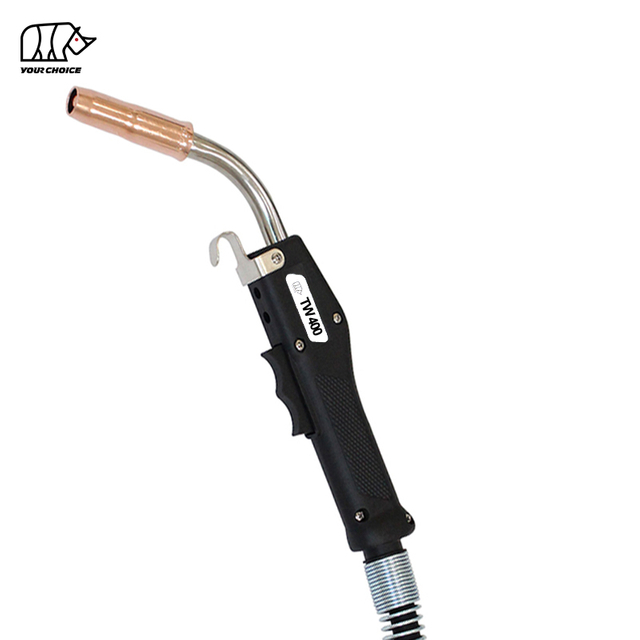
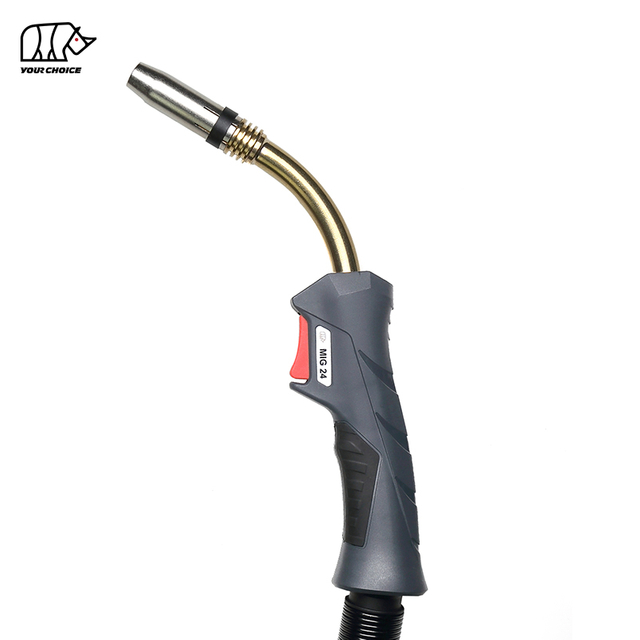
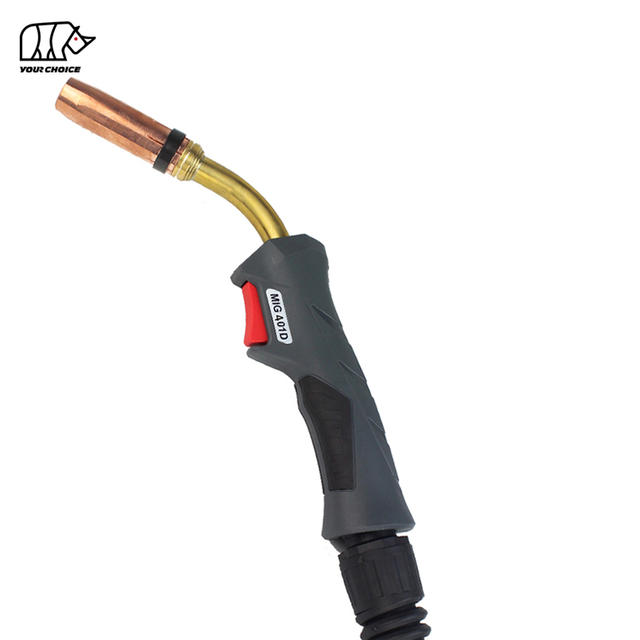
In many applications, the same type of GMAW torch can be used for MIG or MAG welding, provided it is compatible with the equipment, shielding gas, filler wire, and operating conditions.
The shielding gas classification alone does not necessarily require a completely different torch design.
However, torch selection should account for:
Rated welding current
Duty cycle
Gas-cooled or water-cooled configuration
Wire diameter
Contact tip compatibility
Nozzle design
Cable assembly and connector compatibility
Welding position and application
Shielding gas can influence spatter formation and thermal conditions around the torch nozzle and contact tip.
However, consumable selection also depends on welding current, wire type, wire diameter, and the torch manufacturer's specifications.
For high-duty-cycle industrial welding, maintaining a suitable contact tip, nozzle, liner, and cable assembly is important for stable wire feeding and consistent welding performance.
Gas-cooled torches are commonly used for suitable light- and medium-duty applications.
Water-cooled torches are often selected for higher-current or high-duty-cycle applications where additional thermal management is required.
The correct choice depends on the actual welding current, duty cycle, and torch rating rather than the terms MIG or MAG alone.
MAG welding is widely used in industrial steel fabrication, including selected pressure-containing components and piping applications.
However, it is incorrect to assume that all pressure vessels must use mixed-gas MAG welding.
The permitted welding process and shielding gas depend on the applicable fabrication code, material specification, joint design, and qualified welding procedure.
For critical applications, the selection process should consider:
1. Base Material and Filler Metal
The shielding gas must be suitable for the material combination and required weld properties.
2. Welding Procedure Qualification
The welding procedure must satisfy the applicable qualification requirements.
3. Joint Design and Penetration
The selected process must provide the required fusion and penetration.
4. Mechanical Property Requirements
Strength, toughness, corrosion resistance, and other required properties must be considered.
5. Inspection and Acceptance Criteria
Visual examination and any required nondestructive testing must meet the applicable acceptance criteria.
6. Production Consistency
The process should deliver repeatable weld quality under actual workshop conditions.
Mixed-gas MAG welding may be advantageous in some critical fabrication applications, but it is not a substitute for procedure qualification or inspection.
The most reliable selection method is to start with the base metal and welding requirements rather than choosing a process based only on gas price.
Determine whether the workpiece is carbon steel, low-alloy steel, stainless steel, aluminum, or another metal.
This immediately narrows the suitable shielding gas options.
Check the required welding process, filler wire, shielding gas composition, welding parameters, and applicable acceptance criteria.
For qualified production, follow the approved procedure.
Material thickness and joint geometry influence the required penetration, transfer mode, and welding technique.
For applications with strict appearance requirements or high finishing costs, a suitable mixed gas may offer practical benefits.
Consider more than the gas purchase price.
Include welding time, gas consumption, consumable replacement, spatter cleanup, repair work, and inspection costs.
Confirm that the welding power source, wire feeder, torch, contact tip, nozzle, and cooling system are suitable for the intended process.
Where required, use trial welds, inspection, and procedure qualification to confirm that the selected gas and parameters meet the application requirements.
Several common misunderstandings can lead to incorrect gas selection.
Pure CO2 welding is a form of MAG welding because CO2 is an active shielding gas.
Neither classification is universally better.
MIG is commonly used for suitable nonferrous metals, while MAG is widely used for steels.
Stainless steel often requires carefully controlled gas chemistry.
A mixture suitable for carbon steel may not meet stainless steel weld property requirements.
A lower gas price does not necessarily produce the lowest total welding cost.
Excessive gas flow can create turbulence and worsen shielding conditions.
Worn contact tips, blocked nozzles, damaged liners, and unstable wire feeding can affect weld quality even when the shielding gas is correct.
Visual appearance alone cannot confirm penetration, fusion, or compliance with inspection requirements.
The main difference is shielding gas chemistry. MIG uses inert gases such as argon or helium. MAG uses active gases or mixtures containing active components. Pure CO2 welding is a form of MAG welding because carbon dioxide is an active shielding gas.
Pure CO2 welding is one type of MAG welding. However, MAG also includes welding with argon-based mixtures containing CO2 or oxygen. Therefore, the terms overlap but are not completely interchangeable.
Neither process is universally better. MIG is commonly used for aluminum and other suitable nonferrous metals, while MAG is widely used for carbon steel, low-alloy steel, and stainless steel. The best choice depends on the material and welding requirements.
MIG welding uses inert shielding gases, typically argon, helium, or suitable mixtures of these gases. The correct selection depends on the base metal, filler wire, and welding procedure.
MAG welding uses active shielding gases, including pure CO2 and argon-based mixtures containing CO2 or oxygen. The required gas composition depends on the steel grade and welding application.
In strict technical terminology, using pure CO2 makes the process MAG rather than MIG because carbon dioxide is an active gas. In everyday workshop language, some operators still refer to the equipment as a MIG welder.
Both can be suitable. Pure CO2 often has a lower purchase cost, while a suitable argon-CO2 mixture may reduce spatter and improve operating characteristics. The choice should consider weld quality, productivity, and total fabrication cost.
Pure CO2 influences arc behavior and metal transfer differently from many argon-based mixtures. This can result in higher spatter levels, particularly with unsuitable welding parameters. Voltage, wire feed speed, and torch condition also affect spatter.
Yes. Stainless steel can be welded using suitable GMAW processes. Many common stainless steel shielding gases contain controlled additions of CO2 or oxygen, which technically classifies the process as MAG. Gas selection must match the stainless steel grade and filler metal.
Argon and suitable argon-helium mixtures are commonly used for aluminum MIG welding. CO2-containing mixtures are generally unsuitable for conventional aluminum GMAW.
Often, yes. A compatible GMAW torch can be used with different suitable shielding gases. However, its current rating, duty cycle, cooling system, consumables, and equipment connections must match the application.
Not universally. Pressure-containing components must be welded according to the applicable fabrication code and qualified welding procedure. Pure CO2 or mixed-gas processes may be permitted when the relevant requirements are satisfied.
Understanding the differences between CO2, MIG, and MAG welding helps fabricators select suitable shielding gases and avoid unnecessary welding problems.
The most important distinction is straightforward:
Pure CO2 welding uses an active gas and is a form of MAG welding.
MIG welding uses inert shielding gases and is commonly applied to aluminum and other suitable nonferrous metals.
MAG welding uses active gases or mixtures and is widely applied to steel fabrication.
For carbon steel, both pure CO2 and suitable mixed gases can be practical options. Pure CO2 may offer a lower shielding gas purchase cost, while an optimized mixed gas may reduce spatter and improve welding consistency.
For stainless steel and aluminum, shielding gas chemistry must be selected carefully to protect the required weld properties.
The best shielding gas is not simply the cheapest or the one that produces the smoothest-looking bead. It is the gas that meets the material, welding procedure, quality, and production requirements.
By combining correct gas selection with suitable welding parameters, reliable wire feeding, compatible MIG/MAG torch consumables, and appropriate inspection, manufacturers can achieve more consistent weld quality and efficient production.