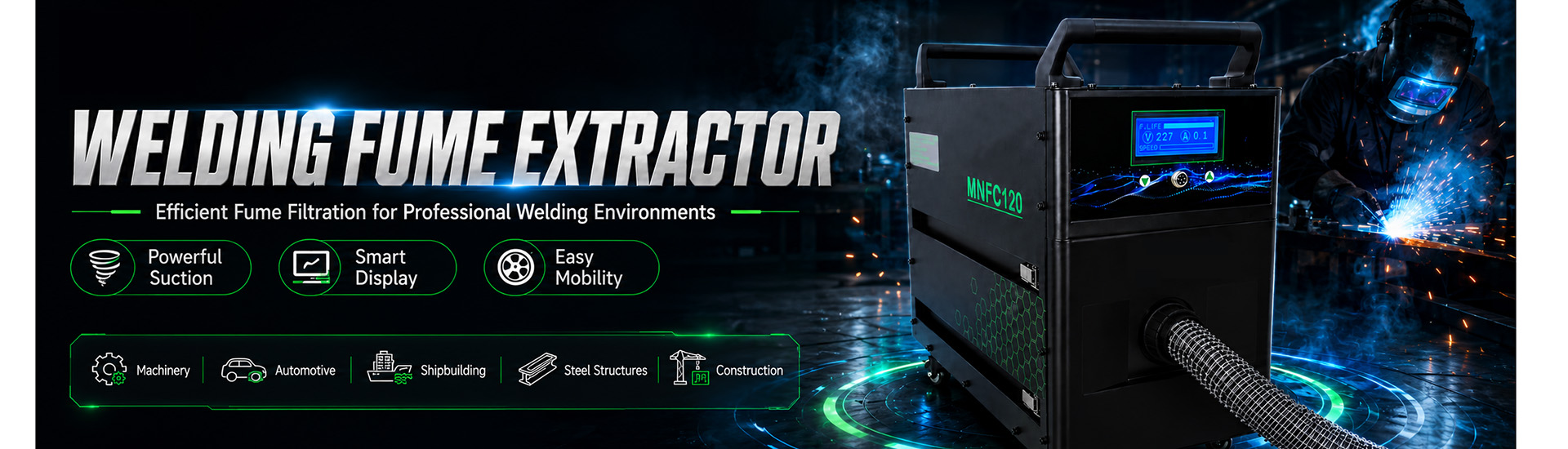
Welding has always been the backbone of modern manufacturing. From automotive factories and shipyards to steel fabrication workshops and construction sites, welding processes keep industries moving forward. But behind every bright welding arc lies a less visible problem that many companies ignored for years: welding fumes. These fumes may look like harmless smoke floating in the air, but they contain microscopic particles and gases that can seriously affect worker health over time.
As industrial safety standards continue evolving worldwide, companies are paying far more attention to indoor air quality than ever before. Workshop managers are no longer asking whether they need a welding fume extraction system. Instead, they are asking which type of extraction solution delivers the best balance of safety, flexibility, efficiency, and long-term value. Portable welding fume extractors and fume extraction guns are rapidly becoming one of the most practical answers.
Modern extraction systems are designed to capture fumes directly at the source before harmful particles spread through the workspace. According to industry product specifications and safety information, advanced extraction systems can filter particles as small as 0.3 microns while helping facilities improve air cleanliness and meet industrial safety requirements.
Today’s welding workshops are different from those of the past. Production environments are faster, more automated, and far more focused on sustainability. Clean air is no longer just a worker comfort issue—it has become a productivity issue, a compliance issue, and even a business reputation issue. Companies investing in modern welding safety solutions are discovering that cleaner air often leads to better employee morale, lower maintenance costs, and more efficient production environments.
The Hidden Danger Behind Welding Smoke
What Makes Welding Fumes Harmful
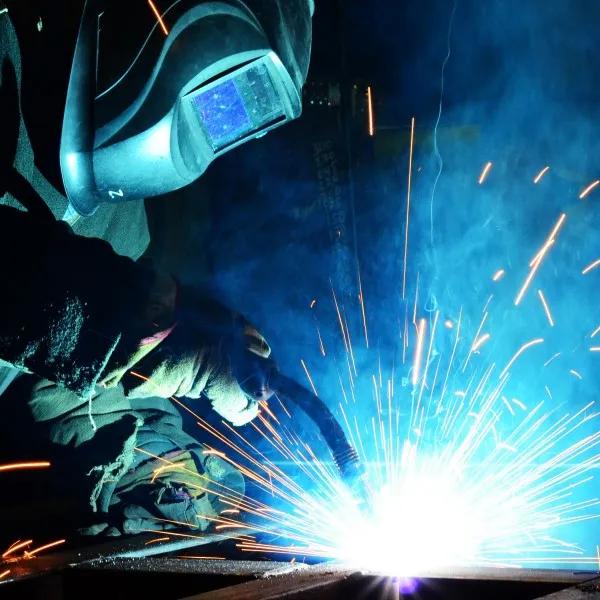
Many people underestimate welding fumes because the smoke disappears quickly into the air. What they cannot see are the ultra-fine particles suspended in that smoke. Welding fumes often contain iron oxide, manganese, chromium compounds, ozone, carbon monoxide, and other airborne contaminants generated during the welding process. These particles are small enough to travel deep into the lungs, especially in enclosed workshops with poor ventilation.
Research and industrial safety discussions have increasingly highlighted the importance of source-capture extraction technology. Portable extraction systems work differently from traditional workshop fans because they remove contaminants near the welding arc itself. Instead of allowing fumes to spread across the shop floor, the system captures them immediately and passes them through high-efficiency filtration units.
The challenge becomes even more serious in facilities where multiple welders work simultaneously. In these environments, smoke concentrations can build up quickly, especially when welding stainless steel, galvanized metals, or aluminum. Over time, poor air quality can create an uncomfortable environment where visibility decreases, equipment collects dust, and workers experience irritation in the eyes, nose, and respiratory system.
Long-Term Health Risks for Welders
Professional welders understand that safety equipment is just as important as welding quality. Long-term exposure to welding fumes has been associated with respiratory problems and other occupational health concerns. That is why many modern workshops are shifting toward proactive air purification systems rather than relying solely on masks or general ventilation.
Real-world discussions from industrial workers also reflect this growing awareness. Some welders describe source extraction as one of the most effective local exhaust ventilation solutions available for industrial welding environments.
Health awareness is also influencing younger workers entering the welding industry. Skilled labor shortages mean companies must create safer and more attractive workplaces to retain experienced welders. Cleaner workshops communicate professionalism and responsibility, helping businesses strengthen their employer reputation in competitive manufacturing sectors.
Why Traditional Ventilation Is No Longer Enough
The Limits of General Workshop Ventilation
For decades, many workshops relied on ceiling fans, open doors, or roof ventilation systems to manage welding smoke. While these methods may improve airflow slightly, they often fail to capture dangerous particles before workers inhale them. By the time smoke reaches a ventilation fan across the workshop, harmful contaminants have already spread throughout the breathing zone.
This is where portable welding fume extraction systems provide a major advantage. Instead of treating the entire room as the problem, these systems target the exact location where fumes are generated. It is similar to stopping a water leak at the pipe instead of constantly mopping the floor afterward. Source extraction technology significantly improves efficiency because contaminants are removed before they disperse.
Modern production lines also demand flexibility. Large centralized ventilation systems can be expensive to install and difficult to modify when factory layouts change. Portable units, on the other hand, can move directly with the welding station. This flexibility is particularly valuable for repair shops, mobile fabrication teams, and growing factories that frequently reorganize production areas.
Source Extraction vs Ambient Air Cleaning
There is an important difference between ambient air filtration and source extraction. Ambient systems clean the air after contamination has already entered the workshop environment. Source extraction captures fumes immediately during welding. The difference may sound small, but in practice it can dramatically improve air quality and reduce overall exposure.
Many portable welding extraction machines now combine strong suction power, high negative pressure, and compact mobility. Technical specifications from current industrial products show negative pressure levels reaching approximately 25,000 Pa with filtration efficiency exceeding 99.9% for fine particles.
Another major advantage is energy efficiency. Large building ventilation systems consume substantial electricity because they move massive volumes of air throughout the facility. Portable extraction systems focus only on the welding area, reducing unnecessary airflow demands and lowering operational costs over time.
What Is a Portable Welding Fume Extractor
Core Components of a Modern Extraction System
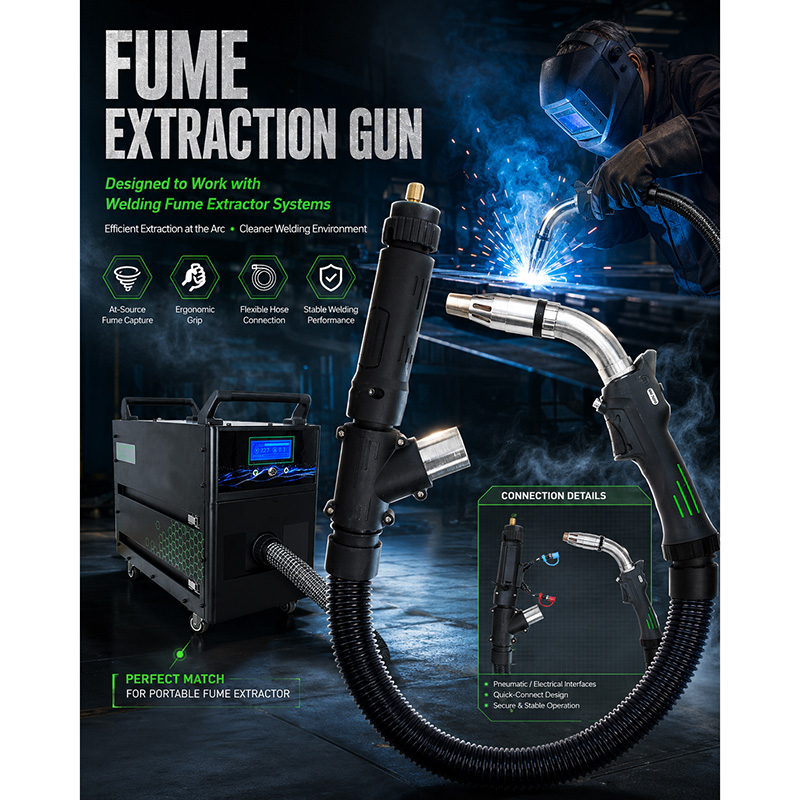
A portable welding fume extractor is essentially a mobile air purification unit specifically engineered for welding applications. Although designs vary depending on industrial needs, most systems include several core components:
| Component | Function |
| Suction System | Captures fumes directly from the welding source |
| Filtration Unit | Removes microscopic particles and contaminants |
| Motor & Blower | Generates airflow and negative pressure |
| Flexible Hose or Torch | Directs fumes into the filtration system |
| Exhaust Outlet | Releases purified air back into the workspace |
Modern systems often use multi-stage filtration technology. High-efficiency filters capture extremely fine particles while helping maintain stable airflow during continuous operation. Some advanced models also include sound insulation materials to reduce operating noise inside busy workshops.
Mobility is another critical factor. Industrial workshops rarely stay static for long periods. Production lines evolve, repair stations move, and welding projects change daily. Portable extractors equipped with durable wheels and compact frames allow operators to reposition equipment quickly without complicated installation procedures.
How Fume Extraction Guns Work
Fume extraction guns integrate extraction capability directly into the welding torch itself. This approach captures smoke almost immediately as it forms around the welding arc. A vacuum system connected to the torch pulls fumes through internal channels before they spread into the welder’s breathing area.
This technology is becoming increasingly popular in high-volume production environments because it delivers efficient source capture without requiring large external extraction arms. Modern extraction guns are designed to maintain welding performance while adding air extraction functionality. Some systems support both gas-cooled and water-cooled configurations depending on production demands.
For facilities operating multiple welding stations simultaneously, extraction guns can significantly improve overall air management. Instead of relying entirely on room ventilation, each welding point actively removes contaminants at the source. This distributed approach often provides better consistency across large manufacturing floors.
Key Benefits of Portable Welding Fume Extraction Systems
Cleaner Air and Better Visibility
One of the most immediate benefits of a welding fume extraction system is improved visibility. Excess smoke can make it difficult for welders to clearly see the weld pool, especially during long production runs. Cleaner air creates a more stable working environment where operators can maintain accuracy and consistency.
Smoke reduction also improves general workshop cleanliness. Fine metallic dust tends to settle on tools, control panels, electronic equipment, and finished products. Over time, accumulated dust can increase maintenance requirements and reduce equipment lifespan. Cleaner workshops are easier to maintain and create a more professional appearance for employees and visitors alike.
Improved Worker Productivity
Air quality directly affects worker comfort. When employees spend long shifts in smoky environments, fatigue and discomfort often increase. Cleaner air helps workers stay focused and comfortable throughout the day, which may contribute to higher productivity and fewer interruptions.
Industrial product information also highlights the relationship between cleaner air and reduced absenteeism. Safer workplaces generally create stronger employee confidence and better long-term retention rates.
Many manufacturing managers now recognize that workplace safety investments are not simply operational costs. They are strategic investments in workforce stability and production efficiency.
Regulatory Compliance Advantages
Industrial safety regulations surrounding welding fumes continue becoming stricter in many global markets. Companies exporting products internationally often face additional compliance expectations related to occupational safety and environmental standards.
Portable extraction systems help facilities align with workplace air quality requirements and demonstrate a proactive commitment to worker protection. Industrial manufacturers increasingly emphasize compliance compatibility with standards such as OSHA, CE, and ISO welding safety recommendations.
For businesses seeking partnerships with international clients, strong safety standards can also strengthen credibility during supplier evaluations and factory audits.
Important Technical Features to Consider
Airflow Capacity and Negative Pressure
When choosing a welding fume extraction system, airflow performance matters significantly. Strong airflow ensures smoke is captured quickly before contaminants escape into the surrounding workspace. Negative pressure also plays a major role because it determines how effectively the system pulls fumes through hoses and filtration units.
Current industrial specifications show some portable systems operating with airflow capacities around 200 m³/h and negative pressure levels reaching 25,000 Pa.
Higher negative pressure generally improves source capture performance, especially when using integrated extraction guns. However, systems must also maintain stable airflow without becoming excessively noisy or difficult to maneuver.
Filtration Efficiency and HEPA Technology
Filtration quality determines whether captured fumes are truly removed from the air. High-efficiency filtration systems can capture extremely fine particles generated during welding processes. Many modern systems use multi-stage filtration with flame-retardant materials and HEPA-level particle capture technology.
According to current industrial product data, advanced filtration systems can achieve filtration efficiency exceeding 99.9% for microscopic particles.
Reliable filtration not only improves worker safety but also protects nearby machinery and electronic equipment from airborne metallic dust contamination.
Noise Reduction and Mobility
Industrial workshops are already noisy environments. Poorly designed extraction equipment can increase operator fatigue if noise levels become excessive. That is why manufacturers increasingly focus on sound insulation and optimized airflow design.
Some modern extraction systems now include acoustic insulation materials capable of reducing operational noise from approximately 85 dB to 73 dB.
Mobility is equally important. Compact dimensions, ergonomic handles, and durable wheels allow extraction systems to move easily between workstations. Portable systems are especially valuable for workshops handling custom fabrication projects where welding locations change frequently.
Applications Across Different Industries
Automotive Manufacturing
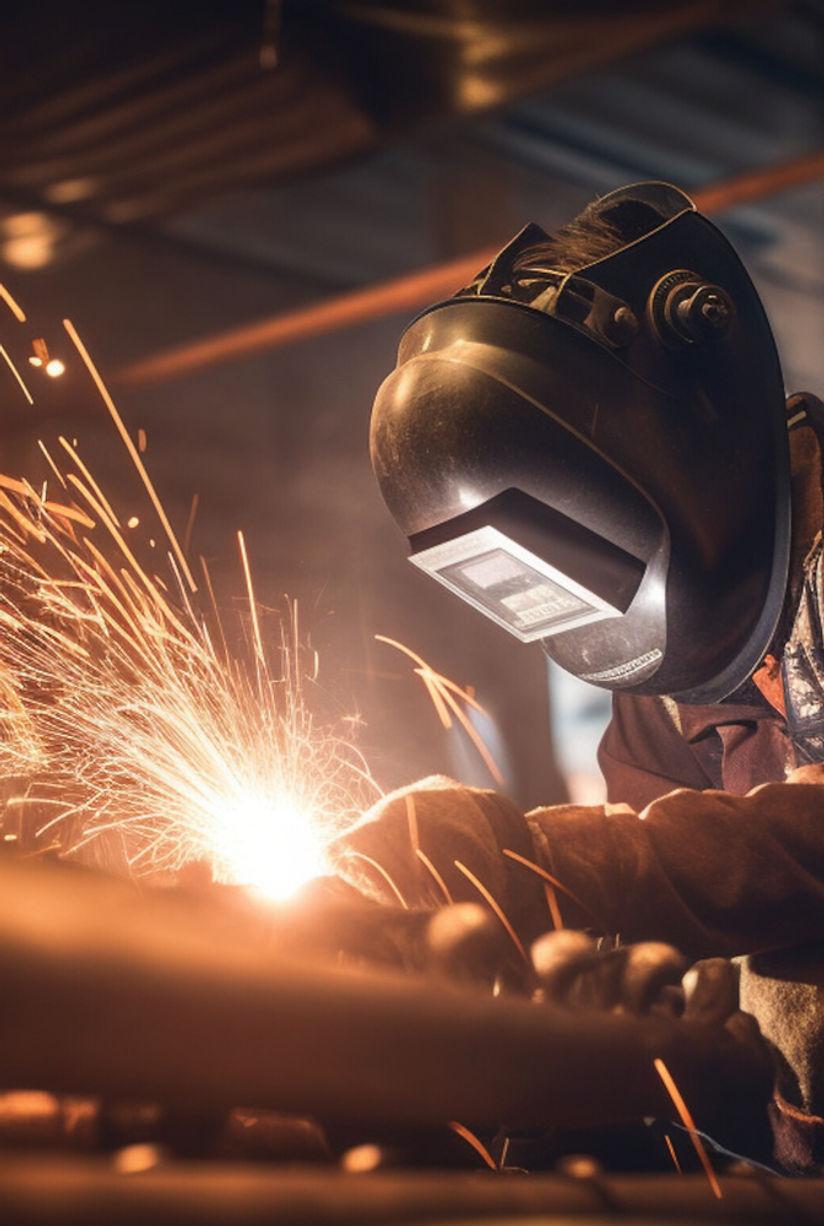
Automotive production environments often involve continuous welding operations throughout the day. High production speeds mean smoke can accumulate rapidly if extraction systems are inadequate. Portable extractors and extraction guns help maintain stable air quality while supporting flexible production layouts.
Robotic welding cells also benefit from localized extraction systems because automated production frequently concentrates welding activity in specific zones. Cleaner environments help protect sensitive automation equipment from metallic dust buildup.
Shipbuilding and Heavy Fabrication
Shipyards and heavy fabrication facilities present unique ventilation challenges because welders frequently work inside confined spaces or large steel structures. Portable extraction systems provide mobility that fixed ventilation systems cannot match.
Compact extractors are particularly useful for temporary welding zones where permanent ventilation installation would be impractical. Flexible extraction solutions allow workers to maintain safer conditions even in difficult environments.
Metal Repair Workshops
Small repair shops and mobile welding businesses often lack the budget or space for large centralized ventilation systems. Portable extractors provide a practical solution because they combine mobility, filtration, and source capture in a compact footprint.
Repair environments also involve varying project sizes and materials, making flexibility especially important. Portable systems adapt easily to changing workloads without major facility modifications.
Portable Extractors vs Centralized Systems
Which Solution Fits Small and Medium Workshops
Choosing between portable extraction systems and centralized ventilation depends heavily on workshop size, production volume, and operational flexibility requirements.
| Feature | Portable Extractor | Centralized System |
| Installation Cost | Lower | Higher |
| Mobility | Excellent | Limited |
| Scalability | Flexible | Complex |
| Maintenance | Easier | More Extensive |
| Best Use Case | Small & medium workshops | Large fixed production lines |
Portable systems are often ideal for businesses seeking flexibility and cost efficiency. Centralized systems may suit very large facilities with permanent production layouts, but they require significant planning and infrastructure investment.
Many growing manufacturers start with portable systems because they can expand gradually as production increases.
How Smart Factories Are Upgrading Welding Safety
The Rise of Green Manufacturing
Environmental responsibility is becoming a major focus across global manufacturing industries. Cleaner production processes help companies reduce environmental impact while supporting employee wellbeing.
Modern extraction systems contribute to greener manufacturing by reducing airborne pollution and improving energy efficiency compared with oversized ventilation systems. Some advanced systems also support recyclable filter technologies and energy-saving airflow management.
Factories increasingly recognize that sustainability and productivity are not opposing goals. Cleaner workplaces often operate more efficiently while creating stronger long-term business value.
Sustainable Welding Practices
Sustainable welding practices extend beyond emissions reduction. They also involve improving worker protection, reducing waste, and optimizing energy consumption throughout production operations.
Portable extraction systems support these goals by delivering targeted air purification exactly where it is needed. This focused approach reduces unnecessary airflow demands while maintaining effective contamination control.
As industrial buyers place more emphasis on environmental responsibility, companies with advanced workplace safety systems may gain stronger competitive advantages in international markets.
Choosing the Right Welding Fume Extraction Solution
Selecting the right extraction system depends on several operational factors:
Businesses should also consider long-term maintenance efficiency. Systems with easy filter replacement, durable construction, and stable suction performance often deliver better lifetime value.
Portable extraction guns can be especially effective for facilities performing continuous MIG welding operations because they capture fumes immediately at the welding source. Workshops handling flexible project layouts may benefit more from mobile extractor units equipped with adjustable suction arms and compact mobility.
The best solution is rarely the cheapest option upfront. Instead, it is the system that delivers consistent air quality improvement, operational flexibility, and long-term reliability.
Conclusion
The welding industry is entering a new era where air quality and worker protection are becoming just as important as welding speed and production output. Portable welding fume extractors and extraction guns are no longer niche equipment reserved for specialized factories. They are rapidly becoming essential tools for modern workshops that want cleaner air, safer working conditions, and stronger operational efficiency.
Today’s extraction technology combines powerful suction performance, advanced filtration, mobility, and energy efficiency into compact systems capable of adapting to a wide range of industrial environments. Whether in automotive production, heavy fabrication, repair workshops, or shipbuilding facilities, source-capture extraction systems help businesses create cleaner and more sustainable workplaces.
As industrial safety expectations continue rising worldwide, companies investing in effective welding fume extraction are positioning themselves for long-term success. Cleaner air does not just protect workers—it improves productivity, strengthens compliance readiness, supports sustainability goals, and helps create the kind of professional workshop environment that modern manufacturing demands.
FAQs
1. Why is welding fume extraction important?
Welding fumes contain microscopic particles and gases that can negatively affect air quality and worker health over time. Extraction systems help capture these contaminants directly at the source.
2. What is the difference between a portable extractor and a centralized system?
Portable systems are mobile, flexible, and easier to install, while centralized systems are fixed solutions designed for large permanent production environments.
3. Can welding fume extraction guns affect welding performance?
Modern extraction guns are designed to maintain stable welding performance while simultaneously capturing fumes near the arc area.
4. How often should filters be replaced?
Filter replacement frequency depends on usage intensity, welding materials, and operational hours. Many systems include filter monitoring indicators for maintenance scheduling.
5. Which industries benefit most from portable welding fume extractors?
Automotive manufacturing, shipbuilding, metal fabrication, maintenance workshops, and construction industries all benefit from portable source-capture extraction systems.
 English
 简体中文
简体中文 العربية
 Français
 Русский
 Español
 Português
 Deutsch
 italiano
 日本語
日本語 한국어
한국어 Nederlands
 Tiếng Việt
 ไทย
ไทย Polski
 Türkçe
 ភាសាខ្មែរ
 Bahasa Melayu
 Filipino
 Bahasa Indonesia
 magyar
 Română
 Čeština
 Монгол
 қазақ
қазақ Српски
 हिन्दी
 فارسی
فارسی Slovenčina
 Slovenščina
 Norsk
Norsk Svenska
 українська
 Ελληνικά
 Suomi
Suomi Latine
 Dansk
Dansk বাংলা
বাংলা Hrvatski
 Afrikaans
 Gaeilge
 Eesti keel
 नेपाली
 Oʻzbekcha
 latviešu
 Azərbaycan dili
 Беларуская мова
 Bosanski
 Български
 ქართული
 Lietuvių