Welding is essential to modern manufacturing, but the dense plume of smoke rising from the weld pool has long been an accepted occupational hazard. That acceptance is rapidly fading. As regulatory agencies worldwide tighten exposure limits and the long-term health consequences of welding fume become scientifically irrefutable, fabrication shops are transitioning toward a more precise and effective solution: Welding Torch Fume Extraction Guns.
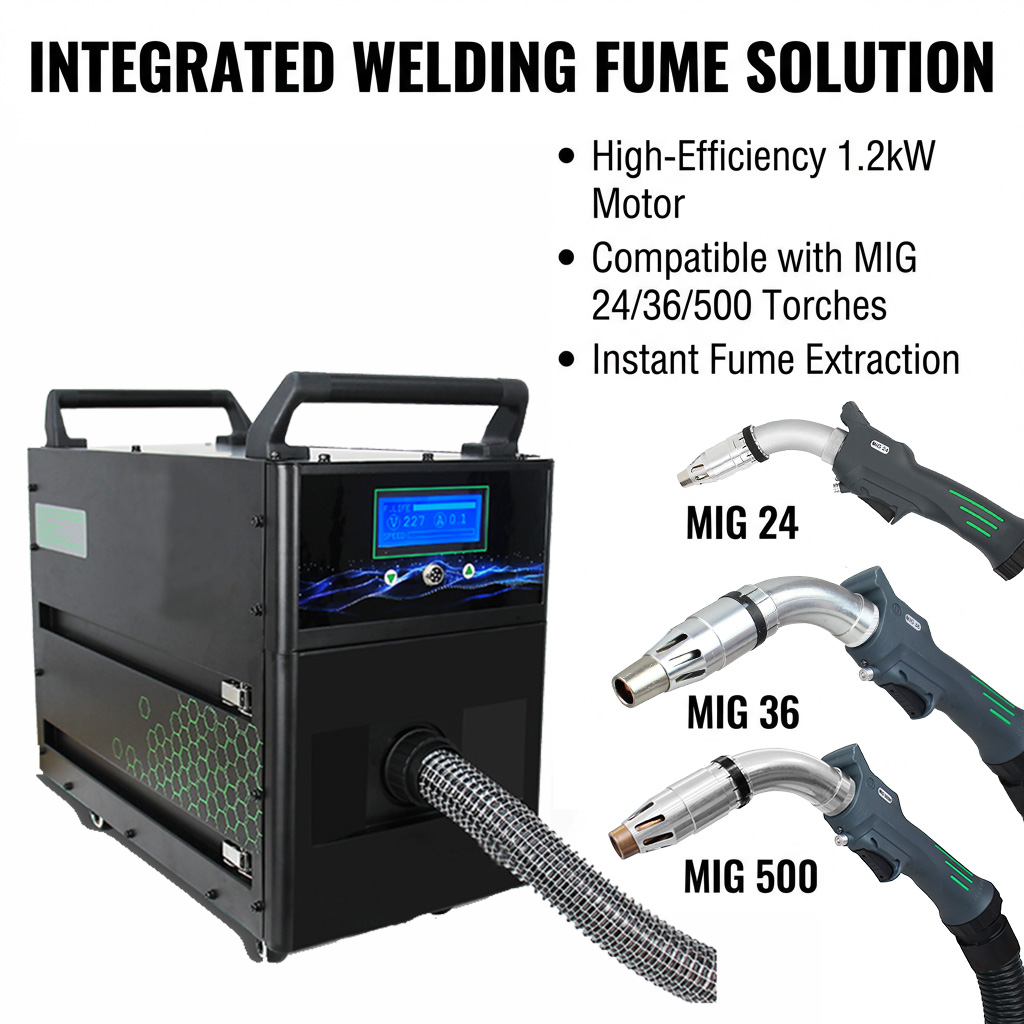
Unlike traditional overhead hoods or cumbersome swing arms that require welders to constantly interrupt their workflow for repositioning, a welding fume extractor gun integrates the vacuum system directly into the welding torch. It captures hazardous particulates at the very moment they are generated—right at the arc. This article provides a comprehensive, technical overview of this technology, explaining the science, compliance drivers, and operational benefits that make it the gold standard for modern MIG welding.
Understanding the Invisible Hazard: The Science of Welding Fume
Before evaluating fume extraction equipment, it is crucial to understand what is being inhaled on the shop floor. Welding fume is not simple smoke. It is a complex aerosol formed when metal vaporizes at extreme temperatures and condenses into microscopic solid particles. The composition varies depending on the base metal, filler material, and shielding gas, but common constituents include iron oxide, aluminum, cadmium, manganese, and—most alarmingly—hexavalent chromium (Cr(VI)), which is produced when welding stainless steel or high-chrome alloys.
The International Agency for Research on Cancer (IARC) has classified welding fumes as a Group 1 carcinogen, placing them in the same category as asbestos and tobacco smoke. The tiny particles generated during welding—many smaller than 0.3 microns—are capable of penetrating deep into the alveolar regions of the lungs. Because these particles are so fine, the body's natural clearance mechanisms struggle to remove them, leading to chronic inflammation and, over time, potentially serious disease.
The Regulatory Landscape: Stricter PELs and Compliance Mandates
Occupational safety regulations are no longer forgiving when it comes to welding fume. The Occupational Safety and Health Administration (OSHA) under 29 CFR 1910.252 mandates that employers control welding fumes through engineering controls and protective measures. Welding operations must utilize fume collectors, exhaust ventilation, or air-supplied respirators to maintain a safe breathing environment. Specific hazards such as cadmium and fluorides require additional precautions beyond general ventilation.
The exposure limits themselves are stringent. For hexavalent chromium, the OSHA permissible exposure limit (PEL) is an exceptionally low 5 µg/m³ as an 8-hour time-weighted average (TWA). For iron and mild steel welding, the PEL is 5 mg/m³ (8-hour TWA), while the National Institute for Occupational Safety and Health (NIOSH) recommends keeping total welding fume exposure as low as reasonably possible. Relying solely on general shop ventilation or simply "opening the bay door" is no longer an acceptable or legally defensible control strategy.
OSHA's hierarchy of controls clearly prioritizes engineering controls—specifically local exhaust ventilation (LEV)—over administrative controls or personal protective equipment. This means capturing fumes at the source before they enter the welder's breathing zone is the preferred approach, not an afterthought.
On-Torch Fume Extraction: How Source Capture Technology Works
There are two fundamental strategies for fume extraction: ambient (general) ventilation and source capture. For manual and automated MIG welding operations, source capture is consistently the superior engineering choice. It captures contaminants close to the generation point before they can disperse into the facility air, requiring far less airflow volume than ambient dilution systems. In automated cells, on-torch extraction integrated directly onto the welding torch can achieve capture efficiencies exceeding 90 percent, making it the most effective method available.
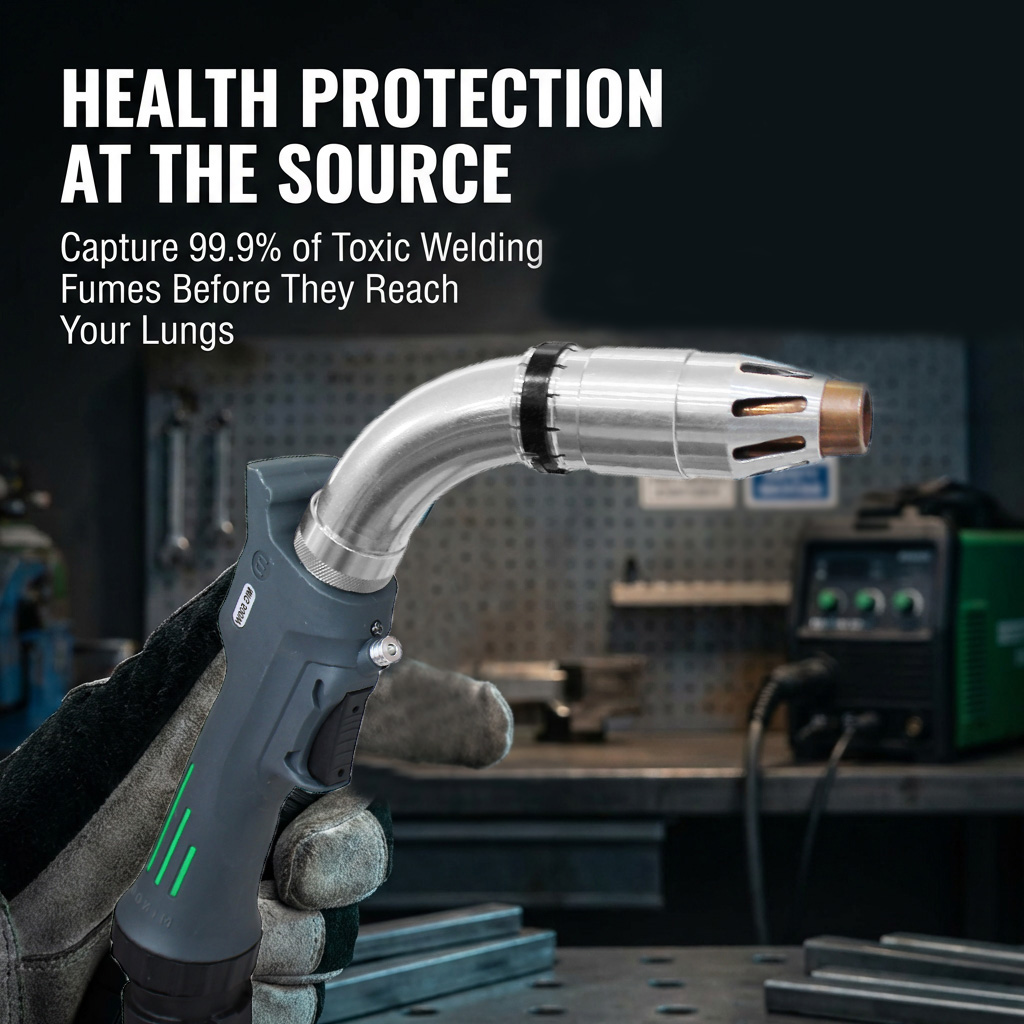
Welding torches with integrated fume extraction capture fumes directly at the source, over the welding pool. The extraction is performed via openings in the nozzle at the tip of the torch, and the fumes are carried through hoses into the collector. To properly extract and treat the fumes, the torch must be connected to a high-vacuum system. This high-vacuum approach is essential because it creates sufficient negative pressure to overcome the natural thermal buoyancy of the fume plume and pull it away from the welder's breathing zone.
The technology relies on precisely designed gas and extraction nozzles that maintain shielding gas coverage and welding quality while simultaneously removing fumes. This dual functionality is critical—the extraction airflow must not disturb the shielding gas envelope that protects the molten weld pool from atmospheric contamination.
Filtration Technology: HEPA and Multi-Stage Systems
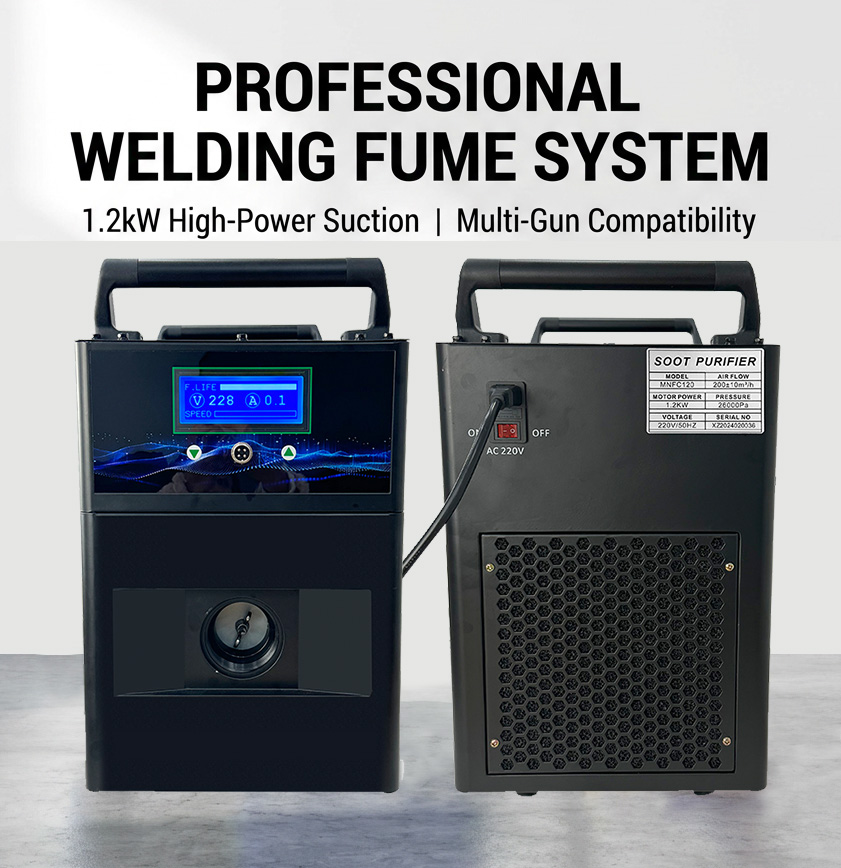
Once captured, welding fumes must be filtered before the air is returned to the shop environment or exhausted outdoors. Modern fume extraction guns connect to filtration units that employ multi-stage filtration systems to handle the unique challenges of welding particulate.
High-efficiency filters are the cornerstone of effective fume removal. HEPA filters with MERV 17 ratings and 99.97% efficiency at 0.3 microns are specifically designed to capture airborne particles such as dust, smoke, welding fumes, solder fumes, and sanding or grinding particles. The filter media—typically ultra-fine glass fiber—traps sub-micron particles that would otherwise pass through conventional HVAC filters.
Many industrial systems utilize a multi-stage approach. A pre-filter or spark trap first captures larger particles and hot embers, protecting the more expensive HEPA media downstream. The HEPA primary filter then removes 99.97% of the remaining fine particulate at 0.3 micron. For applications involving volatile organic compounds or odors—such as soldering or certain coating removal processes—an activated carbon after-filter may be incorporated to capture gaseous contaminants that mechanical filters cannot address.
Filter efficiency ratings are standardized under various international frameworks. Under ISO 21904-1, welding fume extractors are classified by efficiency class; for example, FilterCart+ W3 units achieve filter efficiency below 99% in Class W3, corresponding to F9 under EN779 and MERV 14 under ASHRAE 52.2. HEPA 13 filter options are available for applications requiring even higher capture efficiency.
Applications Across Multiple Industrial Processes
While welding is the primary application for fume extractor guns, the underlying filtration technology serves a broad range of industrial processes that generate harmful airborne contaminants.
Robotic and Manual Welding
Robotic welding cells produce a significant and continuous volume of welding fume. For these applications, fume extractors that run continuously, feature self-cleaning mechanisms, and utilize long-lasting filters are essential to minimize maintenance downtime. On-torch extraction integrated with robotic end effectors provides consistent, hands-free fume control without interrupting production cycles. For manual welding stations used intermittently, portable fume extractors with flexible extraction arms offer a practical solution that can be activated based on shop demand.
MIG welding on mild steel generates between 0.3 and 0.8 grams of metal fume per minute, consisting primarily of iron oxide with manganese and other trace metal particulate. When welding stainless steel or high-alloy materials, hexavalent chromium—a confirmed carcinogen—enters the fume stream, which drives much of the extraction system design for these applications.
Laser Cutting and Laser Welding
Laser processing—whether cutting, welding, marking, or engraving—produces a fine particulate plume whose composition depends on the workpiece material. Metal laser processing generates oxide nanoparticles, often in the sub-micron range, which require specialized filtration media. Standard filters that perform well for welding fume may not capture sub-micron laser particulate effectively. Dust-collection systems for laser cutting and welding must also comply with National Fire Protection Association guidelines for the collection of combustible dust.
Plastic and polymer laser processing releases volatile organic compounds and, depending on the specific polymer, potentially hydrogen cyanide or other toxic gases. These gaseous contaminants require activated carbon or chemical media filtration rather than mechanical particle filters alone.
Soldering and Electronics Assembly
Soldering and brazing in electronics and precision assembly release flux fumes and rosin-based respiratory irritants. Even modern lead-free soldering generates fumes that can cause sensitization over time if exposure is not properly controlled. The exposure limits for rosin-based solder fume are remarkably low—as low as reasonably practicable below an 8-hour TWA of 0.05 mg/m³, with a 15-minute TWA of 0.15 mg/m³. By law, employers must assess the risk to worker health and install appropriate local exhaust ventilation, ideally a fume extraction system.
Key Considerations When Selecting a Welding Fume Extractor Gun System
Selecting the right fume extraction solution requires a systematic evaluation of several technical and operational factors. Every industrial manufacturing facility has unique processes, and there is no one-size-fits-all solution for managing welding fumes.
Assessing Fume Hazards and Generation Volume
The first step is understanding exactly what contaminants the welding process produces. The materials used, operational practices, and facility layout all contribute to welding fume hazards. Knowing the composition of the materials being welded enables accurate identification of hazards and establishes performance expectations for the extraction system. Stainless steel welding demands higher capture efficiency due to hexavalent chromium concerns, while mild steel welding may allow different filtration strategies.
The volume of fume generated also matters. Facilities operating 24/7 or welding for eight consecutive hours daily produce significantly more particulate and require extractors designed for continuous duty with self-cleaning mechanisms. Intermittent manual welding may be adequately served by smaller, portable units that can be activated as needed.
Capture Velocity and Airflow Requirements
Effective fume capture depends on maintaining adequate capture velocity at the fume source. For most welding applications, capture velocity should fall between 100 and 200 feet per minute (0.5 to 1.0 m/s). A standard 12-inch diameter capture hood positioned 12 inches from a MIG welding arc requires approximately 700 to 1,000 CFM to maintain adequate capture velocity. On-torch extraction guns, because they are positioned immediately adjacent to the arc, can achieve effective capture with significantly lower airflow volumes, reducing energy consumption and noise.
Key performance parameters for mobile fume extractors typically include airflow ranging from 800 to 3000 m³/h, filtration efficiency of ≥99.3% for 0.3μm particles, negative pressure capacity of ≥2000 Pa, and noise levels controlled below 65 dB(A). These specifications ensure effective capture while maintaining a tolerable work environment.
Mobility and Facility Layout
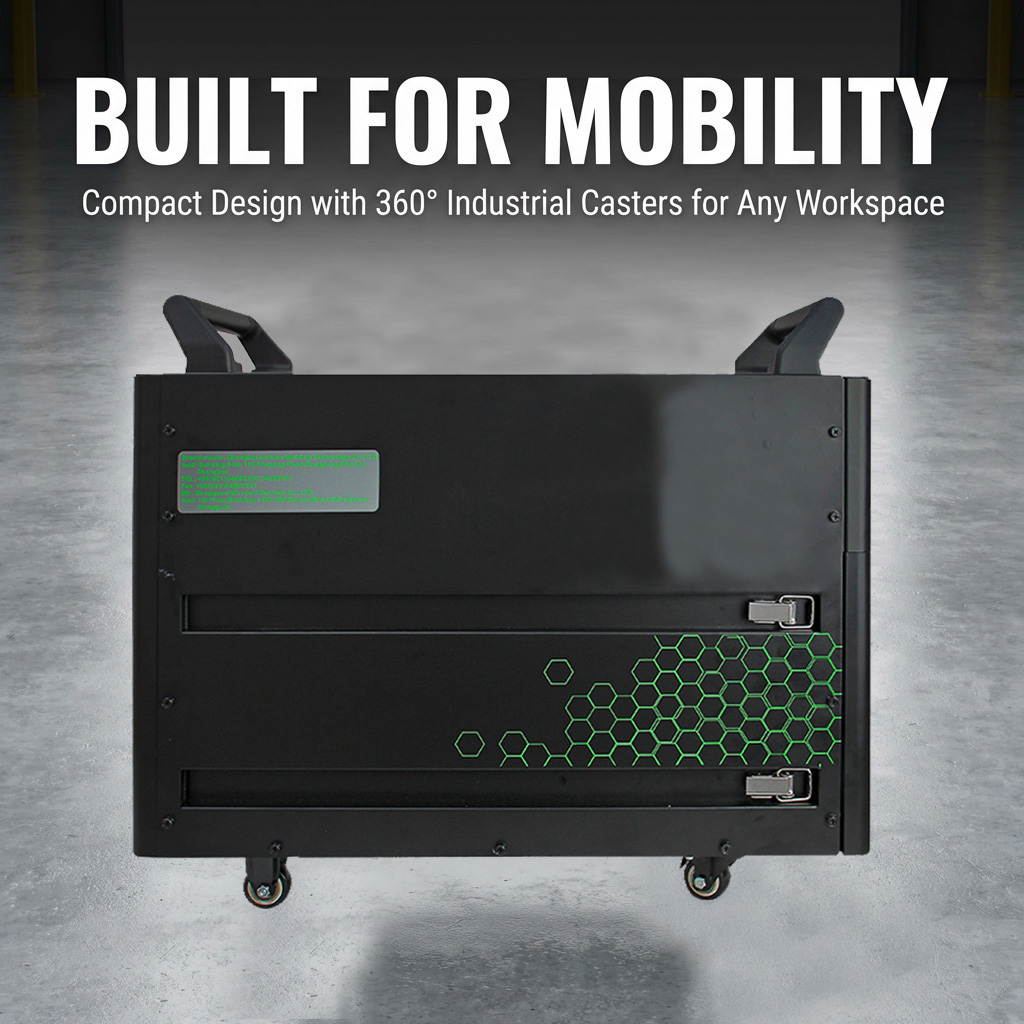
Mobile welding fume extractors offer flexible deployment across non-fixed work areas. Essential features include universal casters with brake mechanisms, modular filter cartridge design, automatic or manual filter cleaning functions, and high-temperature flame-retardant housing materials. Some models support multi-station extraction arm expansion, allowing a single unit to service multiple adjacent welding stations.
Typical application scenarios include automotive spot welding and arc welding stations, structural steel fabrication sites, shipbuilding section assembly areas, construction machinery repair shops, and railway component welding operations—anywhere workpieces are large or stationary welding booths are impractical.
Facilities with spread-out workstations often benefit from point-of-use layouts, where one collector is connected to one welding operation. Since each welding point has its own extractor, selecting units with a small footprint and positioning them directly adjacent to each workstation is a smart approach. In other shops, a centralized strategy—where one collector serves multiple workstations through a duct network—may be more efficient if floor space is limited at the welding points.
Maintenance and Filter Life
Regular maintenance directly impacts both extraction performance and operating costs. The capture hood should be positioned as close to the welding point as possible—ideally within 30 cm—to maximize capture efficiency. Filter cartridge pressure differential should be monitored regularly, with timely replacement or cleaning to prevent airflow degradation that compromises capture performance. In flammable or explosive environments involving aluminum or magnesium dust, explosion-proof certified equipment with proper grounding is essential. During unit relocation, the fan should be turned off to prevent secondary dust dispersion from filter vibration.
Long-lasting, disposable nanofiber filters with large filter surfaces—such as 30 m² (323 ft⊃2;)—offer significantly extended service life compared to conventional media. When the filter reaches capacity, integrated warning signals alert operators that replacement is required, eliminating guesswork and preventing performance degradation.
Health Consequences of Inadequate Fume Control
Understanding the health risks associated with welding fume exposure provides critical context for why proper extraction is essential. Even short-term exposure can cause eye, nose, and throat irritation, headaches, dizziness, and metal fume fever—a flu-like illness characterized by chills, fever, and muscle aches.
Extended exposure without proper safety measures increases the risk of serious health conditions. Inhaling welding fumes and toxic gases over many years can lead to chronic bronchitis, pneumonitis, and reduced lung function. Exposure to manganese, commonly found in steel welding fumes, has been linked to neurological symptoms resembling Parkinson's disease. Chromium and nickel from stainless steel welding can cause organ damage. In confined spaces, reduced oxygen levels and the accumulation of gases like carbon monoxide and ozone pose acute risks of asphyxiation.
These health consequences underscore why engineering controls—specifically source-capture fume extraction—are not merely a compliance checkbox but a fundamental investment in workforce health and long-term operational sustainability.
Conclusion: A Strategic Investment in Safety and Productivity
Welding fume extractor guns represent the convergence of occupational health science and industrial productivity. By capturing hazardous particulate at the arc, these systems protect welders from carcinogenic exposure while simultaneously reducing facility-wide contamination. The result is a cleaner shop floor, reduced housekeeping costs, improved weld visibility, and demonstrable compliance with increasingly stringent regulatory standards.
For fabrication shops, manufacturing facilities, and maintenance operations where welding is a core process, the transition to source-capture fume extraction is not a matter of if but when. The technology has matured, the regulatory landscape has hardened, and the health evidence is undeniable. Selecting the right welding fume extractor gun system—matched to the specific materials, production volumes, and facility constraints—is one of the most impactful decisions a safety manager or shop owner can make in 2026 and beyond.
 English
 简体中文
简体中文 العربية
 Français
 Русский
 Español
 Português
 Deutsch
 italiano
 日本語
日本語 한국어
한국어 Nederlands
 Tiếng Việt
 ไทย
ไทย Polski
 Türkçe
 ភាសាខ្មែរ
 Bahasa Melayu
 Filipino
 Bahasa Indonesia
 magyar
 Română
 Čeština
 Монгол
 қазақ
қазақ Српски
 हिन्दी
 فارسی
فارسی Slovenčina
 Slovenščina
 Norsk
Norsk Svenska
 українська
 Ελληνικά
 Suomi
Suomi Latine
 Dansk
Dansk বাংলা
বাংলা Hrvatski
 Afrikaans
 Gaeilge
 Eesti keel
 नेपाली
 Oʻzbekcha
 latviešu
 Azərbaycan dili
 Беларуская мова
 Bosanski
 Български
 ქართული
 Lietuvių