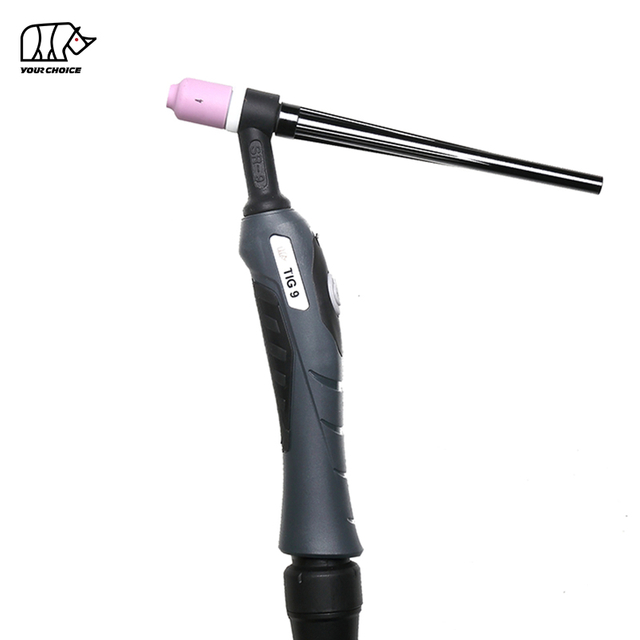
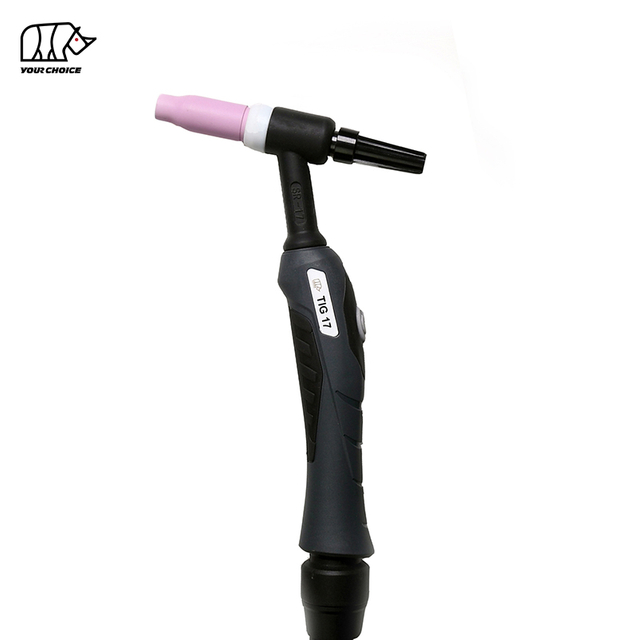
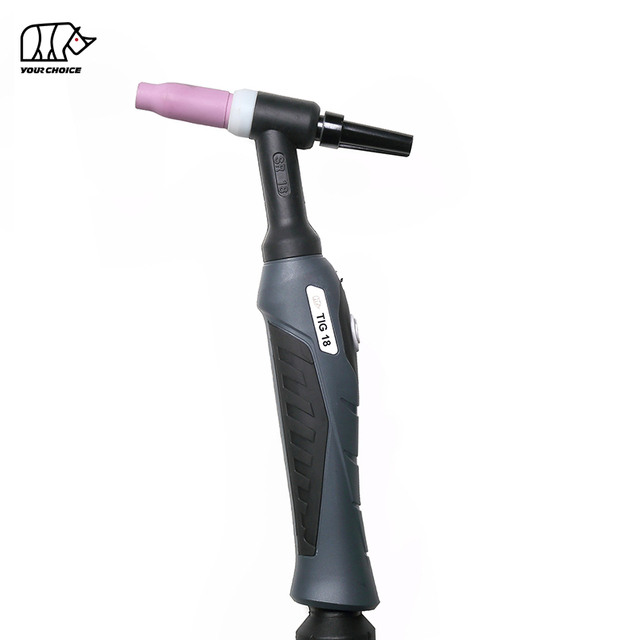
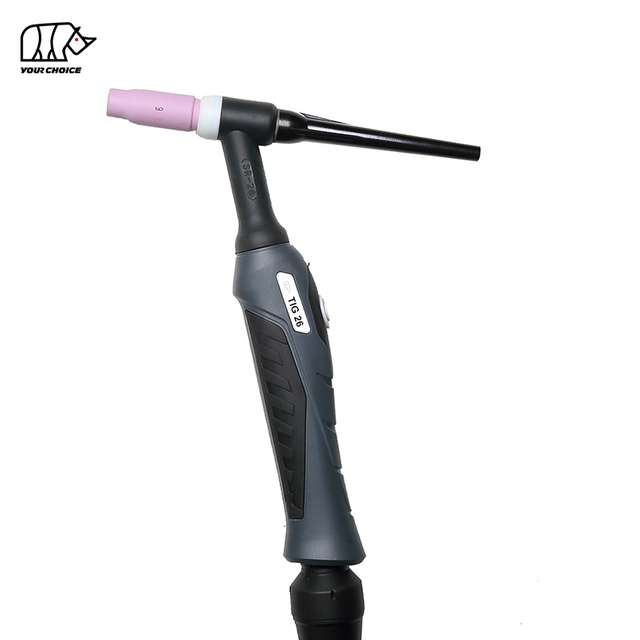
The welding industry stands at the threshold of a profound transformation. For decades, TIG (Tungsten Inert Gas) welding has been revered as the pinnacle of manual welding skill—a process demanding exceptional hand-eye coordination, steady control, and years of practice to master. Unlike MIG or stick welding, TIG requires the welder to simultaneously manage the torch angle, filler rod feed rate, arc length, and foot pedal amperage, all while observing the molten puddle. This complexity has made TIG welding notoriously difficult to automate. Traditional robotic TIG systems still rely heavily on human operators for programming, parameter tuning, and real-time adjustments. However, a new paradigm is emerging: fully autonomous TIG welding. This article explores what full autonomy means for TIG welding, the technologies enabling it, the benefits and challenges, and how it is poised to reshape industries ranging from aerospace to shipbuilding.
What Is Fully Autonomous TIG Welding?
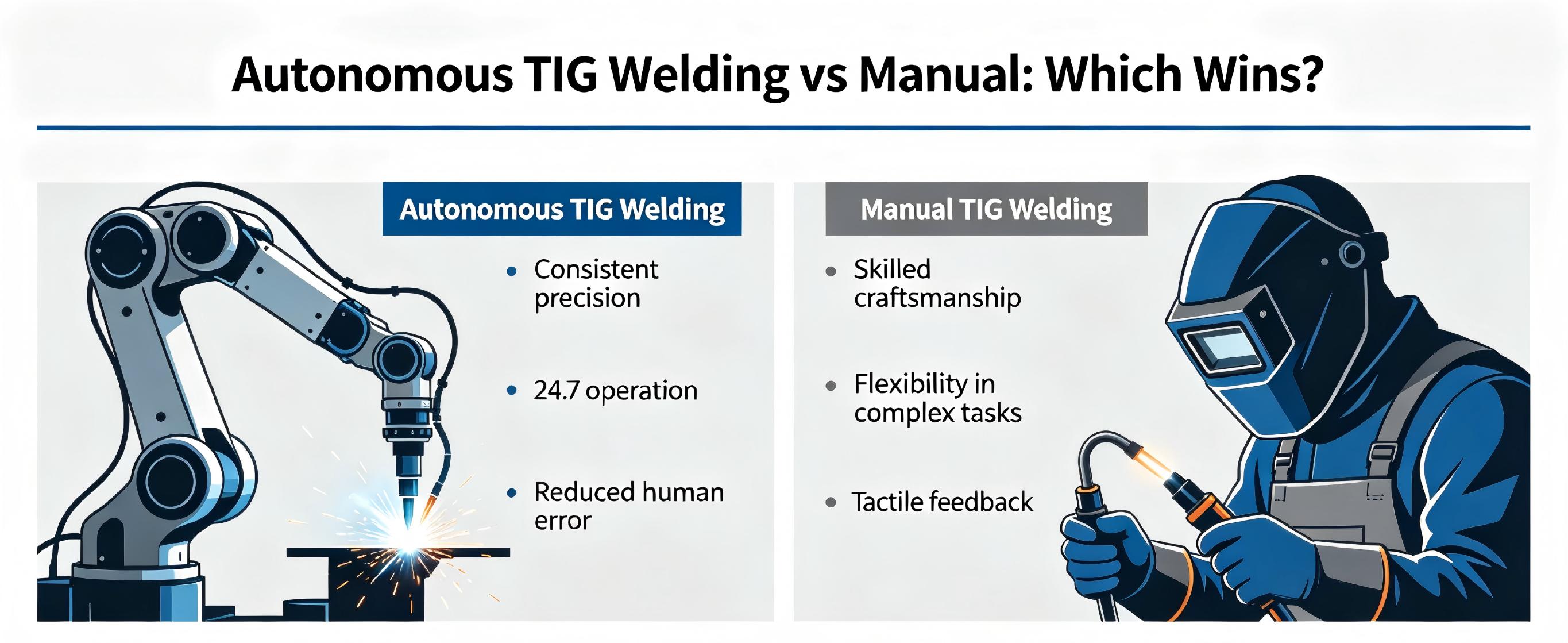
Fully autonomous TIG welding refers to a system that can perform complete TIG welding operations—from joint preparation and torch positioning to arc initiation, puddle control, filler metal addition, and post-weld inspection—without any human intervention during the welding cycle. Unlike conventional robotic TIG cells that require an operator to teach points, set parameters, and often monitor the process continuously, an autonomous system perceives its environment, makes decisions in real time, and adapts to variations in part fit-up, material properties, and thermal conditions.
The key distinction lies in the word “fully.” Many modern robotic welding systems are described as “automated” but still demand human oversight for tasks such as adjusting wire feed speed, correcting torch alignment, or stopping the process when a defect appears. Fully autonomous TIG welding eliminates the need for a human in the loop. The system handles start-up, in-process adjustments, and shutdown independently. It can weld a first part as accurately as the thousandth, even if the parts are not identical. This capability represents a leap from simple repeatability to true adaptability.
The Technological Pillars of Autonomous TIG Welding
Achieving full autonomy in TIG welding requires the integration of several advanced technologies. None of these alone is sufficient; it is their combination that unlocks autonomous operation.
Real-Time Vision and Sensing
The eyes of an autonomous TIG system are high-speed cameras, laser scanners, and sometimes thermal imagers. Unlike conventional “teach and repeat” robots that assume every part is identical, autonomous systems use vision to locate the joint, measure gap width, detect edge mismatch, and identify surface contaminants. Structured light laser scanners project a pattern onto the workpiece; by analyzing the deformation of that pattern, the system builds a three-dimensional map of the joint in milliseconds.
Furthermore, during welding, the system must see through the intense arc light. Specialized narrow-band optical filters and high dynamic range cameras capture images of the molten puddle and the tungsten electrode. Machine vision algorithms track puddle geometry, keyhole formation (in keyhole TIG variants), and the position of the filler wire relative to the puddle. This real-time visual feedback is the foundation for adaptive control.
Adaptive Process Control Algorithms
Raw sensor data is useless without intelligence. Adaptive control algorithms—often based on machine learning or classical model predictive control—take the vision input and adjust welding parameters instantaneously. For TIG welding, the critical parameters include:
Welding current (amperage): Controls heat input and puddle fluidity.
Arc length (voltage): Affects penetration and arc stability.
Travel speed: Determines heat input per unit length and bead shape.
Filler wire feed rate: Must be synchronized with travel speed and puddle demand.
Torch oscillation (if applicable): For wider joints or filling gaps.
An autonomous system may adjust amperage dozens of times per second in response to puddle oscillations or gap variations. For example, if the joint gap widens unexpectedly, the algorithm can reduce travel speed, increase filler feed, and slightly increase amperage to ensure complete fusion. If the puddle begins to sag (indicating excessive heat), the system reduces current or speeds up travel. These adjustments happen without any human decision.
Machine Learning and Neural Networks
Many advanced autonomous TIG systems employ deep neural networks trained on thousands of hours of welding data. The network learns to associate visual features of the puddle and joint with optimal parameter settings. Unlike rule-based systems that require engineers to manually program every “if-then” scenario, neural networks can generalize from examples. They can handle edge cases—such as an oily spot on the plate or a sudden draft—that would confuse traditional controllers.
One powerful approach is reinforcement learning, where the system is rewarded for producing good welds (measured by penetration, bead shape, and lack of defects) and penalized for bad ones. Over many trials, either in simulation or on real equipment, the system discovers control policies that outperform human operators. This is particularly valuable for TIG welding, where the optimal response to a given puddle state is often non-intuitive.
Sensor Fusion and Digital Twins
No single sensor provides complete information. An autonomous system fuses data from laser scanners, arc voltage monitors, current sensors, acoustic microphones (arc sound correlates with stability), and sometimes infrared thermography. Sensor fusion algorithms combine these diverse inputs into a coherent model of the welding process.
Increasingly, this model is embedded in a digital twin—a real-time virtual replica of the physical weld. The digital twin simulates thermal diffusion, solidification, and residual stress. By comparing the actual sensor data with the twin’s predictions, the system can detect anomalies early. For instance, if the cooling rate after the weld deviates from the expected profile, the system might trigger a post-weld heat treatment or flag the part for inspection.
Key Advantages Over Manual and Conventional Automated TIG Welding
Fully autonomous TIG welding offers compelling benefits that explain the intense industry interest.
Unmatched Consistency and Repeatability
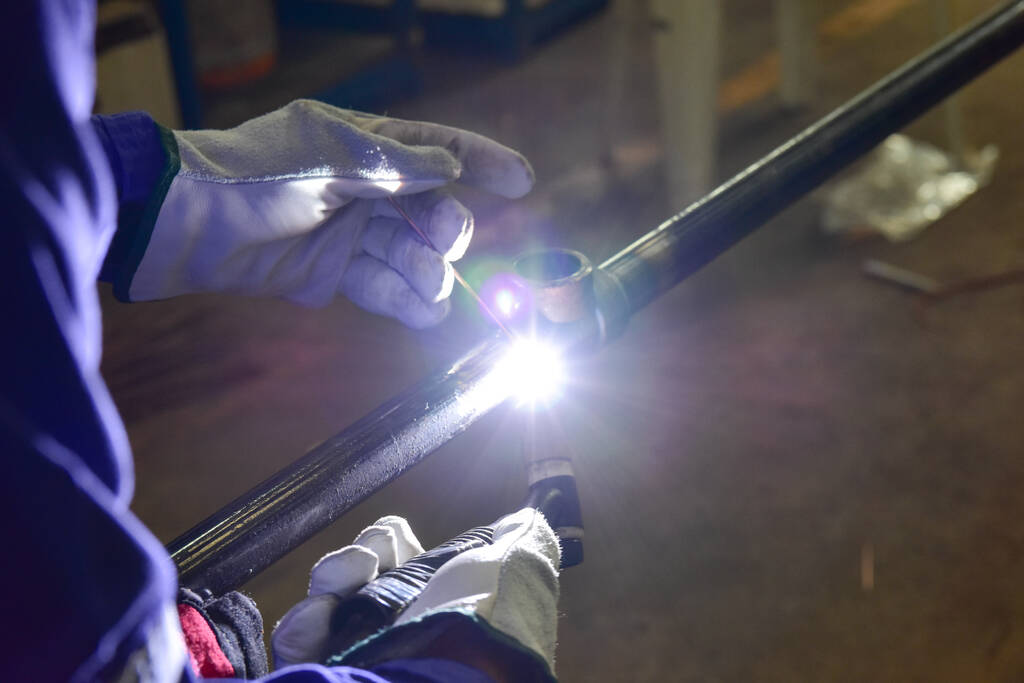
Human TIG welders, even the most skilled, exhibit natural variation. Fatigue, distraction, hand tremor, and ambient conditions all affect weld quality. An autonomous system welds exactly the same way every time, provided the sensors detect consistent conditions. More importantly, when conditions change, the system adapts in a controlled, repeatable manner—not randomly. This consistency is critical in industries like aerospace, where even microscopic porosity or incomplete fusion can lead to catastrophic failure.
Higher Productivity and Utilization
Manual TIG welding is slow and requires frequent breaks. A human welder might achieve a “duty cycle” (actual arc-on time) of 30-50% due to positioning, cleaning, and rest. An autonomous robot can achieve >90% arc-on time, welding continuously. Furthermore, autonomous systems can operate 24/7 without shifts, breaks, or vacations. For high-volume production, this translates directly to lower cost per weld.
Reduction in Rework and Scrap
One of the largest hidden costs in welding is rework. Defective welds must be ground out and re-welded, consuming labor, materials, and schedule time. Autonomous systems, with their real-time quality monitoring, can detect a defect as it begins and immediately correct the parameters, often preventing the defect entirely. Studies have shown that advanced adaptive welding can reduce rework rates by 70-90% compared to manual welding.
Addressing the Welder Shortage
The welding industry faces a severe shortage of skilled labor, particularly for TIG welding. According to the American Welding Society, the average age of welders is over 55, and the number of new entrants is insufficient to replace retirees. Fully autonomous TIG welding reduces dependence on human expertise. Instead of needing master TIG welders for every critical joint, a facility can deploy autonomous cells supervised by technicians with broader, but less specialized, skills. This does not eliminate the need for welders entirely but shifts the role toward programming, maintenance, and quality assurance.
Enabling New Geometries and Materials
Certain weld joints are virtually impossible for a human to perform consistently—for example, long, curved seams in confined spaces, or ultra-thin materials that distort easily. Autonomous systems, with their precise motion control and adaptive heat management, can weld geometries that would challenge even the best manual welders. Moreover, emerging materials like aluminum-copper alloys or titanium matrices require precise thermal cycles that autonomous systems can deliver.
Technical Challenges Still Facing Fully Autonomous TIG Welding
Despite rapid progress, several hurdles remain before autonomous TIG welding becomes ubiquitous.
Sensing Through Arc Interference
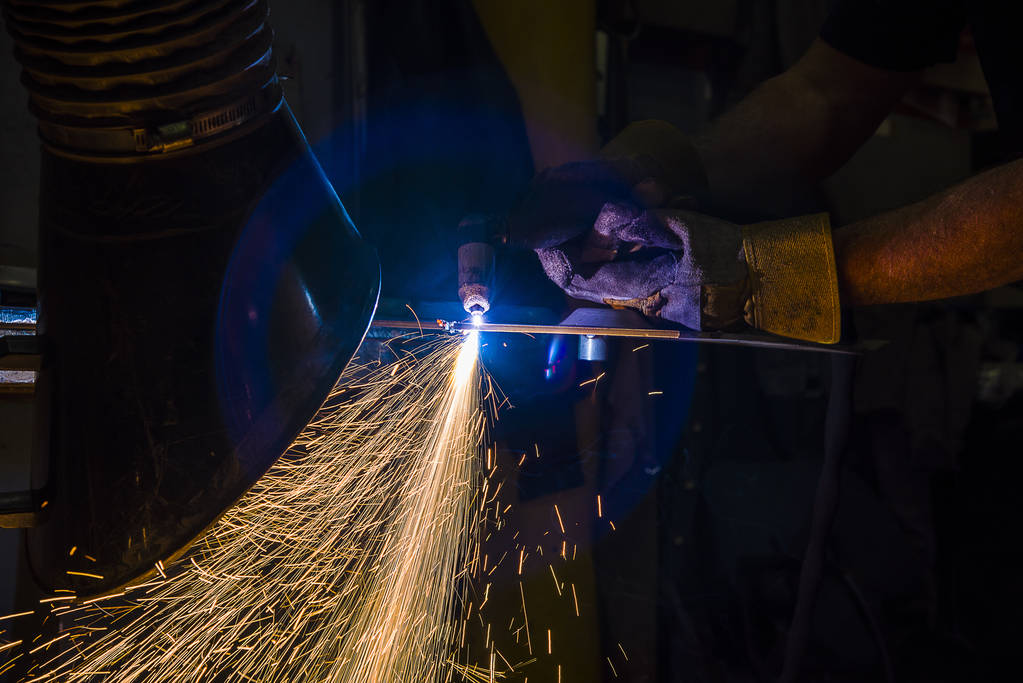
TIG arcs are extremely bright, emitting intense ultraviolet and infrared radiation. While narrow-band filtering helps, it cannot completely eliminate noise. The arc also generates electromagnetic interference that can corrupt sensor signals. Developing robust sensors that function reliably across thousands of hours of welding is an ongoing challenge. Some systems mitigate this by using structured laser light that is gated (pulsed) in sync with the welding current, but this adds complexity.
Adapting to Extreme Part Variation
Autonomous systems excel when variations are within predictable bounds. However, if a part has grossly mismatched edges, severe oil contamination, or incorrect base material, the system may fail. In such cases, the safest response is to stop and alert a human. Designing graceful failure modes—where the system recognizes its own limitations—is critical for safe deployment. This is an active area of research in anomaly detection and uncertainty quantification.
Cost and Complexity
Fully autonomous TIG systems are expensive. They require high-end robots, multiple sensors, powerful computing hardware (often with GPUs for neural network inference), and sophisticated software. For a small job shop, the upfront investment may be prohibitive. However, as components commoditize and software matures, costs are falling. Some manufacturers now offer autonomous welding as a service (robots as a service), reducing capital barriers.
Validation and Certification
In regulated industries (aerospace, nuclear, pressure vessels), any change to the welding process must be validated and certified. Certifying an autonomous system that adapts in real time is far more complex than certifying a fixed-parameter robot. Regulators are accustomed to static procedures: “weld at 120 amps, 10 inches per minute, with a 1/16-inch tungsten.” An autonomous system may weld the same joint with 118 amps at the start and 122 amps in the middle, depending on heat buildup. How does one qualify such a process? New standards for adaptive and AI-driven welding are needed. Industry groups are working on guidelines, but widespread acceptance will take years.
Applications Already Benefiting from Fully Autonomous TIG
While still emerging, fully autonomous TIG welding has found early adoption in specific niches where the value proposition is strongest.
Aerospace Components
Turbine engine components, fuel system parts, and structural brackets often require TIG welding of thin, heat-sensitive alloys like Inconel and titanium. These parts are expensive, and a single defect can scrap a multi-thousand-dollar component. Autonomous systems provide the precision and consistency needed. Some aerospace suppliers now use autonomous TIG cells for low-volume, high-mix production, where reprogramming time is amortized over small batches.
Pipe and Tube Welding
Orbital TIG welding for pipes has been automated for decades, but conventional orbital systems still require an operator to set parameters and visually monitor the weld. Fully autonomous orbital TIG adds real-time seam tracking and adaptive parameter control, allowing it to weld pipes with ovality or wall thickness variations. This is especially valuable in shipbuilding and oil & gas construction, where pipes are rarely perfectly round.
Medical Device Manufacturing
Implants, surgical instruments, and medical housings often involve tiny, precise TIG welds on stainless steel or cobalt-chrome. Humans struggle with the fine motor control required. Autonomous micro-TIG systems, equipped with high-magnification vision, can produce consistent welds that are virtually invisible. The ability to log every weld parameter and inspection result also supports strict regulatory requirements (e.g., FDA 21 CFR Part 820).
Automotive Prototyping and Motorsport
While production automotive welding is dominated by MIG and resistance welding, prototypes, racing components, and low-volume specialty vehicles often use TIG for its aesthetics and strength. Autonomous TIG allows rapid iteration without waiting for a master welder. For example, a Formula 1 team might weld dozens of tubular chassis variations in a week, using an autonomous cell to ensure each weld meets exacting standards.
The Role of Simulation and Offline Programming
A critical enabler of autonomous TIG is the ability to simulate the welding process before a single arc is struck. Offline programming software, coupled with physics-based welding simulators, allows engineers to test different joint designs, torch orientations, and parameter sequences in the virtual world. The autonomous system can then use the simulation results as a starting point, refining parameters in real time based on actual sensor feedback.
Simulation also plays a role in training the AI controllers. Using a technique called domain randomization, the system can be trained on thousands of simulated welding scenarios with random variations in gap, misalignment, material emissivity, and ambient temperature. This synthetic training data supplements real-world data, which is expensive to collect. After simulation training, the autonomous controller transfers (with fine-tuning) to the physical robot—a process known as sim-to-real transfer.
Future Directions: What’s Next for Autonomous TIG
The current state of fully autonomous TIG welding is impressive but far from the ultimate vision. Several trends will shape the next decade.
Multi-Process Autonomy
Today’s autonomous systems are usually dedicated to TIG or MIG. Tomorrow’s systems will switch between processes as needed—for example, using TIG for the root pass (critical penetration) and MIG for fill passes (higher deposition). The robot would automatically change the torch, wire feeder, and gas supply. This requires not only hardware integration but also a higher-level planner that decides which process to use for each segment of the joint.
Collaborative Autonomy
Instead of isolating autonomous welding cells behind safety fences, future systems will collaborate directly with human workers. A human might perform complex fixture loading or post-weld finishing while the robot welds. This requires safety-rated vision systems that detect human presence and adapt robot motion accordingly (speed reduction, path deviation). Collaborative autonomous TIG is more challenging than MIG because TIG torches have exposed tungsten electrodes that could cause injury, but solutions such as retractable electrodes or light curtains are emerging.
Generative Design for Weldability
Currently, part designers often ignore welding constraints, leading to joints that are difficult or impossible to automate. With fully autonomous TIG becoming more capable, designers can create geometries optimized for robot welding—such as self-locating features, consistent gap tolerances, and accessible torch orientations. In the future, generative design algorithms will produce part geometries that minimize welding complexity while maximizing strength, with the robot’s capabilities as an input constraint.
Edge Computing and Cloud Learning
Autonomous TIG systems generate enormous amounts of data: video streams, sensor logs, parameter adjustments. Edge computing (processing data locally on the robot controller) enables low-latency control decisions. However, valuable insights can be aggregated across many cells in a cloud-based “learning factory.” When one robot encounters a difficult welding scenario and discovers a successful parameter set, that knowledge can be anonymized and shared to improve all other robots. This collective learning accelerates the improvement of autonomous welding algorithms.
Economic Considerations for Adoption
For a manufacturing manager evaluating fully autonomous TIG, the key question is not “can it work?” but “does it pay off?” The business case depends on several factors.
Direct Labor Savings
Replacing a skilled TIG welder earning $35-50 per hour plus benefits yields obvious savings. However, the robot does not eliminate the need for human involvement entirely. One technician might supervise multiple autonomous cells, handling maintenance, consumable changes, and quality audits. The net labor reduction is often 60-80% rather than 100%.
Consumable Costs
Autonomous systems, by maintaining optimal parameters, can reduce filler metal and shielding gas consumption. They also extend tungsten electrode life because they avoid accidental dipping or arc strikes. In some cases, the savings in consumables alone can cover the robot’s operating cost.
Throughput Increase
If a manual TIG welder produces 50 parts per shift, an autonomous cell might produce 150 parts per day (24-hour operation). The additional output can be sold as incremental revenue. For capacity-constrained shops, this is the most compelling benefit.
Return on Investment (ROI) Realities
A typical fully autonomous TIG cell costs between $80,000 and $250,000 depending on robot size, sensors, and software. For a shop currently employing four TIG welders (total labor cost ~$400,000/year), replacing two of them with a single autonomous cell (cost $150,000 plus $80,000/year technician) yields an ROI of under 12 months. For smaller shops with one or two welders, the payback period extends to 2-3 years. Financing and robotics-as-a-service models are making adoption more accessible.
Conclusion: The Autonomous Welding Shop Floor
Fully autonomous TIG welding is no longer a laboratory curiosity. It is a maturing technology that has crossed the chasm from research to early industrial deployment. The convergence of affordable high-speed cameras, GPU-accelerated machine learning, and robust robot controllers has made it possible for a machine to perceive, decide, and act with the finesse of a master TIG welder—and in many cases, surpass human capabilities in consistency, speed, and adaptability.
Nevertheless, autonomous systems are not a panacea. They work best in structured environments with moderate part variation, clear joint geometries, and access to power and shielding gas. They require upfront investment and a willingness to embrace new validation methods. But for manufacturers facing labor shortages, quality demands, and competitive pressure, fully autonomous TIG welding offers a path forward.
The welding shop of 2030 will likely be a hybrid environment: human welders focusing on repair, custom fabrication, and complex tooling, while autonomous cells handle repetitive, high-precision, or hazardous TIG work. The two will not compete but complement. The technology is not about replacing the human touch—it is about freeing humans to do what they do best: solve problems, design better parts, and manage the overall process.
As sensors become cheaper, algorithms more robust, and standards more accommodating, fully autonomous TIG welding will move from an early adopter technology to a standard tool in the fabricator’s arsenal. For those who embrace it now, the competitive advantage will be substantial. For those who wait, catching up may prove difficult. The arc is struck; the autonomous future is welding itself into reality.
 English
 简体中文
简体中文 العربية
 Français
 Русский
 Español
 Português
 Deutsch
 italiano
 日本語
日本語 한국어
한국어 Nederlands
 Tiếng Việt
 ไทย
ไทย Polski
 Türkçe
 ភាសាខ្មែរ
 Bahasa Melayu
 Filipino
 Bahasa Indonesia
 magyar
 Română
 Čeština
 Монгол
 қазақ
қазақ Српски
 हिन्दी
 فارسی
فارسی Slovenčina
 Slovenščina
 Norsk
Norsk Svenska
 українська
 Ελληνικά
 Suomi
Suomi Latine
 Dansk
Dansk বাংলা
বাংলা Hrvatski
 Afrikaans
 Gaeilge
 Eesti keel
 नेपाली
 Oʻzbekcha
 latviešu
 Azərbaycan dili
 Беларуская мова
 Bosanski
 Български
 ქართული
 Lietuvių