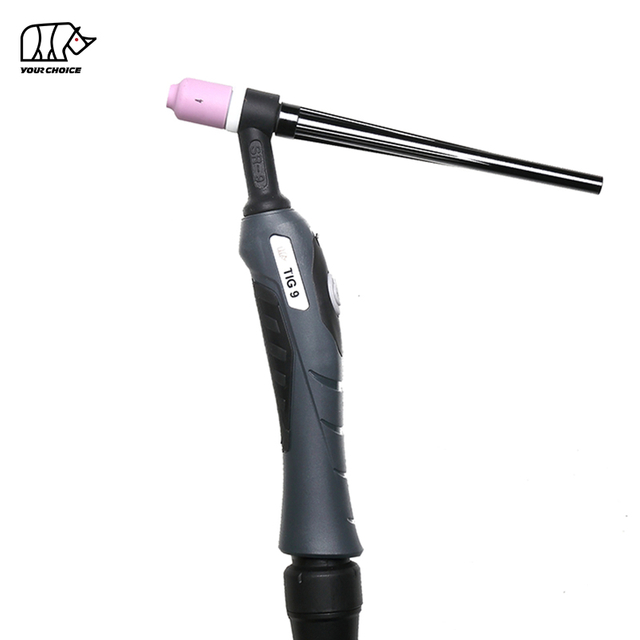
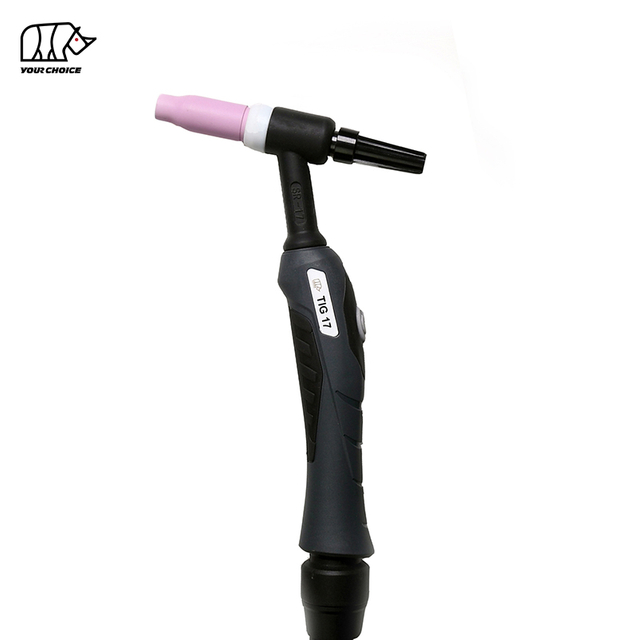
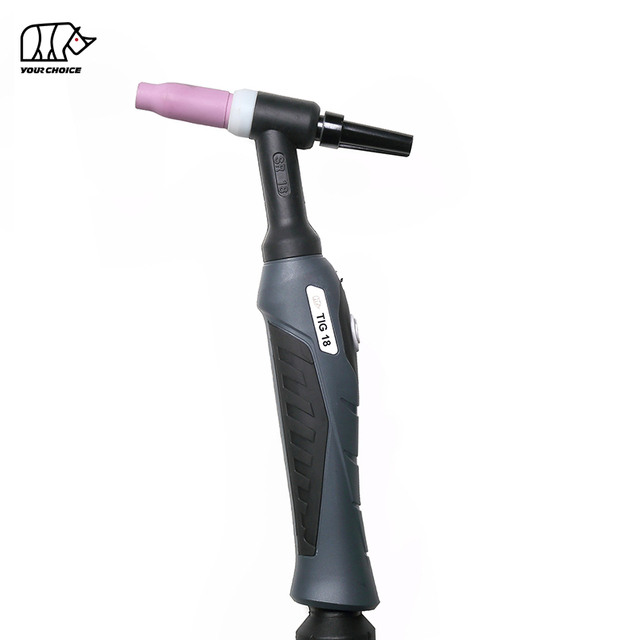
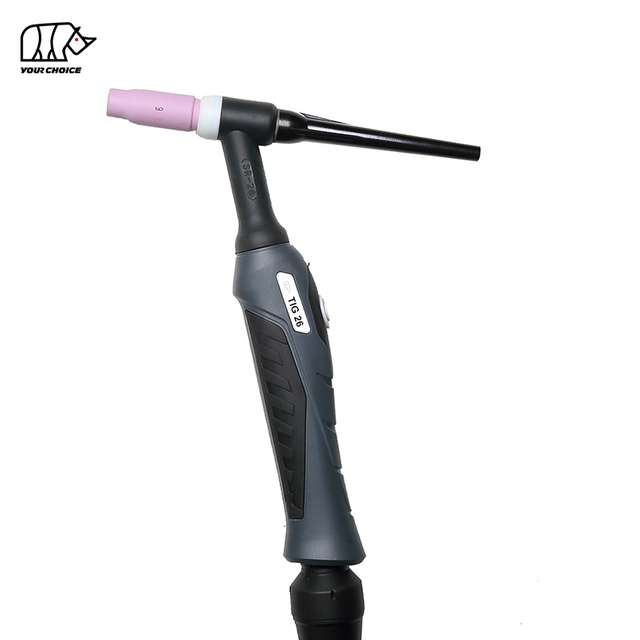
A TIG welding torch is a specialized welding tool used in Tungsten Inert Gas (TIG) welding, also known as Gas Tungsten Arc Welding (GTAW). It creates a stable welding arc between a non-consumable tungsten electrode and the workpiece, allowing welders to produce extremely clean and accurate welds.
Unlike MIG welding, where a continuously fed wire acts as both electrode and filler material, TIG welding uses a tungsten electrode that does not melt during welding. The welder manually adds filler metal when required, giving much greater control over the welding process.
The TIG torch plays a critical role because it controls several important welding functions at the same time:
Electrical current transmission
Shielding gas delivery
Tungsten electrode positioning
Arc stability
Operator control and comfort
A high-quality TIG welding torch works like the "precision hand" of a welder. Even when using an advanced welding machine, poor torch design can affect arc stability, weld appearance, and operator efficiency.
This is why professional welding companies carefully select TIG torches based on their welding applications, materials, and production requirements.
For example, a fabrication workshop producing stainless steel equipment may require a different TIG torch solution compared with a manufacturer welding thick aluminum components. The correct torch selection directly influences welding quality, productivity, and long-term operating costs.
The Basic Working Principle of TIG Welding Torch
The working principle of a TIG welding torch is based on creating a controlled electrical arc protected by an inert shielding gas, usually argon.
When the welder activates the torch, electrical current flows through the tungsten electrode. The distance between the tungsten tip and the workpiece creates an arc that generates enough heat to melt the base material.
At the same time, shielding gas flows through the torch nozzle to protect the molten weld pool from atmospheric contamination.
The three main functions happen simultaneously:
Function
Purpose
Tungsten electrode
Creates stable welding arc
Shielding gas
Protects weld from oxidation
Torch cooling system
Controls heat during operation
The TIG torch must maintain stable gas flow and electrical connection throughout the welding process. Any instability may lead to welding defects such as:
Porosity
Tungsten contamination
Uneven weld appearance
Poor penetration
Arc instability
This explains why the TIG torch is not simply an accessory. It is a core component that directly affects final welding results.
Why TIG Torch Quality Matters for Welding Performance
Many welders focus heavily on welding machines but underestimate the importance of the torch itself.
However, the torch is the component that the operator interacts with continuously. A poorly designed TIG torch can create unnecessary challenges:
Excessive hand fatigue
Difficult welding positions
Poor heat control
Frequent consumable replacement
Reduced welding efficiency
A professional TIG welding torch should provide:
Comfort + stability + durability + precise control
For industries requiring high-quality weld appearance, such as stainless steel fabrication, food processing equipment, and precision manufacturing, torch performance becomes especially important.
A well-designed TIG torch helps welders maintain consistent arc distance, control heat input, and achieve cleaner weld results.
Different Types of TIG Welding Torches Explained
Air Cooled TIG Torch
An air cooled TIG torch uses surrounding air to remove heat generated during welding.
These torches are lightweight, simple, and easy to maintain. They are commonly used for low to medium amperage welding applications.
Advantages include:
Lightweight design
Easy operation
Lower maintenance requirements
Suitable for mobile welding jobs
Cost-effective solution
Air cooled TIG torches are commonly used in:
Repair welding
Small fabrication workshops
Maintenance applications
Light manufacturing
However, because cooling depends on natural airflow, they have limitations when used for long periods at high welding currents.
For continuous industrial welding, especially above medium amperage ranges, a water cooled TIG torch may provide better performance.
Water Cooled TIG Torch
A water cooled TIG torch uses a circulating cooling system to remove heat from the torch body and cable assembly.
Compared with air cooled models, water cooled TIG torches can handle higher welding currents and longer duty cycles.
Main advantages include:
Better heat management
Higher continuous welding capability
More comfortable operation during long welding periods
For professional users performing long welding sessions, water cooling can significantly improve torch reliability and operator comfort.
Main Parts of a TIG Welding Torch You Should Know
Understanding the structure of a TIG welding torch helps welders and purchasing managers choose the right equipment, improve welding efficiency, and reduce unnecessary maintenance costs. Although TIG torches may appear simple from the outside, each internal component plays an important role in maintaining arc stability, shielding gas protection, and operator control.
A professional TIG torch is made up of multiple parts that work together as a complete welding system. When one component performs poorly, it can affect the entire welding process. For example, a damaged collet may cause unstable tungsten positioning, while an incorrect gas lens may reduce shielding gas coverage and create weld contamination.
For companies purchasing TIG welding equipment, understanding these components is especially valuable because it helps with product selection, spare parts management, and long-term maintenance planning.
The main components of a TIG welding torch include:
TIG Torch Component
Main Function
Torch body
Holds internal components and provides structural support
Handle
Provides operator control and comfort
Torch cable assembly
Transfers power, gas, and cooling connections
Tungsten electrode
Creates the welding arc
Collet
Holds and positions the tungsten electrode
Collet body
Supports the collet and controls gas flow
Gas lens
Improves shielding gas coverage
Ceramic nozzle
Directs shielding gas around the weld area
Back cap
Secures tungsten electrode position
Each part affects welding performance, so selecting a reliable TIG torch system is important for achieving consistent results.
TIG Torch Body, Handle and Cable Assembly
The torch body is the central structure of a TIG welding torch. It connects the handle, electrode system, gas components, and cable assembly into one complete unit.
A well-designed torch body should provide:
Good electrical insulation
Strong mechanical durability
Heat resistance
Comfortable operation
During welding, the torch body experiences heat from the arc and surrounding molten metal. Poor-quality materials may lead to overheating, deformation, or reduced service life.
The handle design is another important consideration because welders often hold the torch for several hours. A comfortable handle reduces hand fatigue and improves welding accuracy.
Professional TIG torch handles usually focus on:
Ergonomic shape
Non-slip grip
Lightweight construction
Easy access to torch controls
The cable assembly is responsible for transferring electrical current, shielding gas, and cooling water (for water cooled models). Since the cable moves constantly during welding, flexibility and durability are critical.
A high-quality TIG torch cable should provide:
Good bending resistance
Stable power transmission
Reliable gas connection
Long service life
For industrial welding operations, cable quality directly affects productivity because frequent cable replacement can increase downtime and operating costs.
TIG Tungsten Electrode, Collet and Gas Lens Explained
Tungsten Electrode
The tungsten electrode is the heart of the TIG welding process. Unlike MIG welding wire, the tungsten electrode does not melt during normal welding operation.
Its main purpose is to create and maintain a stable arc.
Different welding applications may require different tungsten electrode types, sizes, and preparation methods.
The correct tungsten selection influences:
Arc stability
Starting performance
Weld appearance
Electrode life
For example, precision welding applications often require excellent arc control, while heavy welding applications may require electrodes capable of handling higher heat levels.
Collet and Collet Body
The collet is a small but essential component that securely holds the tungsten electrode inside the TIG torch.
A properly installed collet ensures:
Accurate tungsten positioning
Stable arc performance
Reliable electrical contact
If the collet becomes damaged or incorrectly installed, welders may experience:
Arc fluctuation
Tungsten movement
Poor weld consistency
The collet body also plays an important role in controlling shielding gas flow through the torch.
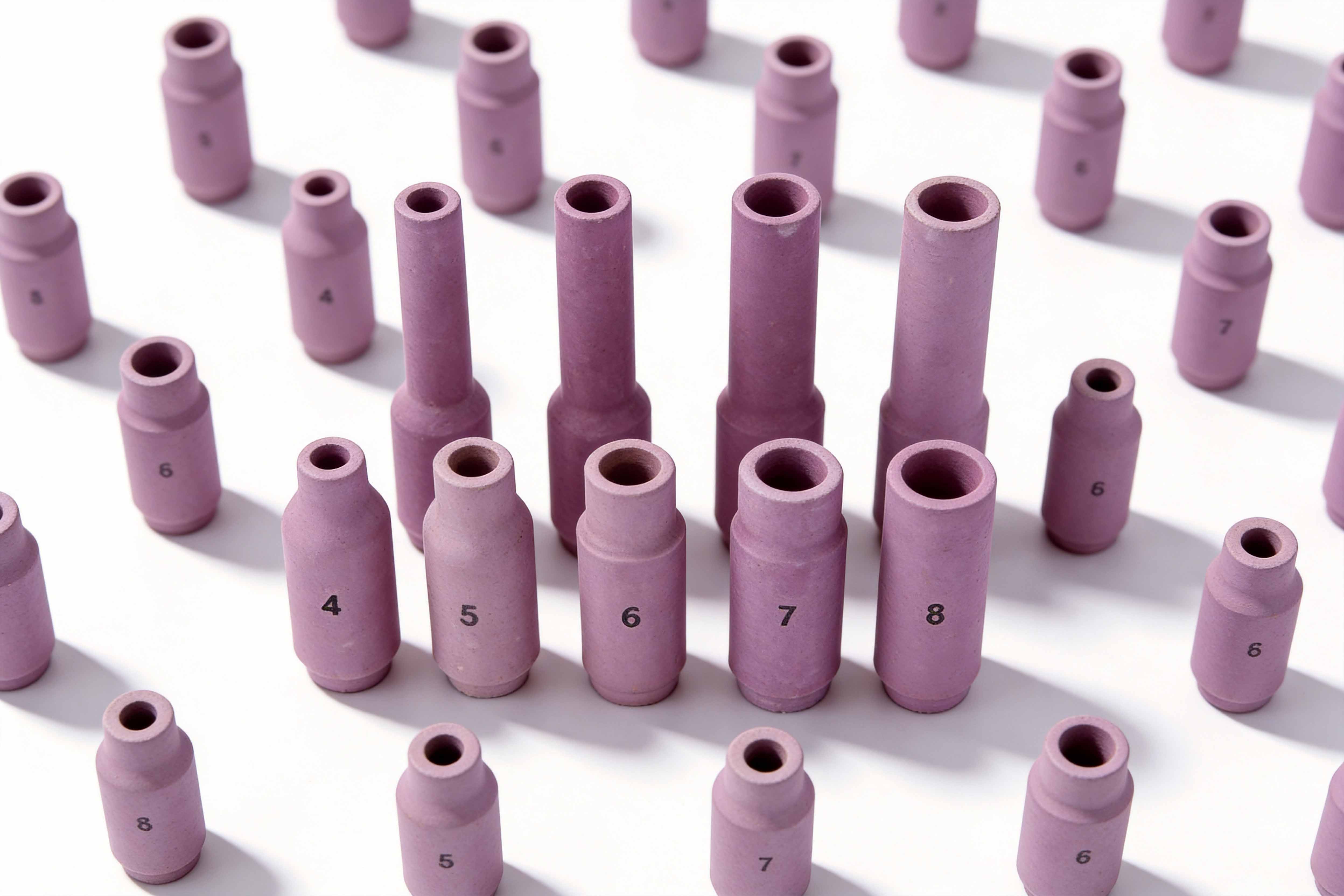
Gas Lens and Ceramic Nozzle
The gas lens is designed to improve shielding gas distribution around the welding area.
Compared with standard gas flow systems, a gas lens can create a smoother and more stable gas coverage zone. This is especially useful when welding sensitive materials that require excellent protection from atmospheric contamination.
The ceramic nozzle controls the direction and coverage of shielding gas.
Different nozzle sizes are selected depending on:
Welding position
Joint design
Material type
Required visibility
Choosing the correct nozzle helps welders achieve cleaner welds and better control.
How to Choose the Right TIG Welding Torch for Your Application
Choosing the correct TIG welding torch requires understanding your welding requirements instead of simply selecting the highest-rated model.
Many buyers make the mistake of choosing a torch based only on maximum amperage. However, the best TIG torch is the one that matches your actual working conditions.
Important selection factors include:
Welding current requirement
Duty cycle
Cooling method
Welding material
Working environment
Operator comfort
Torch flexibility
Consider Welding Current and Duty Cycle
The welding current rating is one of the most important specifications when selecting a TIG torch.
A torch designed for low amperage applications may overheat when used continuously at high current. On the other hand, selecting an oversized torch for small applications may increase weight and reduce operator comfort.
A simple selection principle:
Application Type
Recommended Torch Consideration
Light fabrication
Air cooled TIG torch
Repair welding
Flexible and lightweight TIG torch
Long production welding
Water cooled TIG torch
Heavy industrial welding
High duty cycle TIG torch
The duty cycle indicates how long a torch can operate within a specific period without overheating.
For example, industrial manufacturers performing continuous welding should prioritize higher duty cycle capability.
Selecting the correct current rating helps:
Prevent overheating
Extend torch life
Reduce maintenance frequency
Improve welding consistency
Choose Between Flexible Head and Standard Head TIG Torch
Another important decision is choosing between a flexible head TIG torch and a standard rigid head design.
Standard TIG Torch
Standard TIG torches provide excellent durability and are commonly used in general welding applications.
Advantages:
Strong structure
Reliable performance
Suitable for production welding
They are commonly used in workshops where welding positions are relatively predictable.
Flexible Head TIG Torch
A flexible head TIG torch allows the operator to adjust the torch angle according to the welding position.
Advantages include:
Better access in narrow spaces
Improved operator comfort
Easier welding in complex positions
Flexible head designs are popular among welders working on:
Pipe welding
Maintenance projects
Custom fabrication
Difficult-access joints
The choice depends on the welding environment. A production line may prefer a standard torch for durability, while a repair technician may benefit from a flexible design.
TIG Welding Torch Applications Across Different Industries
A TIG welding torch is widely used in industries where weld quality, appearance, and precision are critical.
Unlike processes designed mainly for speed, TIG welding is valued for control and accuracy.
Aerospace, Automotive and Precision Manufacturing
In aerospace and precision manufacturing, welding quality is extremely important because components often require strict dimensional accuracy and excellent surface appearance.
TIG welding torches are commonly used because they provide:
Precise heat control
Clean weld appearance
Excellent control on thin materials
Minimal weld contamination
Applications include:
Stainless steel components
Aluminum structures
Precision metal parts
Specialized fabrication
Automotive manufacturers also use TIG welding for applications where appearance and accuracy are important.
Examples include:
Exhaust components
Custom metal parts
Prototype manufacturing
Performance components
Stainless Steel, Aluminum and Specialty Metal Welding
One major advantage of TIG welding is its ability to handle many different metals.
Common TIG welding materials include:
Stainless steel
Aluminum
Copper
Titanium
Nickel alloys
Each material requires different welding techniques and torch settings.
For example:
Stainless steel welding requires excellent shielding protection to prevent oxidation and maintain appearance.
Aluminum welding requires precise heat control because aluminum transfers heat quickly.
Titanium welding requires extremely clean shielding conditions because it is sensitive to contamination.
A suitable TIG torch helps welders achieve better control across these challenging applications.
Air Cooled vs Water Cooled TIG Torch: Which One Is Better?
The choice between an air cooled TIG torch and a water cooled TIG torch depends mainly on welding intensity and application requirements.
Comparison
Air Cooled TIG Torch
Water Cooled TIG Torch
Cooling method
Natural air cooling
Circulating water cooling
Weight
Lighter
Slightly heavier
Maintenance
Easier
Requires cooling system maintenance
High current welding
Limited
Excellent
Long welding periods
Moderate
Better performance
Mobility
Excellent
Good
Industrial production
Suitable for lighter jobs
Ideal for continuous welding
For hobby welding, repair work, and short welding operations, an air cooled TIG torch is often sufficient.
For professional manufacturing environments requiring long welding cycles, a water cooled TIG torch usually provides better thermal management and longer service life.
The correct choice depends on balancing:
Welding power + working time + operator comfort + maintenance requirements
Common TIG Welding Torch Problems and How to Solve Them
Even though a TIG welding torch is designed for precision and durability, problems can still occur if the torch is incorrectly selected, poorly maintained, or used under unsuitable welding conditions. Understanding common TIG torch issues helps welders reduce downtime, improve weld quality, and extend equipment lifespan.
Many welding problems are not caused by the welding machine itself. In many cases, the torch, consumables, shielding gas system, or operating habits are the real reasons behind inconsistent results.
A professional welding operation should regularly check the condition of the TIG torch because small issues can quickly affect productivity.
Below are some common TIG torch problems and practical solutions.
1. TIG Torch Overheating During Welding
Torch overheating is one of the most common problems, especially during long welding operations.
When the torch temperature becomes too high, welders may experience:
Uncomfortable operation
Reduced torch lifespan
Damaged cable components
Faster consumable wear
Welding interruptions
The main causes of overheating include:
Cause
Solution
Using a low-amperage torch for heavy welding
Select a higher-capacity TIG torch
Exceeding duty cycle limits
Follow recommended operating parameters
Poor cooling performance
Check airflow or water circulation
Damaged cooling components
Replace worn parts
For continuous industrial welding, a water cooled TIG torch is usually a better choice because it can remove heat more efficiently during long welding cycles.
2. Unstable TIG Arc Performance
A stable arc is essential for producing clean and consistent TIG welds. When the arc becomes unstable, welders may notice irregular bead appearance or difficulty controlling the weld pool.
Common causes include:
Incorrect tungsten installation
Poor electrical connection
Contaminated tungsten electrode
Incorrect shielding gas flow
Damaged torch components
To improve arc stability:
Check tungsten electrode condition
Ensure the collet securely holds the tungsten
Clean the welding surface properly
Confirm correct shielding gas settings
Inspect torch cable connections
A stable TIG arc depends on the entire welding system working together.
3. Shielding Gas Problems
Shielding gas protection is one of the most important functions of a TIG torch. If shielding gas coverage is insufficient, the weld may become contaminated.
Signs of poor gas protection include:
Porosity inside the weld
Discoloration
Weak weld appearance
Surface contamination
Possible causes:
Damaged ceramic nozzle
Incorrect gas flow rate
Loose gas connections
Poor gas lens condition
Regular inspection of the gas nozzle and gas lens helps maintain consistent shielding performance.
For precision welding applications, especially stainless steel and titanium welding, proper shielding gas control is critical.
4. Damaged TIG Torch Cable
The TIG torch cable experiences continuous movement during welding. Over time, repeated bending, twisting, and pulling can cause damage.
Cable problems may result in:
Intermittent power connection
Gas leakage
Reduced torch flexibility
Increased operator fatigue
To extend cable life:
Avoid sharp bending
Store the torch properly
Do not pull the torch by the cable
Inspect connections regularly
For industrial users, choosing a TIG torch with a durable and flexible cable assembly can significantly reduce maintenance costs.
How to Extend TIG Welding Torch Service Life
A high-quality TIG welding torch can provide excellent performance for many years when properly maintained. However, even the best torch requires regular care.
Maintenance does not need to be complicated. Simple inspection routines can prevent many common failures.
Regularly Replace TIG Torch Consumables
Consumables are the parts that experience the most wear during welding.
Replacing worn consumables at the right time helps maintain:
Stable arc performance
Proper shielding gas coverage
Better weld appearance
Lower welding defects
Using damaged consumables often creates unnecessary welding problems.
Keep the TIG Torch Clean
Contamination is one of the biggest enemies of TIG welding quality.
Dust, metal particles, oil, and moisture can affect:
Gas flow
Electrical conductivity
Arc stability
A simple cleaning routine should include:
Removing welding residue
Checking nozzle condition
Cleaning connection points
Inspecting cable surfaces
A clean torch produces more consistent welding results.
Use the Correct TIG Torch for the Application
One of the easiest ways to extend torch life is choosing the correct model from the beginning.
Using a small air cooled torch for heavy industrial welding will shorten service life. Similarly, using a large industrial torch for small precision jobs may reduce operator comfort.
The right selection should consider:
Welding current
Duty cycle
Material type
Welding frequency
Working environment
Correct matching between torch capability and welding requirements prevents unnecessary stress on the equipment.
Why Professional Welders Prefer High Quality TIG Torches
Professional welders understand that equipment quality directly affects productivity. A TIG torch is not just a tool that holds a tungsten electrode; it is a precision instrument that controls the entire welding process.
A reliable TIG welding torch provides:
Better Welding Control
High-quality torch designs allow welders to maintain better control over:
Arc position
Heat input
Welding angle
Filler metal addition
This is especially important when welding thin materials or expensive components.
Improved Operator Comfort
Welding often requires long periods of repetitive movement. Torch weight, balance, and cable flexibility directly influence operator fatigue.
An ergonomic TIG torch helps:
Reduce hand pressure
Improve welding posture
Increase working efficiency
Comfort is not only about convenience. It directly affects welding consistency.
Lower Long-Term Operating Costs
A cheaper torch may appear attractive initially, but frequent replacement and maintenance can increase total ownership costs.
A durable TIG torch can reduce:
Replacement frequency
Production downtime
Consumable waste
Maintenance expenses
For professional welding companies, reliability is often more valuable than the lowest purchase price.
Future Trends of TIG Welding Torch Technology
The welding industry is continuously developing toward higher efficiency, better safety, and smarter manufacturing.
Future TIG welding torch improvements are expected to focus on:
1. Better Ergonomic Designs
Manufacturers are developing lighter and more comfortable TIG torches to reduce operator fatigue during long welding operations.
Future designs may include:
Improved handle shapes
Flexible cable systems
Better weight distribution
2. Advanced Cooling Solutions
As industries demand higher productivity, cooling technology will continue improving.
Future water cooled TIG torches may provide:
Better heat management
Longer continuous operation
Increased component lifespan
3. Integration With Automated Welding Systems
Automation is becoming increasingly important in manufacturing.
TIG torches designed for robotic and automated welding applications need:
High positioning accuracy
Stable performance
Long operating life
Reliable connections
This creates new opportunities for advanced TIG torch solutions in industrial production.
Conclusion: Choosing the Right TIG Welding Torch for Better Welding Performance
A TIG welding torch is one of the most important components in achieving high-quality welding results. From precision fabrication to industrial manufacturing, the right torch improves arc stability, operator comfort, productivity, and overall welding efficiency.
Understanding different TIG torch types, including air cooled TIG torches and water cooled TIG torches, helps buyers select the correct solution for their applications. Knowing important components such as tungsten electrodes, collets, gas lenses, and cables also makes maintenance easier and reduces unnecessary downtime.
For professional welders and industrial companies, investing in the right TIG welding torch is not simply purchasing a welding accessory. It is choosing a tool that directly influences weld quality, production efficiency, and long-term operating costs.
As welding technology continues to develop, TIG torches will become more ergonomic, durable, and adaptable to modern manufacturing requirements. Companies that choose reliable TIG torch solutions will be better prepared for the future of precision welding.
Frequently Asked Questions About TIG Welding Torches
FAQ 1: What is a TIG welding torch used for?
A TIG welding torch is used to perform Tungsten Inert Gas welding by creating a stable arc between a tungsten electrode and the workpiece. It delivers electrical current and shielding gas while allowing welders to create precise, clean, and high-quality welds.
FAQ 2: What is the difference between air cooled and water cooled TIG torches?
An air cooled TIG torch uses surrounding air to remove heat and is suitable for low to medium welding applications. A water cooled TIG torch uses circulating water to control heat and is better for high-current welding and long production cycles.
FAQ 3: How do I choose the right TIG welding torch?
Choosing the right TIG welding torch depends on welding current, duty cycle, material type, welding frequency, and working environment. Lightweight air cooled torches are suitable for smaller jobs, while water cooled models are better for industrial applications.
FAQ 4: How can I make my TIG welding torch last longer?
You can extend TIG torch life by regularly replacing consumables, keeping the torch clean, avoiding cable damage, using correct welding parameters, and selecting a torch that matches your application requirements.
FAQ 5: Why is my TIG torch overheating during welding?
A TIG torch may overheat because of excessive welding current, exceeding the duty cycle, insufficient cooling, or using a torch that is too small for the application. Selecting the correct torch capacity and maintaining the cooling system can prevent overheating.
This website uses cookies and similar technologies (“cookies”). Subject to your consent, will use analytical cookies to track which content interests you, and marketing cookies to display interest-based advertising. We use third-party providers for these measures, who may also use the data for their own purposes.
You give your consent by clicking "Accept all" or by applying your individual settings. Your data may then also be processed in third countries outside the EU, such as the US, which do not have a corresponding level of data protection and where, in particular, access by local authorities may not be effectively prevented. You can revoke your consent with immediate effect at any time. If you click on "Reject all", only strictly necessary cookies will be used.
 English
 简体中文
简体中文 العربية
 Français
 Русский
 Español
 Português
 Deutsch
 italiano
 日本語
日本語 한국어
한국어 Nederlands
 Tiếng Việt
 ไทย
ไทย Polski
 Türkçe
 ភាសាខ្មែរ
 Bahasa Melayu
 Filipino
 Bahasa Indonesia
 magyar
 Română
 Čeština
 Монгол
 қазақ
қазақ Српски
 हिन्दी
 فارسی
فارسی Slovenčina
 Slovenščina
 Norsk
Norsk Svenska
 українська
 Ελληνικά
 Suomi
Suomi Latine
 Dansk
Dansk বাংলা
বাংলা Hrvatski
 Afrikaans
 Gaeilge
 Eesti keel
 नेपाली
 Oʻzbekcha
 latviešu
 Azərbaycan dili
 Беларуская мова
 Bosanski
 Български
 ქართული
 Lietuvių