TIG torch overheating during aluminum welding occurs when heat generated around the tungsten electrode, torch head and power cable builds up faster than the torch can dissipate it. The most effective solutions are to use a properly rated TIG torch, stay within its duty cycle, optimize AC balance, maintain coolant circulation and use water cooling for sustained high-current welding.
Aluminum makes thermal management particularly important because it conducts heat rapidly. The American Welding Society (AWS) explains that aluminum's high thermal conductivity makes it more difficult to establish a weld pool and often requires welders to begin with relatively high heat before reducing current as the workpiece becomes hotter.
In addition, aluminum develops a refractory oxide layer. AWS reports that aluminum itself melts at about 660°C (1,220°F), while its oxide layer melts above 2,000°C (3,600°F+). AC TIG welding is therefore commonly used because the electrode-positive portion helps remove oxide while electrode-negative current provides penetration.
The result is a demanding thermal environment for the TIG torch.
For occasional low- or moderate-current work, a properly rated gas- or air-cooled torch may be sufficient. For long welds, high amperage and industrial aluminum fabrication, a water-cooled TIG torch usually provides greater thermal capacity and a higher practical duty cycle.
How Do You Stop a TIG Torch from Overheating on Aluminum?
The best way to prevent TIG torch overheating is to match the torch's AC amperage rating and duty cycle to the actual welding application.
For sustained high-current aluminum welding, use a water-cooled TIG torch and verify that coolant circulates correctly. Clean the aluminum before welding, avoid unnecessary electrode-positive AC time, use the correct tungsten diameter and maintain enough travel speed to prevent excessive heat buildup.
Cause of TIG Torch Overheating
Recommended Action
Why It Helps
Welding current too high
Use a higher-rated torch
Prevents thermal overload
Long continuous welds
Check duty cycle
Keeps operation within torch limits
Insufficient cooling capacity
Use a water-cooled TIG torch
Continuously removes heat
Too much electrode positive
Optimize AC balance
Reduces tungsten heating
Dirty or oxidized aluminum
Clean before welding
Reduces required cleaning action
Restricted coolant flow
Check pump, hoses and reservoir
Restores heat transfer
Undersized tungsten
Select correct electrode diameter
Improves electrode stability
Slow travel speed
Increase travel speed where appropriate
Reduces excessive localized heat
Torch becomes hotter over time
Check current and arc-on time
Identifies accumulated thermal load
Key takeaway: TIG torch overheating is usually a system problem rather than a single-component problem. Torch capacity, amperage, duty cycle, AC balance, tungsten, coolant flow and welding technique should be evaluated together.
Why Does a TIG Torch Overheat When Welding Aluminum?
A TIG torch becomes hot during aluminum welding mainly because of high current demand, AC electrode-positive heating, long arc-on time and insufficient cooling capacity.
Understanding each mechanism makes troubleshooting much easier.
1. Why Does Aluminum Require High Welding Current?
Aluminum has high thermal conductivity.
Heat introduced by the TIG arc spreads rapidly from the joint into the surrounding material instead of remaining concentrated around the weld pool.
AWS explains that this makes establishing an aluminum weld pool more difficult and is why aluminum is often welded relatively “hot and fast.” As welding continues and the workpiece absorbs heat, the welding current may need to be reduced.
This produces a distinctive aluminum TIG welding cycle:
High starting current → rapid puddle formation → steady travel → progressively reduced current as the workpiece heats up.
If an operator instead uses insufficient current and compensates by traveling extremely slowly, the torch may remain under load longer than necessary.
That can increase total thermal stress on both the torch and workpiece.
2. Why Does Aluminum Oxide Increase the Welding Challenge?
Aluminum naturally forms an oxide layer when exposed to air.
This oxide is important because its melting temperature is dramatically higher than that of the underlying aluminum.
Material
Approximate Melting Temperature
Aluminum base metal
660°C / 1,220°F
Aluminum oxide
Above 2,000°C / approximately 3,600–3,700°F
AWS describes the base aluminum melting at approximately 660°C while its oxide layer melts above 2,000°C.
This means the aluminum beneath the oxide may already be molten while the oxide layer remains solid.
That is one reason AC TIG is widely used for aluminum.
3. Why Does AC TIG Increase Heat at the Tungsten?
AC TIG alternates between:
Electrode Negative (EN) — primarily supports penetration and directs more useful heat into the workpiece.
Electrode Positive (EP) — provides oxide-cleaning action but places greater thermal stress on the tungsten.
AWS explains that electrode-positive current cleans the aluminum oxide while electrode-negative current melts the underlying aluminum.
INWELT similarly notes that too much EP can cause tungsten deformation, erosion and excessive balling because more heat is applied to the electrode during the positive portion of the cycle.
Therefore:
More EP = more cleaning, but also more tungsten heating.
That relationship is particularly important when troubleshooting TIG torch overheating during AC aluminum welding.
What Is the Best Way to Cool a TIG Torch for Aluminum Welding?
For sustained high-current aluminum TIG welding, a water-cooled TIG torch is usually the most effective solution because coolant continuously carries heat away from the torch head and cable assembly.
INWELT describes its water-cooled TIG torches as particularly suitable for welding above approximately 200 amps at high duty cycles. This should be treated as application guidance rather than a universal changeover point because individual torch designs and ratings differ.
Water cooling becomes increasingly valuable when:
welding amperage increases;
weld length increases;
arc-on time increases;
production cycles become repetitive;
operators need a smaller high-amperage torch;
an air-cooled torch becomes uncomfortable to hold;
cooling interruptions reduce productivity.
The correct question is therefore not simply:
“How many amps am I welding at?”
It is:
“What current am I using, for how long, and what AC duty cycle is my torch designed to handle?”
Should You Use an Air-Cooled or Water-Cooled TIG Torch for Aluminum?
Neither cooling method is automatically correct for every aluminum application.
An air- or gas-cooled TIG torch provides a simpler and more portable setup, while a water-cooled TIG torch provides substantially greater thermal management for demanding applications.
Factor
Air/Gas-Cooled TIG Torch
Water-Cooled TIG Torch
Cooling method
Ambient air / torch design
Circulating liquid coolant
Equipment complexity
Lower
Higher
Water cooler required
No
Yes
Portability
Excellent
Moderate
High-current capability
More limited
Higher
Continuous welding
More limited
Better
High duty cycle
More limited
Better
Torch size at high amperage
Usually larger
Can remain more compact
Maintenance
Simpler
Cooler and hoses require inspection
Ideal application
Repair, field and intermittent welding
Industrial and high-current welding
INWELT specifically positions water-cooled TIG torches for high-amperage, high-duty-cycle applications and notes that efficient around-the-head cooling helps provide compact torch dimensions and precise control.
When Is an Air-Cooled TIG Torch a Good Choice?
An air- or gas-cooled TIG torch can be appropriate when:
welding is intermittent;
amperage remains within the torch rating;
portability is important;
work is mainly repair or maintenance;
a water cooler would add unnecessary complexity.
When Should You Upgrade to a Water-Cooled TIG Torch?
Consider water cooling when:
the torch handle becomes uncomfortably hot;
the application requires long aluminum welds;
the torch frequently needs cooling breaks;
AC welding current approaches the torch's continuous thermal limit;
production requires a high duty cycle;
cable and torch-head temperatures increase excessively.
If overheating occurs regularly during normal production, repeatedly stopping to let an undersized torch cool is not an efficient long-term solution.
What Does TIG Torch Duty Cycle Mean?
TIG torch duty cycle describes how long the torch can operate at a specified current without exceeding its thermal design limit.
Duty-cycle ratings are typically expressed as a percentage.
For example:
Duty Cycle
Simplified Meaning
100%
Designed for continuous operation at the stated rating under specified test conditions
60%
Higher arc-on capability than a 35% torch but not continuous at the stated rating
35%
Intended for significantly more intermittent operation at the stated rating
Duty cycle is extremely important because amperage alone does not describe thermal performance.
Imagine two applications:
Application A: 180 A for short intermittent welds.
Application B: 180 A for long repetitive aluminum seams.
Both use the same amperage, but Application B places substantially more thermal load on the torch.
Therefore:
Never select a TIG torch by maximum amperage alone. Always evaluate amperage and duty cycle together.
This is particularly important for production aluminum welding.
How Does AC Balance Affect TIG Torch Temperature?
AC balance controls the relationship between electrode-negative penetration and electrode-positive cleaning during aluminum TIG welding. Using more EP than necessary increases heat at the tungsten and can contribute to overheating.
INWELT explains that increasing the EN portion of the AC cycle provides several benefits, including reduced tungsten erosion and reduced balling. Conversely, increasing EP provides additional cleaning but puts more heat into the tungsten.
For modern inverter equipment welding properly cleaned aluminum, INWELT identifies approximately 75% EN as a useful typical starting point, while older or dirtier material may require more cleaning and very clean aluminum may allow EN values closer to 80%.
This is a starting point—not a universal specification.
Different welding machines may also express AC balance differently, so always check the power source manufacturer's instructions.
What Happens If There Is Too Much EP?
Excessive electrode-positive time may cause:
tungsten erosion;
excessive tungsten balling;
unstable arc behavior;
excessive etched or cleaned area;
unnecessary electrode heating.
If the weld requires unusually high EP just to achieve an acceptable puddle, inspect the aluminum surface before making further parameter changes.
The material may simply need better mechanical cleaning.
Can Cleaning Aluminum Reduce TIG Torch Overheating?
Yes, indirectly. Clean aluminum requires less oxide-removal work from the AC arc, allowing the operator to avoid unnecessary electrode-positive cleaning action and the additional tungsten heating associated with it.
AWS recommends removing grease and contamination and then using a clean stainless-steel wire brush to remove aluminum oxide before welding. A brush used on steel should not be reused on aluminum because it can introduce contamination.
INWELT likewise recommends pre-cleaning aluminum before adjusting AC balance, noting that effective mechanical cleaning can reduce the amount of EP required during welding.
What Is the Correct Aluminum Cleaning Sequence?
A practical preparation sequence is:
Remove oil, grease and surface contamination with an appropriate cleaning method.
Allow the material to dry.
Remove oxide using a dedicated stainless-steel brush or suitable preparation method.
Keep aluminum-specific cleaning tools separate from carbon-steel tools.
Keep filler metal clean and dry.
Weld soon after preparation when practical.
The goal is not merely cosmetic cleanliness.
Cleaner aluminum helps produce a more stable welding condition with less reliance on aggressive EP cleaning.
How Can Welding Parameters Reduce TIG Torch Heat?
The goal should not be to reduce amperage as far as possible.
An aluminum weld made with insufficient current may force the operator to move too slowly, increasing arc-on time and total heat exposure.
Instead, optimize the complete welding cycle.
Use Enough Current to Establish the Puddle Quickly
Because aluminum conducts heat away rapidly, the beginning of a weld often requires relatively high energy.
AWS notes that aluminum's thermal conductivity can make initial fusion difficult and that weld parameters often need to decrease later as heat accumulates in the workpiece.
A foot pedal or remote amperage control is therefore particularly useful for manual aluminum TIG welding.
A practical sequence is:
Establish the puddle quickly → maintain consistent travel → reduce current as the workpiece heat-soaks.
Avoid Unnecessarily Slow Travel
Once a stable puddle has formed, lingering in one location increases:
base-metal heat buildup;
torch arc-on time;
distortion;
weld width;
burn-through risk.
Aluminum generally rewards controlled, decisive movement more than prolonged heating.
Avoid Excessive Arc Length
An unnecessarily long arc can reduce control and increase the area affected by the arc.
Maintain an appropriate electrode-to-work distance while preventing tungsten contamination.
Use Remote Amperage Control When Appropriate
For manual aluminum welding, a foot pedal or fingertip control allows the welder to compensate for changing workpiece temperature.
This is valuable because the current required at the start of an aluminum weld may be greater than the current required later in the same joint.
Does Tungsten Selection Affect TIG Torch Overheating?
Yes. Tungsten type, diameter and AC balance all affect electrode temperature and arc stability. An undersized tungsten or excessive EP can overheat the electrode even when the torch itself is otherwise correctly selected.
Modern aluminum TIG applications commonly use alloyed tungsten electrodes such as lanthanated, ceriated or zirconiated types depending on the welding machine and application.
AWS notes that modern aluminum GTAW commonly uses water-cooled torches with electrodes such as zirconiated or ceriated tungsten, while inverter technology allows electrode selection across a wide range of material thicknesses.
The tungsten diameter should match:
AC amperage;
electrode type;
AC balance;
waveform;
power-source recommendations.
What Are the Signs of an Overheated Tungsten?
Common symptoms include:
excessive balling;
deformed electrode tip;
rapid erosion;
unstable arc;
tungsten splitting;
difficulty directing the arc.
INWELT specifically identifies excessive EP as a cause of tungsten deformation and erosion.
Do not automatically increase tungsten size without determining why the electrode is overheating.
The underlying cause may be excessive EP, excessive current or an unsuitable torch configuration.
Why Is My Water-Cooled TIG Torch Still Getting Hot?
A water-cooled TIG torch can still overheat if coolant flow is restricted or if the torch is operated beyond its rated current and duty cycle.
Water cooling only works when heat can move efficiently through the entire circuit.
Check:
coolant level;
coolant condition;
pump operation;
inlet and return hoses;
hose kinks;
damaged connectors;
radiator airflow;
blocked internal passages;
actual welding current;
torch duty-cycle rating.
A water-cooled torch that suddenly becomes much hotter than it normally does should be investigated before continuing high-current welding.
A sudden temperature change can indicate a coolant circulation problem.
What Are the Most Common Signs of TIG Torch Overheating?
A torch may be operating outside its preferred thermal range if you notice:
the handle becomes excessively hot;
cable temperature rises significantly;
tungsten deteriorates unusually quickly;
torch components distort or discolor;
coolant temperature becomes abnormal;
coolant return flow decreases;
the arc becomes unstable;
consumables fail repeatedly;
welding must be interrupted frequently to cool the torch.
The first diagnostic question should always be:
Is the torch operating within its rated AC amperage and duty cycle?
If it is, investigate coolant flow, cable connections, consumables, AC balance and welding technique.
How Do You Troubleshoot an Overheating TIG Torch Step by Step?
Use this sequence before replacing components unnecessarily.
Diagnostic Step
What to Check
Corrective Action
1. Verify amperage
Actual AC current
Compare with torch AC rating
2. Verify duty cycle
Actual arc-on duration
Stay within rated thermal capacity
3. Inspect cooling
Coolant level and circulation
Correct restrictions or pump issues
4. Check AC balance
Excessive EP
Increase EN when weld condition allows
5. Inspect tungsten
Diameter and condition
Use correct electrode
6. Check aluminum
Oxide, grease, contamination
Clean before welding
7. Evaluate technique
Travel speed and arc length
Reduce unnecessary arc time
8. Check connections
Cable and power connections
Tighten or replace damaged components
9. Evaluate torch capacity
Repeated overheating under normal use
Upgrade cooling or torch rating
Step 1: Check the AC Rating, Not Just the DC Rating
A torch may have different AC and DC ratings.
Because aluminum is commonly welded using AC GTAW, the AC specification is the relevant figure.
Step 2: Measure Actual Arc-On Time
A torch that survives occasional 180 A welds may behave very differently when operated near 180 A for long production seams.
Step 3: Check Coolant Flow
If using a water-cooled torch, confirm that coolant is actually circulating.
Step 4: Check AC Balance
Too much EP increases electrode heating.
Step 5: Inspect the Tungsten
Excessive balling or erosion provides useful evidence of thermal imbalance.
Step 6: Inspect the Workpiece
Remove contamination and oxide rather than asking the arc to perform all cleaning electrically.
Step 7: Upgrade the Torch When Necessary
If a production application consistently operates close to the torch's thermal limit, the long-term solution is usually a more suitable torch—not repeated cooling interruptions.
What TIG Torch Should You Choose for Aluminum Welding?
The best TIG torch for aluminum welding is one whose AC amperage rating, duty cycle and cooling method exceed the requirements of the actual welding cycle with an appropriate operating margin.
Consider at least these factors:
Selection Factor
Why It Matters
AC amperage rating
Aluminum is commonly TIG welded with AC
Duty cycle
Determines thermal endurance
Cooling method
Determines heat-removal capability
Tungsten capacity
Must support the welding current
Torch head size
Affects accessibility
Cable length
Affects operator movement
Cable flexibility
Affects ergonomics
Connector compatibility
Must match the TIG power source
Consumable availability
Affects maintenance and operating cost
For demanding industrial aluminum welding, the preferred configuration is often:
Water-Cooled TIG Torch + Appropriate AC Rating + High Duty Cycle + Reliable Cooling Unit
Which INWELT TIG Torch Is Suitable for Aluminum Welding?
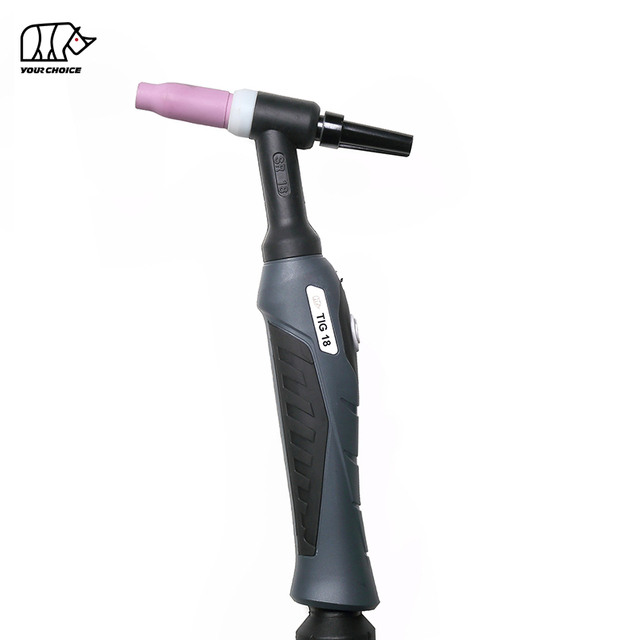
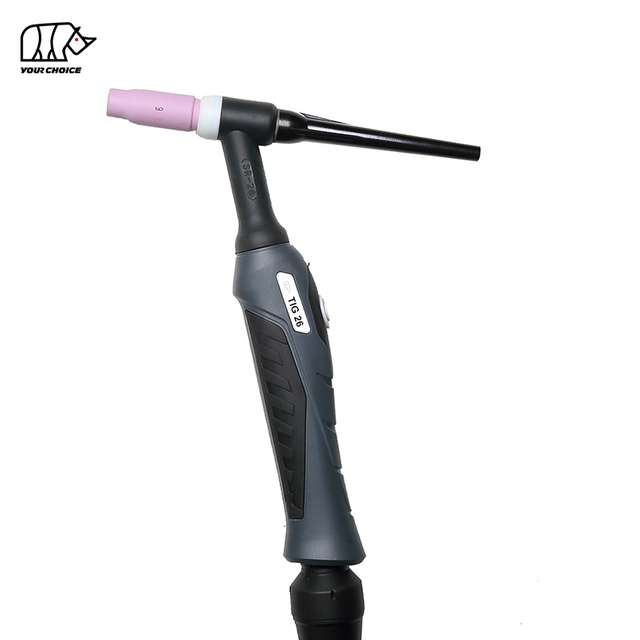
INWELT offers both gas-cooled and water-cooled WP-series TIG welding torches for different amperage and duty-cycle requirements.
Two useful examples are the INWELT WP18 and INWELT WP26.
INWELT WP18 vs. WP26 for Aluminum Welding
Specification
INWELT WP18
INWELT WP26
Cooling
Water cooled
Gas cooled
AC rating
240 A
150 A
AC duty cycle
100%
35%
DC rating
320 A
180 A
Electrode capacity
0.5–4 mm
0.5–4 mm
Standard lengths
4 m / 8 m
4 m / 8 m
Best fit
High-current, extended-duty welding
Intermittent and moderate-current welding
INWELT's current WP18 specifications list 240 A AC at 100% duty cycle and 320 A DC at 100% duty cycle with water cooling.
The WP26 is gas cooled and currently specified at 150 A AC and 180 A DC at 35% duty cycle.
This comparison demonstrates why amperage alone is not enough.
A torch rated for 150 A AC at 35% duty cycle and a torch rated for 240 A AC at 100% duty cycle serve very different production requirements.
INWELT lists the WP18 as a water-cooled torch with 4 m and 8 m cable options, a 0.5–4 mm electrode range and 240 A AC / 320 A DC ratings at 100% duty cycle.
For aluminum fabricators experiencing repeated torch overheating, moving to a correctly matched water-cooled configuration can provide a more sustainable solution than simply reducing welding output.
When Is the INWELT WP26 a Practical Choice?
The INWELT WP26 gas-cooled TIG welding torch is better suited to applications where portability and equipment simplicity are priorities and welding remains within its rated thermal capacity.
Typical use cases include:
intermittent TIG welding;
maintenance;
fabrication;
repair work;
moderate-current aluminum welding;
applications where a separate water cooler is undesirable.
INWELT currently specifies the WP26 at 150 A AC and 180 A DC at 35% duty cycle.
For applications requiring longer continuous welds or substantially higher thermal capacity, the WP18 water-cooled configuration is the more appropriate direction.
How Can Distributors and Welding Brands Select the Right TIG Torch?
For welding equipment distributors, wholesalers and private-label brands, torch selection should consider not only maximum amperage but also the applications of the final customer.
A distributor supplying automotive repair shops may require a different product mix from one supplying aluminum fabrication plants.
Useful application data includes:
AC and DC amperage requirements;
expected duty cycle;
air/gas or water cooling preference;
cable length;
electrode range;
connector type;
torch-head configuration;
switch requirements;
target industry;
packaging and branding requirements.
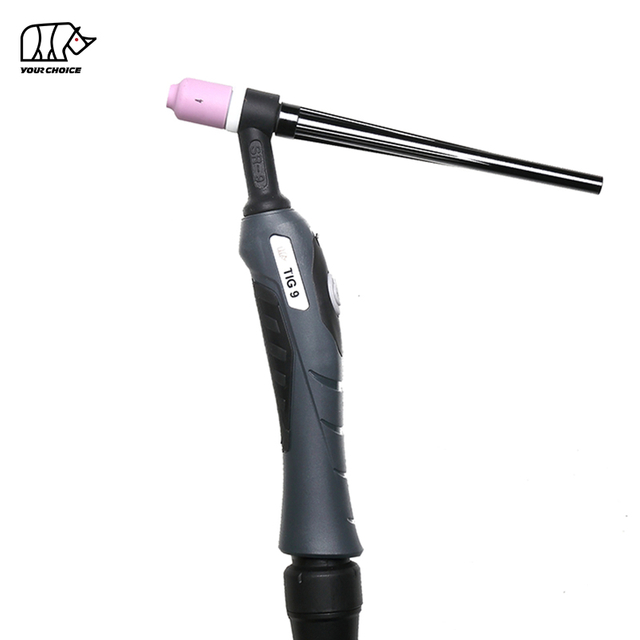
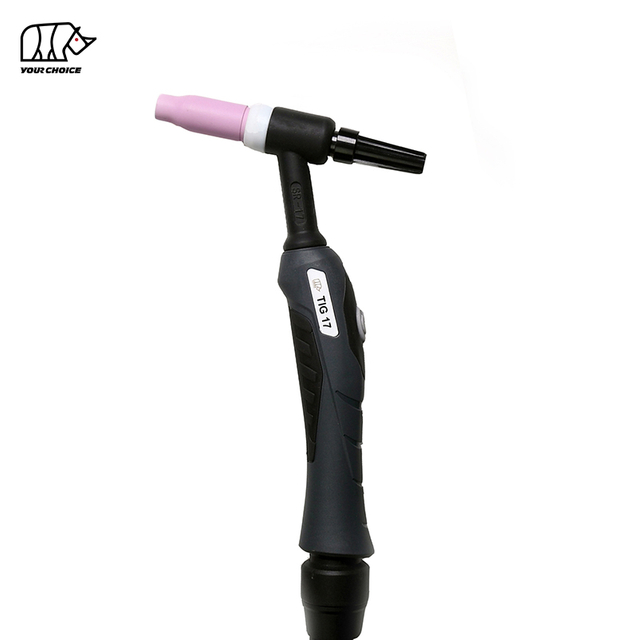
INWELT's TIG torch manufacturing program currently includes WP9, WP17, WP18 and WP26 series products and supports customization and OEM/ODM services for professional buyers.
Looking for an OEM TIG Welding Torch Manufacturer?
INWELT provides TIG welding torch solutions for:
welding equipment brands;
importers;
distributors;
wholesalers;
manufacturers;
industrial welding suppliers.
Available options include gas-cooled and water-cooled TIG torch configurations, different cable lengths, connector options, switches and customized branding.
For a more accurate recommendation, provide the required AC amperage, duty cycle, cable length, connection type and target welding application when requesting a quotation.
Explore INWELT TIG Welding Torches
Request an OEM/ODM TIG Torch Sample or Bulk Quote
FAQ About TIG Torch Overheating During Aluminum Welding
Why Does My TIG Torch Get Extremely Hot When Welding Aluminum?
A TIG torch can become extremely hot during aluminum welding because aluminum's high thermal conductivity often requires relatively high welding current, while the electrode-positive portion of AC TIG places additional thermal load on the tungsten. Excessive current, long arc-on periods, high EP and insufficient cooling can all increase torch temperature.
At What Amperage Should I Use a Water-Cooled TIG Torch?
There is no universal changeover amperage because TIG torch designs and duty cycles vary.
INWELT identifies water-cooled TIG torches as particularly suitable for amperages above approximately 200 A at high duty cycles, but the actual decision should be based on the manufacturer's AC rating, duty cycle and the real arc-on time of the application.
Is a Water-Cooled TIG Torch Better for Aluminum?
For high-current, long-duration or production aluminum welding, a water-cooled TIG torch generally provides better thermal management.
For lower-current or intermittent welding, a correctly rated air- or gas-cooled torch may be simpler and more economical.
What AC Balance Should I Use for Aluminum TIG Welding?
For many modern inverter TIG machines and properly cleaned aluminum, approximately 75% EN can be a useful starting point.
The exact setting depends on the power source, material condition and amount of cleaning required. INWELT notes that dirtier material may require more EP, while very clean aluminum may permit EN values closer to 80%.
Does More Electrode Positive Make a TIG Torch Hotter?
Yes.
Increasing electrode-positive time increases oxide-cleaning action but also puts more heat into the tungsten. Too much EP can cause tungsten erosion, deformation, excessive balling and an unstable arc.
Can Dirty Aluminum Cause TIG Torch Overheating?
Dirty aluminum can contribute indirectly.
Heavy oxide or contamination may require greater EP cleaning action, increasing heat at the tungsten. Proper mechanical cleaning reduces the amount of cleaning that must be performed electrically by the AC arc.
Why Is My Water-Cooled TIG Torch Still Getting Hot?
Possible causes include insufficient coolant, poor circulation, kinked hoses, a failing pump, restricted cooling passages, excessive welding current or operation beyond the torch's rated duty cycle.
If the temperature changes suddenly compared with normal operation, inspect coolant circulation before continuing high-current welding.
What Is the Best TIG Torch for High-Current Aluminum Welding?
For high-current aluminum TIG welding, choose a torch with an adequate AC amperage rating, high duty cycle and water cooling.
For example, the INWELT WP18 is specified as a water-cooled TIG torch rated for 240 A AC at 100% duty cycle, making it suitable for demanding aluminum applications where thermal capacity is important.
Conclusion: How Can You Prevent TIG Torch Overheating During Aluminum Welding?
Preventing TIG torch overheating during aluminum welding requires more than simply lowering the welding amperage.
The most effective thermal-management strategy combines:
For intermittent and moderate-current welding, a correctly sized gas- or air-cooled TIG torch can provide an economical and portable solution.
For sustained high-current aluminum fabrication, a water-cooled TIG torch provides substantially greater thermal capacity and can reduce the need for frequent cooling interruptions.
The most important selection rule is simple:
Always compare the actual AC welding current and production duty cycle with the TIG torch manufacturer's rated specifications.
For demanding aluminum applications, the INWELT WP18 provides water cooling with a published rating of 240 A AC at 100% duty cycle, while the gas-cooled WP26 is specified at 150 A AC at 35% duty cycle.
These specifications illustrate why choosing the correct cooling system and duty cycle is just as important as choosing the amperage rating.
INWELT supplies WP-series TIG welding torches for welding equipment brands, distributors, wholesalers and industrial users, with OEM/ODM options for different cable lengths, connections and application requirements.
Need help selecting a TIG torch for aluminum welding?
Provide your required AC amperage, duty cycle, welding duration, existing torch model, cable length and connector requirements, and INWELT can recommend a suitable TIG torch configuration.
This website uses cookies and similar technologies (“cookies”). Subject to your consent, will use analytical cookies to track which content interests you, and marketing cookies to display interest-based advertising. We use third-party providers for these measures, who may also use the data for their own purposes.
You give your consent by clicking "Accept all" or by applying your individual settings. Your data may then also be processed in third countries outside the EU, such as the US, which do not have a corresponding level of data protection and where, in particular, access by local authorities may not be effectively prevented. You can revoke your consent with immediate effect at any time. If you click on "Reject all", only strictly necessary cookies will be used.
 English
 简体中文
简体中文 العربية
 Français
 Русский
 Español
 Português
 Deutsch
 italiano
 日本語
日本語 한국어
한국어 Nederlands
 Tiếng Việt
 ไทย
ไทย Polski
 Türkçe
 ភាសាខ្មែរ
 Bahasa Melayu
 Filipino
 Bahasa Indonesia
 magyar
 Română
 Čeština
 Монгол
 қазақ
қазақ Српски
 हिन्दी
 فارسی
فارسی Slovenčina
 Slovenščina
 Norsk
Norsk Svenska
 українська
 Ελληνικά
 Suomi
Suomi Latine
 Dansk
Dansk বাংলা
বাংলা Hrvatski
 Afrikaans
 Gaeilge
 Eesti keel
 नेपाली
 Oʻzbekcha
 latviešu
 Azərbaycan dili
 Беларуская мова
 Bosanski
 Български
 ქართული
 Lietuvių