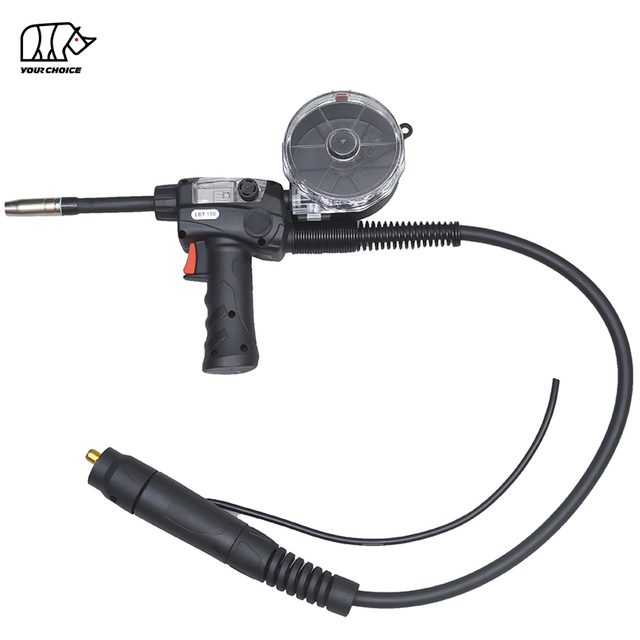
If you've spent any time in a fabrication shop over the past few years, you've likely noticed a shift. Walk through any modern welding facility—whether they're building aluminum boats, fabricating automotive components, or assembling railcars—and you'll see more welders reaching for push-pull MIG guns than ever before.
This isn't just a passing trend. According to recent market research, the global push-pull MIG welding guns market was valued at US$ 457 million in 2024 and is projected to reach US$ 696 million by 2031, growing at a compound annual growth rate of 6.2% during the forecast period. In 2024 alone, global sales reached 950,000 units, with an average selling price of $480.
But what's driving this migration away from traditional MIG setups? Why are shop owners and welding professionals increasingly willing to invest in more sophisticated push-pull systems?
The answer lies in a fundamental challenge that has plagued welders for decades: wire feeding reliability, particularly with soft alloys like aluminum. As one industry expert puts it, "If you've ever wrestled with 'bird-nesting' while trying to weld aluminum, you know that standard MIG welding has its limits."
This comprehensive guide explores the technical advantages, economic benefits, and practical applications that are convincing more shops to make the switch to push-pull MIG guns.
Understanding Push-Pull MIG Gun Technology
Before diving into why shops are switching, it's essential to understand what makes push-pull technology different from standard MIG systems.
The Fundamental Difference from Standard MIG Systems
In a standard MIG (Push) setup, the wire feeder is located inside the welding machine or at the feeder control. It uses a single set of drive rolls to push the welding wire through a liner and out the torch. This system works perfectly for rigid wires like steel and stainless steel over relatively short distances—typically 3 to 5 meters.
However, as one welding publication explains, "Because you are pushing a soft or thin wire through a flexible cable, the wire can kink or bunch up—known as 'bird-nesting'—if there is even slight resistance."
A push-pull welding system, by contrast, utilizes two sets of synchronized motors:
By having a motor at the torch end, the system maintains constant tension on the wire. The "push" motor provides the bulk of the force, while the "pull" motor ensures the wire stays taut and feeds at a perfectly consistent rate.
How the Dual-Motor System Works
The beauty of the push-pull system lies in its synchronization. As described by INWELT in their product literature, "Push-pull MIG systems maintain constant wire tension between two sets of drive rolls: one set in the feeder and one set in the gun."
This dual-motor approach solves several common feeding problems:
Wire slippage at the drive rolls
Erratic arc performance
Wire burning back to the contact tip
Cold lap issues
Bird nesting at the feeder rolls
The Aluminum Factor: Why Soft Wires Demand Push-Pull Technology
The Unique Challenges of Feeding Aluminum Wire
The single biggest reason shops switch to push-pull systems is aluminum. Aluminum wire is significantly softer than steel and presents unique feeding challenges.
"Because it has a really low columnar strength—which is the material's ability to resist bending or buckling when force is applied—aluminum has a lower tolerance to being pushed from a traditional wire feeder and can only be pushed a certain distance before it starts bird-nesting anywhere from contact tip to the drive roll."
In practical terms, this means that with a standard push-only system, aluminum wire:
Buckles under pressure when resistance is encountered
Shaves and creates metal debris inside the liner
Produces erratic feeding that leads to inconsistent weld quality
Limits cable length to just a few meters
What Wire Diameters Can You Run?
With a push-pull system, welders can reliably use thinner aluminum wires over much longer distances. As one manufacturer notes, "With a push-pull system, you can use thinner aluminum wires (like 0.8 mm or 1.0 mm) over much longer distances."
This capability is crucial for applications requiring:
Key Components and Design Variations
Air-Cooled vs. Water-Cooled Systems
Push-pull guns are available in both air-cooled and water-cooled configurations, each suited for different applications.
Air-cooled systems:
Rely on ambient air and shielding gas to dissipate heat
Better for lower amperages (150-600 amps) with shorter arc-on time
Generally lighter and more portable
Suitable for most general fabrication work
Water-cooled systems:
Pump cooling solution through hoses inside the power cable
Ideal for high-amperage applications (300-600 amps)
Support longer arc-on times and higher duty cycles
Essential for heavy industrial applications
For example, INWELT's water-cooled MIG gun offers a duty cycle of 100% at 450 amps, making it suitable for demanding industrial applications.
Handle Configurations: Pistol Grip vs. Standard Grip
Push-pull guns come with different handle designs to accommodate operator preference and application requirements.
Pistol grip handles:
Shaped like the grip of a pistol
Designed for comfort and better ergonomics
Trigger located in an easy-to-reach position
Popular for heavy-duty applications
Standard-style grips:
Straight, cylindrical handle resembling a torch or stick
More linear design
Preferred by some operators for specific applications
As one industry source notes, "Ultimately, the choice of a pistol or standard-style grip comes down to operator preference and the needs of the application."
Extended Reach Without Compromising Quality
Cable Lengths Up to 50 Feet
One of the most significant advantages of push-pull systems is the ability to work far from the power source without dragging the machine along.
"This push-pull system creates consistent tension on the wire, which ultimately prevents bird-nesting. It also allows for cables up to 50' long—a significant benefit that means the operator doesn't have to reposition equipment to get the weld completed."
This extended reach translates directly into productivity gains:
Less time moving equipment
Fewer interruptions in long welds
Ability to work around large workpieces
Improved workflow in large fabrication shops
INWELT WELDING, a leading manufacturer, emphasizes that "These guns have a variety of uses within the industry since they are designed to fit many needs. This tool has become a welders favorite for providing extended reach in your operation."
Applications Requiring Long Reach
Industries that particularly benefit from extended reach include:
Shipbuilding: Working on large hull sections
Railcar manufacturing: Welding along lengthy car bodies
Structural fabrication: Moving around large beams and columns
Container and tank fabrication: Reaching inside and around vessels
Eliminating Wire Feeding Problems
Solving the Bird-Nesting Nightmare
Bird-nesting—that frustrating tangle of wire at the drive rolls—is perhaps the most recognizable failure mode in MIG welding. Push-pull systems virtually eliminate this problem.
As described by INWELT, these systems solve "common feeding problems, such as wire slippage, erratic arc performance, wire burning back to the contact tip, cold lap and bird nesting at the feeder rolls."
The economic impact is significant:
Reduced downtime from clearing jams
Less wasted wire from tangles and burnbacks
Fewer consumable replacements (contact tips, liners)
Higher operator productivity and less frustration
Consistent Arc Performance
When wire feeds consistently, arc performance improves dramatically. Welders experience:
One Translas publication notes, "The synchronized motors prevent wire slippage, leading to a more stable arc and cleaner beads."
Productivity Gains in High-Volume Applications
Less Downtime, More Arc Time
In production environments, every minute of downtime costs money. Push-pull systems deliver productivity gains through:
Fewer interruptions:
No stopping to clear bird nests
Reduced need for tip changes
Less time troubleshooting feeding issues
Longer continuous welds:
Operators can complete longer passes without stopping
Fewer starts and stops mean better weld quality
Reduced risk of restart defects
As one industry source emphasizes, "Operators need continuous welds with minimal starts and stops, so having the ability to maintain the weld with the increased cable length improves productivity."
The Economics of Reduced Waste
Beyond time savings, push-pull systems reduce material waste:
Wire savings: Less wire lost to tangles and burnbacks
Contact tip savings: Fewer tips destroyed by erratic feeding
Gas savings: Consistent starts reduce gas waste
Digital gas control technology, available on some systems, "can save up to $650 to $1,300 per year, per machine in gas waste in typical use cases."
Superior Results with Aluminum and Soft Alloys
Weld Quality Improvements
The consistent wire feed of push-pull systems translates directly into better weld quality:
Smoother bead appearance: Consistent wire feed produces uniform deposition
Fewer defects: Reduced risk of cold lap, lack of fusion, and porosity
Better starts: Controlled wire presentation at arc initiation
New Craft Mode technology, available on aluminum system, "uses two overlapping pulsed currents to better control heat input, provide smoother metal transfer with less spatter, and create a TIG-like bead appearance without excess gun manipulation."
Working with Thinner Wires
Push-pull systems excel with thin aluminum wires (0.8mm to 1.2mm), enabling:
Welding of thin-gauge materials
Better heat control on heat-sensitive alloys
Improved appearance on visible welds
Reduced distortion in thin sections
Versatility Across Multiple Alloys
Beyond Aluminum: Stainless Steel and Non-Ferrous Metals
While aluminum is the primary driver for push-pull adoption, these systems excel with other challenging materials as well. According to market research, push-pull guns are "suitable for precision welding of aluminum alloys, stainless steel, and non-ferrous metals."
This versatility means shops can:
Standardize equipment across multiple applications
Reduce training requirements with consistent equipment
Handle specialty jobs that require exotic alloys
Respond flexibly to changing customer demands
Industry Applications Driving Adoption
Automotive and Transportation
Electric Vehicle Manufacturing
The rise of electric vehicles has created new welding challenges and opportunities. Lightweight construction with aluminum is central to EV design, and push-pull systems are essential for reliable aluminum welding.
Market research confirms that major downstream customers include Volkswagen and Tesla among automotive manufacturers adopting push-pull technology.
EV battery enclosures, structural components, and body panels all require:
Consistent, high-quality aluminum welds
Reliable feeding over longer distances
Minimal spatter for clean appearance
Rail Transit Applications
Railcar manufacturing represents a significant market for push-pull guns, with applications including:
The market research specifically identifies rail transit as a key application segment, noting its contribution to market revenue.
Shipbuilding and Marine Fabrication
Building Aluminum Boats and Vessels
Shipbuilding is one of the primary industries relying on push-pull technology. Marine fabricators work with:
Large aluminum hull sections
Extended weld lengths requiring continuous passes
Challenging access situations
Offshore and Marine Repair
The marine repair sector also benefits from push-pull technology:
Shipboard repairs in confined spaces
Offshore platform maintenance
Port facility fabrication
Heavy Equipment and Engineering Machinery
Construction and Mining Equipment
Heavy equipment manufacturers face demanding welding requirements:
Market research identifies Sany Heavy Industry among major downstream customers, along with various machinery manufacturers adopting push-pull technology.
Agricultural Machinery
Farm equipment fabrication shares similar challenges:
Long weld seams on frames and implements
Aluminum components for weight reduction
High-volume production requirements
Aerospace Applications
Precision Welding Requirements
Aerospace manufacturing demands the highest levels of quality and consistency. Push-pull systems contribute to:
Consistent wire feeding for critical welds
Reduced defects in safety-critical components
Ability to work with aerospace alloys
Boeing is specifically mentioned as a downstream customer in market research, highlighting the technology's acceptance in the most demanding applications.
General Fabrication and Job Shops
Versatility for Mixed Production
Even smaller shops are increasingly adopting push-pull technology because:
One system does it all: Handle steel, stainless, and aluminum with the same gun
Future-proofing: Be ready for aluminum jobs when they come in
Quality differentiation: Offer superior weld quality to customers
As one manufacturer notes, push-pull guns "have a variety of uses within the industry since they are designed to fit many needs."
Comparing Push-Pull to Alternatives
Push-Pull vs. Standard MIG (Push Only)
The most fundamental comparison is between push-pull systems and traditional push-only MIG guns.
The table clearly shows that while standard MIG remains cost-effective for steel-dominant shops, push-pull systems offer compelling advantages for anyone working with aluminum or requiring extended reach.
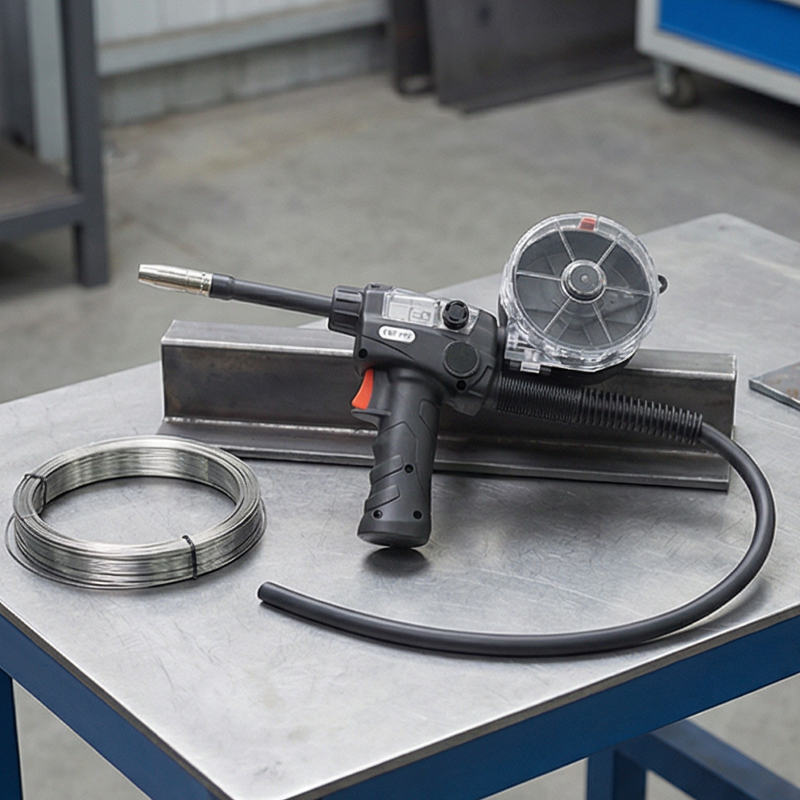
Push-Pull vs. Spool Guns
Spool guns represent another alternative for aluminum welding, placing a small spool directly on the gun.
Advantages of Spool Guns
Extreme reach: No limit on distance from power source
Short wire path: Minimal feeding distance
Simplicity: No complex push-pull synchronization
Limitations of Spool Guns
Small spool capacity: 1-2 pound spools require frequent changes
Weight on the gun: Added mass at the torch increases fatigue
Access limitations: Bulkier design restricts access in tight spaces
As one industry source explains, "While both types work well for aluminum applications, spool gun operators have to change the roll of wire after every pound used, whereas a push-pull system can accommodate much larger spools. When an operator is using several pounds of aluminum wire per day, the time needed to change spools can add up."
When Each Makes Sense
Welding's product literature illustrates the hierarchy:
Push-Pull Gun: "Best performance for production aluminum welding - Use larger spools"
Spool Gun: "Better feeding with integrated 2 lb. spools"
Push Gun: "Good for occasional aluminum work"
For high-volume aluminum production, push-pull systems are clearly the superior choice.
Push-Pull vs. Flux-Cored Guns
Flux-cored guns serve a different purpose entirely, designed for self-shielded processes used outdoors or in high-deposition applications. These aren't direct competitors but rather complementary tools for different applications.
Real-World Experiences: What Welders Are Saying
Success Stories and Common Challenges
While push-pull systems offer significant advantages, they're not without their learning curve. A detailed discussion on WeldingWeb illustrates both the potential and the challenges:
One user reported issues with a new MIG 360 and Pro AL push-pull gun: "It keeps randomly burning up contact tips on arc starts... out of nowhere on arc starts, it fuses the wire in the contact tip and melts the whole thing together. I've burned up 8 tips so far in just a couple days."
Troubleshooting Common Issues
The community response highlighted several important considerations for push-pull users:
Gas flow settings: "50 cfh argon sounds like a lot... you could be having a gas surge problem with it pulling in air behind the gas stream via venturi effect."
Drive roll selection: "I would only use knurled rollers with flux core or metal core wire."
Contact tip selection: Some manufacturers offer aluminum-specific tips: " A certain brand makes a 5356 specific tip. Which I don't understand how it's different from the regular AL tip."
Setup verification: The user discovered that their local dealer "put the AL drive rollers in but did not change the steel wire guide to the plastic ones you're supposed to use for AL."
Key Lessons for New Users
These real-world experiences highlight important considerations:
Proper setup is critical: Verify all components are correct for aluminum
Parameter adjustment matters: Hot start, run-in, and other settings need optimization
Consumable selection counts: Use appropriate contact tips for your wire alloy
Liner material matters: Plastic vs. metal liners can affect feeding
One experienced user advised checking the head-tube liner material: "Some of the head-tube liners that are out there are made of plastic... the high currents at the arc starts can melt these plastic liners and the filler metal ends up sticking to the melted plastic."
Selecting the Right Push-Pull System
Key Considerations for Buyers
Amperage Requirements
Your welding applications will determine the amperage capacity you need. Push-pull guns are typically categorized by current range:
200A-300A: Lighter applications, thinner materials
300A-450A: General fabrication, medium-thickness aluminum
450A-600A: Heavy industrial, thick plate, high-duty-cycle applications
Cooling Method Selection
Choose between air-cooled and water-cooled based on your duty cycle requirements:
Air-cooled: Suitable for intermittent use, lighter applications
Water-cooled: Essential for high-amperage, continuous production
Cable Length Requirements
Consider your typical work envelope when selecting cable length:
15 ft (4.5m) : General shop use, smaller workpieces
25 ft (7.6m) : Larger fabrication, some mobility requirements
35-50 ft (10-15m) : Large structures, shipbuilding, maximum flexibility
Compatibility with Existing Equipment
Not all push-pull guns work with all power sources. Consider:
Connector type: Euro vs. Tweco vs. manufacturer-specific
Control voltage and signaling: Compatibility with your welder's interface
Synergic line availability: Some systems offer pre-programmed settings for specific wires
Some manufacturers offer "plug-and-play compatibility" that "interfaces seamlessly with most modern power sources."
The Future of Push-Pull Technology
Market Trends and Growth Projections
The push-pull MIG welding guns market is poised for continued growth, with projections showing expansion from $457 million in 2024 to $696 million by 2031.
Key growth drivers include:
Increasing adoption of aluminum in automotive and transportation
Growth in electric vehicle manufacturing
Expansion of shipbuilding and rail transit in Asia-Pacific
Automation trends requiring reliable wire feeding
Emerging Technologies
Lightweighting and Ergonomics
Manufacturers are focusing on reducing gun weight while maintaining durability. Future developments will emphasize:
Lightweight materials for reduced operator fatigue
Ergonomic optimization for comfort during extended use
Balanced designs that improve maneuverability
Intelligent Control Systems
Smart features are increasingly integrated into push-pull systems:
Digital gas control for precise flow management and waste reduction
Synergic lines for simplified setup with different wire alloys
Connectivity for weld data monitoring and quality tracking
Robotic Integration
Push-pull technology is increasingly important for automated welding:
Consistent feeding essential for robotic applications
Long-reach capability for large-part automation
Reliable performance in high-volume production
Market research confirms that "in combination with robotic automated welding systems, their demand will continue to grow in the new energy vehicle and smart manufacturing sectors."
Regional Growth Opportunities
Asia-Pacific Expansion
The Asia-Pacific region, particularly China, Japan, and South Korea, represents significant growth potential driven by:
North American Market
The North American market continues to show strength, supported by:
Advanced manufacturing requirements
Adoption of aluminum in automotive and aerospace
Focus on productivity improvement
Making the Switch: Implementation Strategies
Assessing Your Shop's Needs
Before investing in push-pull technology, consider:
Current work mix:
What percentage involves aluminum or soft alloys?
Are you turning away aluminum work due to feeding issues?
Could you expand your capabilities with better equipment?
Productivity bottlenecks:
How much time is lost to wire feeding problems?
What's the cost of consumables wasted on feeding issues?
Could longer reach improve workflow?
Quality requirements:
Are you facing weld quality issues with current equipment?
Could better feeding improve appearance and reduce rework?
Do customers demand higher quality than you can deliver?
Training and Change Management
Operator Training Requirements
Switching to push-pull systems requires some training:
Setup procedures: Proper installation and adjustment
Parameter adjustment: Understanding synergic lines and trim controls
Troubleshooting: Diagnosing and resolving feeding issues
Maintenance Considerations
Push-pull systems require different maintenance procedures:
Regular cleaning of drive roll assemblies
Liner inspection and replacement
Motor maintenance in the gun handle
Calculating ROI
Direct Savings
Consider these direct cost savings when calculating ROI:
Reduced consumable costs: Fewer contact tips, liners, and nozzles
Wire savings: Less waste from bird-nesting and burnbacks
Gas savings: Better starts reduce gas consumption
Labor savings: Less time troubleshooting and clearing jams
Indirect Benefits
Don't overlook these indirect benefits:
Quality improvements: Fewer rework hours
Capacity expansion: Ability to take on aluminum work
Customer satisfaction: Better weld appearance and quality
Operator satisfaction: Less frustration, better morale
Conclusion: The Verdict on Push-Pull Technology
The evidence is clear: push-pull MIG guns are not just a niche tool for specialized applications but are increasingly becoming essential equipment for modern fabrication shops.
From the $457 million market size and projected 6.2% annual growth to the enthusiastic adoption across automotive, shipbuilding, and general fabrication, push-pull technology has proven its value.
The fundamental advantages are compelling:
Reliable wire feeding eliminates the frustration of bird-nesting and erratic arcs
Extended reach allows welders to work up to 50 feet from the power source
Superior aluminum welding makes soft alloys manageable and predictable
Reduced waste saves money on consumables and wire
Improved quality delivers better bead appearance and fewer defects
While the initial investment is higher than standard MIG guns, the return on investment through reduced downtime, lower consumable costs, and expanded capabilities makes push-pull systems a smart choice for any shop serious about aluminum welding or productivity improvement.
As INWELT WELDING manufacturer succinctly puts it: "By eliminating friction issues and providing a smooth, consistent feed, it pays for itself in saved time and frustration—especially when working with soft alloys."
The trend toward push-pull adoption will only accelerate as aluminum continues to replace steel in lightweighting applications, as electric vehicles drive demand for reliable aluminum welding, and as shops seek every possible productivity advantage in competitive markets.
For shop owners and welding professionals still on the fence, the question isn't whether to switch to push-pull technology—it's how soon they can make the transition and start realizing the benefits their competitors are already enjoying.
 English
 简体中文
简体中文 العربية
 Français
 Русский
 Español
 Português
 Deutsch
 italiano
 日本語
日本語 한국어
한국어 Nederlands
 Tiếng Việt
 ไทย
ไทย Polski
 Türkçe
 ភាសាខ្មែរ
 Bahasa Melayu
 Filipino
 Bahasa Indonesia
 magyar
 Română
 Čeština
 Монгол
 қазақ
қазақ Српски
 हिन्दी
 فارسی
فارسی Slovenčina
 Slovenščina
 Norsk
Norsk Svenska
 українська
 Ελληνικά
 Suomi
Suomi Latine
 Dansk
Dansk বাংলা
বাংলা Hrvatski
 Afrikaans
 Gaeilge
 Eesti keel
 नेपाली
 Oʻzbekcha
 latviešu
 Azərbaycan dili
 Беларуская мова
 Bosanski
 Български
 ქართული
 Lietuvių