In the modern landscape of metal fabrication, the choice of cutting equipment can make or break a project’s efficiency, precision, and overall cost-effectiveness. Among the most versatile tools available today is the plasma cutting torch. However, fabricators often find themselves at a crossroads: should they invest in amanual plasma cutting torch or transition to a CNC (Computer Numerical Control) plasma cutting system?
While both technologies utilize the same fundamental principle—using ionized gas to cut through electrically conductive materials—their operational mechanics, precision levels, and ideal application scenarios differ significantly. This comprehensive guide explores the nuances of manual and CNC plasma cutting torches to help you determine which is best suited for your specific industrial or hobbyist needs.
1. Understanding the Fundamentals: What is Plasma Cutting?
Before diving into the manual vs. CNC debate, it is essential to understand how plasma cutting works. A plasma cutter works by sending an electric arc through a gas (such as oxygen, nitrogen, or argon) that is passing through a constricted opening. This increases the temperature of the gas to the point where it enters the fourth state of matter: plasma. Because plasma is electrically conductive, it transfers the energy to the metal workpiece, melting it instantly, while the high-velocity gas blows the molten metal away, creating a clean cut.
2. Manual Plasma Cutting Torches: Flexibility and Portability
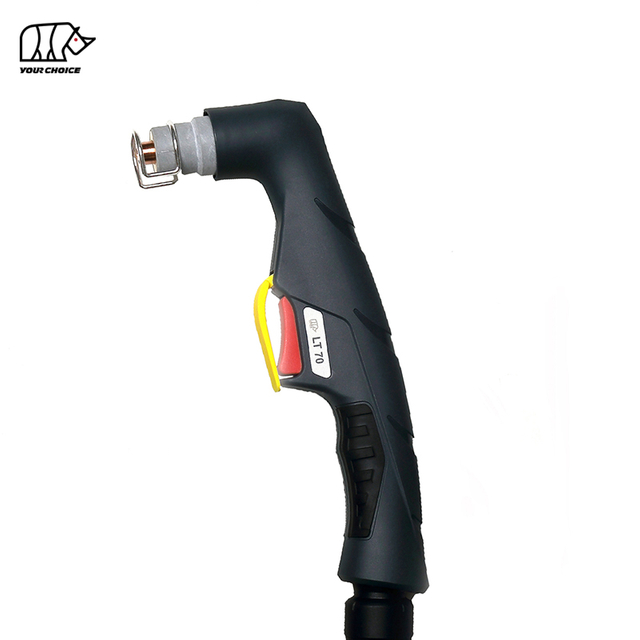
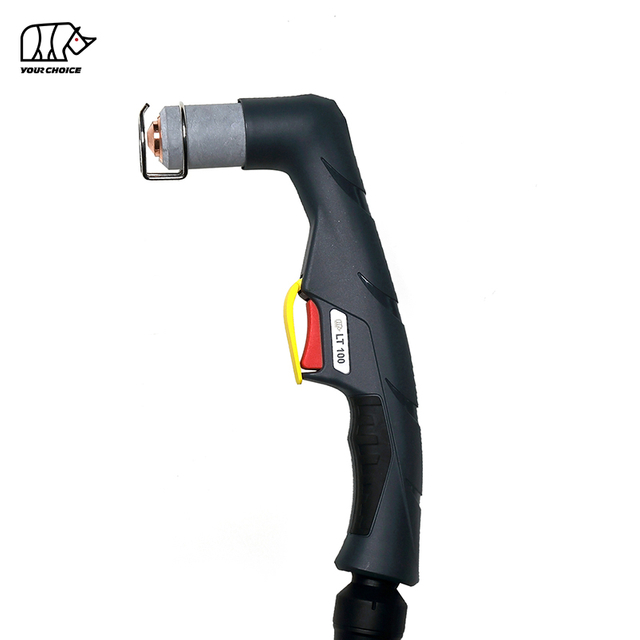
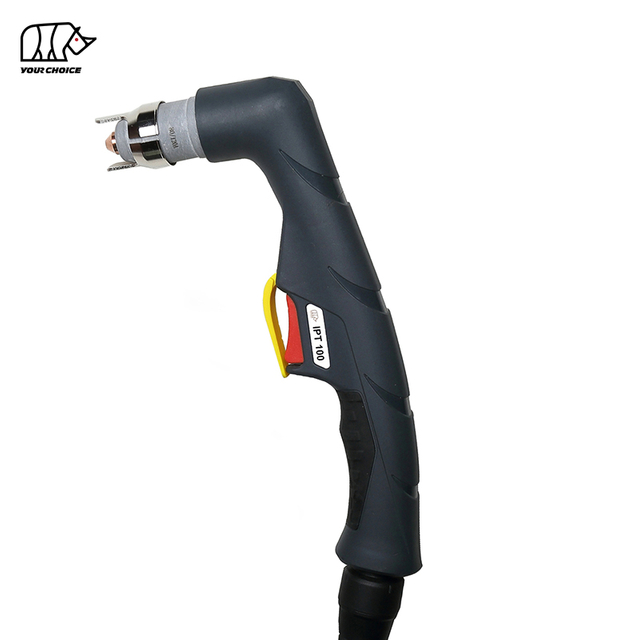
Manual plasma cutting torches, often referred to as handheld plasma cutters, are the workhorse of smaller workshops, maintenance crews, and on-site contractors. These tools are designed for human operation, where the fabricator holds the torch handle and guides the arc along the desired cut path.
Key Technical Characteristics
Operator Control: The quality of the cut depends entirely on the operator's hand-eye coordination, steady movement, and travel speed.
Design: These torches feature an ergonomic curved handle with a trigger switch. They are built for comfort during extended handheld use.
Arc Starting: Most manual units use contact arcing or high-frequency (HF) starts, requiring the operator to be in close proximity to the workpiece.
Ideal Scenarios for Manual Plasma Torches
A. On-Site Repairs and Construction
Manual plasma cutters are prized for their portability. Whether you are repairing a structural beam on a construction site or fixing heavy machinery in the field, a handheld torch can be easily transported. Its ability to run off portable generators or standard shop power makes it indispensable for mobile welding services.
B. Automotive Restoration and Repair
In the automotive world, space is often at a premium. Manual torches allow mechanics to reach into tight corners of a vehicle chassis, cut away rusted floorboards, or remove stubborn exhaust bolts that saws cannot reach. The flexibility to cut at various angles—upside down, sideways, or vertically—is a major advantage in garage environments.
C. Scrap Metal Processing and Demolition
When dismantling large metal structures, precision is less important than speed and ease of movement. Manual plasma torches allow demolition crews to quickly slice through thick steel beams, tanks, and pipes, reducing them to manageable sizes for transport and recycling.
D. Artistic Metalwork and Sculpting
For artists who create one-of-a-kind metal sculptures, the "human touch" is vital. A manual torch acts like a paintbrush, allowing the artist to freehand organic shapes, textures, and intricate details that might be difficult to program into a computer for a single-use piece.
Advantages of Manual Torches
Lower Initial Investment: High-quality manual plasma cutters are significantly more affordable than CNC tables, making them accessible for small businesses and hobbyists.
Zero Programming Required: There is no software to learn; as long as you have a steady hand, you can start cutting immediately.
High Versatility: Capable of cutting pipes, angled iron, and irregular shapes that would not fit on a flat CNC table.
Limitations of Manual Torches
Inconsistent Cut Quality: Human error can lead to uneven edges, excessive dross (slag), and beveling, often requiring secondary grinding and finishing.
Operator Fatigue: Long production runs are physically taxing, leading to a drop in accuracy as the day progresses.
Safety Risks: Operators are exposed to sparks, intense UV light, and fumes at close range, requiring rigorous use of personal protective equipment (PPE).
3. CNC Plasma Cutting Torches: Precision and Automation
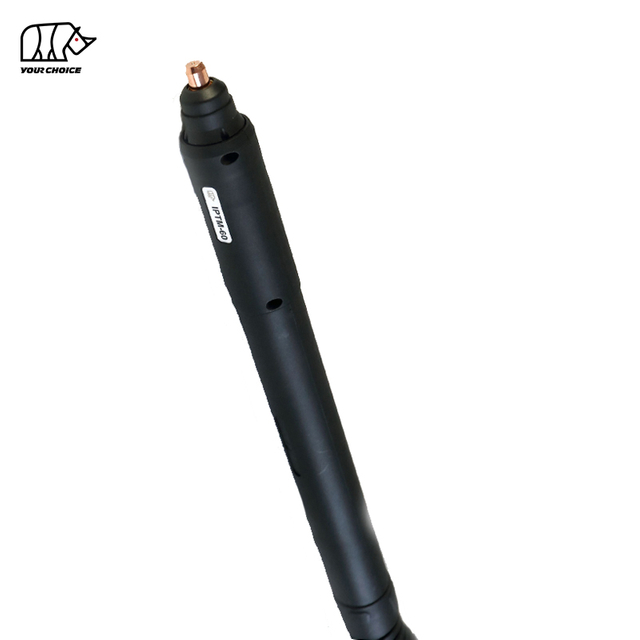
CNC plasma cutting involves mounting a specialized "machine torch" onto a motorized gantry or robotic arm controlled by a computer. The movement is dictated by CAD (Computer-Aided Design) and CAM (Computer-Aided Manufacturing) software, ensuring that every cut follows a precise digital blueprint.
Key Technical Characteristics
Software-Driven: The computer controls the X, Y, and often Z (height) axes, ensuring perfectly straight lines and complex curves with microscopic tolerances.
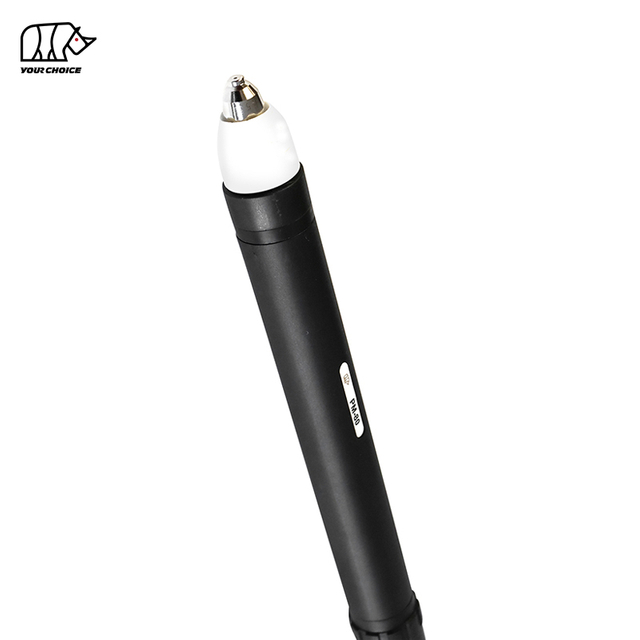
Machine Torch Design: Unlike the curved handheld handle, CNC torches feature a straight barrel designed for secure mounting.
Torch Height Control (THC): Advanced CNC systems use sensors to maintain the optimal distance between the torch and the metal plate, even if the plate is slightly warped.
Ideal Scenarios for CNC Plasma Torches
A. High-Volume Manufacturing and Batch Production
If your business requires 500 identical brackets or base plates, a CNC plasma table is the only logical choice. Automation allows for 24/7 operation with minimal human intervention, ensuring that the first part is identical to the last. This scalability is essential for industrial manufacturing.
B. Industrial HVAC Fabrication
In the HVAC industry, cutting intricate flat patterns for ductwork from galvanized sheets requires extreme precision to ensure parts fit together perfectly during assembly. CNC systems can nest multiple parts on a single sheet of metal to minimize waste, significantly reducing material costs.
C. Heavy Equipment and Shipbuilding
Cutting through 1-inch or 2-inch steel plates for excavator buckets or ship hulls requires high-power plasma units. CNC tables provide the stability and consistent speed necessary to maintain a clean cut through extreme thicknesses without the wavering typical of handheld operation.
D. Precision Signage and Architectural Accents
For businesses producing metal signs, logos, or decorative gates, CNC plasma provides the ability to cut complex lettering and geometric patterns with sharp corners and smooth curves that are nearly impossible to replicate by hand.
Advantages of CNC Torches
Unmatched Precision and Repeatability: Eliminates human error, resulting in professional-grade edges with minimal dross.
Improved Safety: The operator can stand at a safe distance from the cutting area, reducing exposure to heat and sparks.
Efficient Material Usage: Software nesting optimizes how parts are arranged on a plate, reducing scrap and saving money.
Reduced Secondary Finishing: Clean cuts mean less time spent grinding or sanding edges before welding or painting.
Limitations of CNC Torches
High Upfront Cost: A complete CNC plasma system (table, software, and power supply) represents a significant capital investment.
Steep Learning Curve: Operators must be trained in CAD/CAM software and machine maintenance.
Large Footprint: Most CNC tables are stationary and require a dedicated area in the workshop, making them unsuitable for on-site work.
4. Head-to-Head Comparison: Which Should You Choose?
To simplify your decision, consider the following factors:
Factor
Manual Plasma Torch
CNC Plasma Torch
Best For
Repairs, site work, one-offs
Mass production, precision parts
Portability
High (Can be carried)
Low (Stationary table)
Edge Quality
Medium (Requires cleanup)
High (Clean, square edges)
Complexity
Low (Plug and play)
High (Software & calibration)
Labor Cost
High (Requires active operator)
Low (Automated once programmed)
5. Conclusion: Matching the Tool to the Task
In conclusion, neither the manual nor the CNC plasma cutting torch is "better" in an absolute sense; rather, they are optimized for different environments.
If your work revolves around maintenance, mobile repair, or artistic freedom, the manual plasma cutting torch is your best ally. Its portability and low entry cost allow for immediate problem-solving in the field.
However, if your goal is business growth, industrial manufacturing, or high-precision fabrication, transitioning to a CNC plasma cutting system is a necessary step. The initial investment is offset by the dramatic increase in productivity, material savings, and superior cut quality.
By understanding the unique strengths of each system, you can ensure that your workshop is equipped with the right technology to tackle any metalworking challenge with confidence.
This website uses cookies and similar technologies (“cookies”). Subject to your consent, will use analytical cookies to track which content interests you, and marketing cookies to display interest-based advertising. We use third-party providers for these measures, who may also use the data for their own purposes.
You give your consent by clicking "Accept all" or by applying your individual settings. Your data may then also be processed in third countries outside the EU, such as the US, which do not have a corresponding level of data protection and where, in particular, access by local authorities may not be effectively prevented. You can revoke your consent with immediate effect at any time. If you click on "Reject all", only strictly necessary cookies will be used.
 English
 简体中文
简体中文 العربية
 Français
 Русский
 Español
 Português
 Deutsch
 italiano
 日本語
日本語 한국어
한국어 Nederlands
 Tiếng Việt
 ไทย
ไทย Polski
 Türkçe
 ភាសាខ្មែរ
 Bahasa Melayu
 Filipino
 Bahasa Indonesia
 magyar
 Română
 Čeština
 Монгол
 қазақ
қазақ Српски
 हिन्दी
 فارسی
فارسی Slovenčina
 Slovenščina
 Norsk
Norsk Svenska
 українська
 Ελληνικά
 Suomi
Suomi Latine
 Dansk
Dansk বাংলা
বাংলা Hrvatski
 Afrikaans
 Gaeilge
 Eesti keel
 नेपाली
 Oʻzbekcha
 latviešu
 Azərbaycan dili
 Беларуская мова
 Bosanski
 Български
 ქართული
 Lietuvių