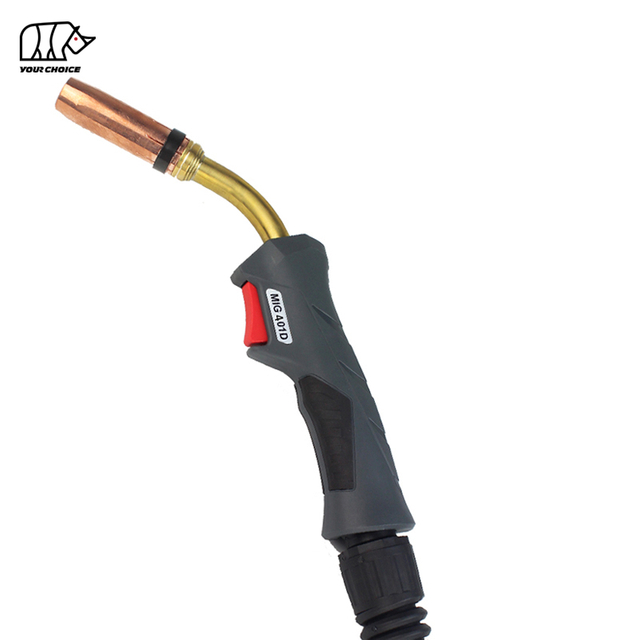
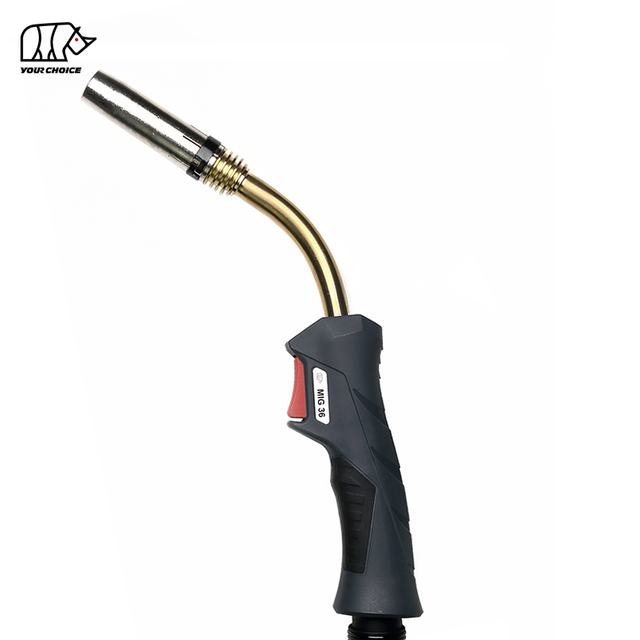
Metal Inert Gas (MIG) welding, also known as Gas Metal Arc Welding (GMAW), is one of the most versatile and widely used welding processes across industries—from automotive repair and construction to manufacturing and hobbyist projects. At the heart of every successful MIG welding operation is a high-quality MIG gun: the tool that delivers the electrode wire, shielding gas, and electrical current to the weld joint. Choosing the right MIG gun isn’t just a matter of picking a tool off the shelf; it’s a decision that directly impacts weld quality, productivity, operator comfort, and long-term cost efficiency. With a wide range of options available—varying in size, amperage, cooling type, and design—selecting the ideal MIG gun for your specific application can feel overwhelming. This guide breaks down the critical factors to consider, common pitfalls to avoid, and step-by-step advice to help you make an informed choice that aligns with your welding needs.
Understanding the Basics of MIG Guns
Before diving into the selection process, it’s essential to grasp the core function and components of a MIG gun. A MIG gun serves as the interface between the welder, the power source, and the workpiece. Its primary role is to feed the consumable electrode wire (MIG wire) into the weld pool, deliver a consistent electrical current to create the arc, and channel shielding gas to protect the weld from atmospheric contamination—such as oxygen and nitrogen—that can weaken the joint or cause defects like porosity and cracks.
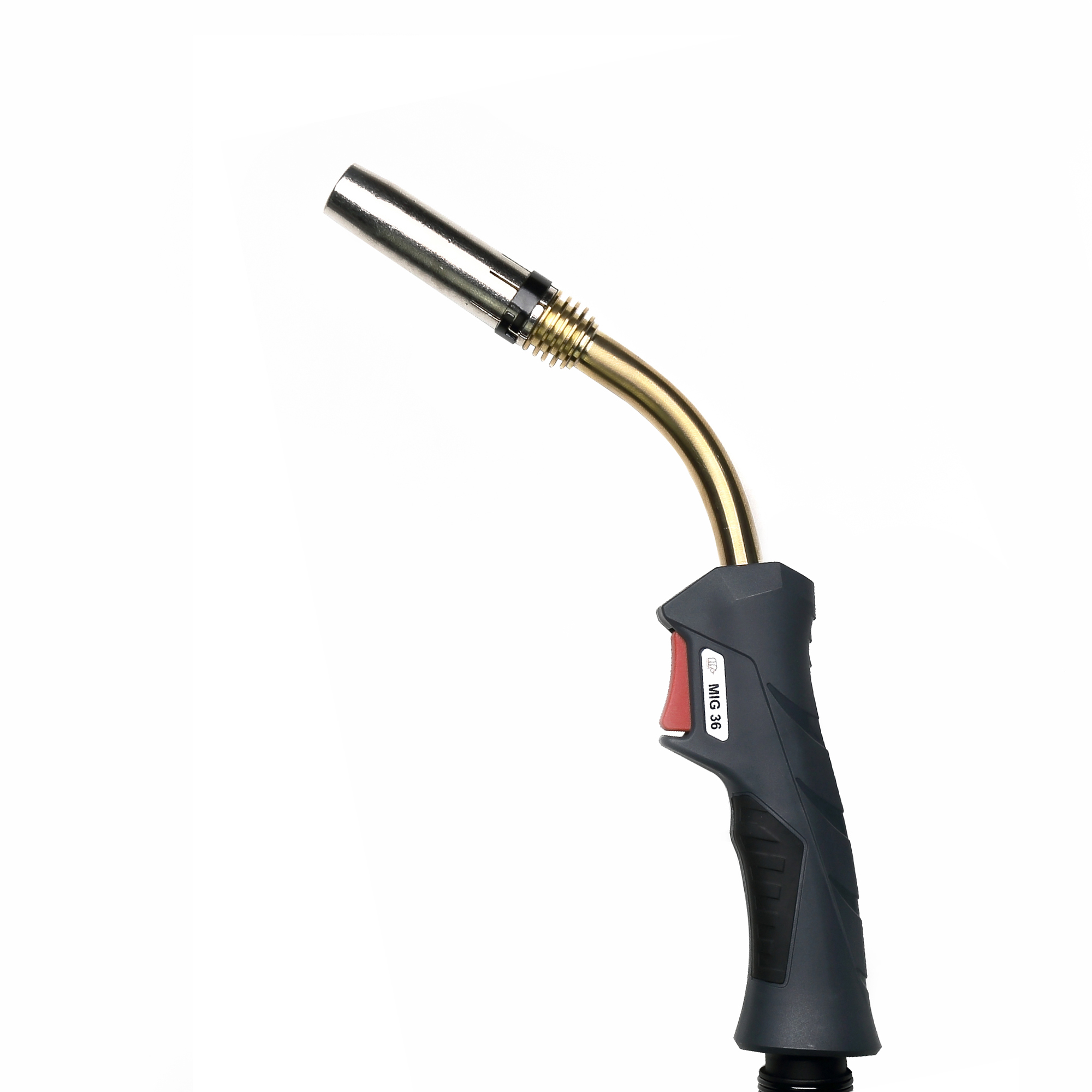
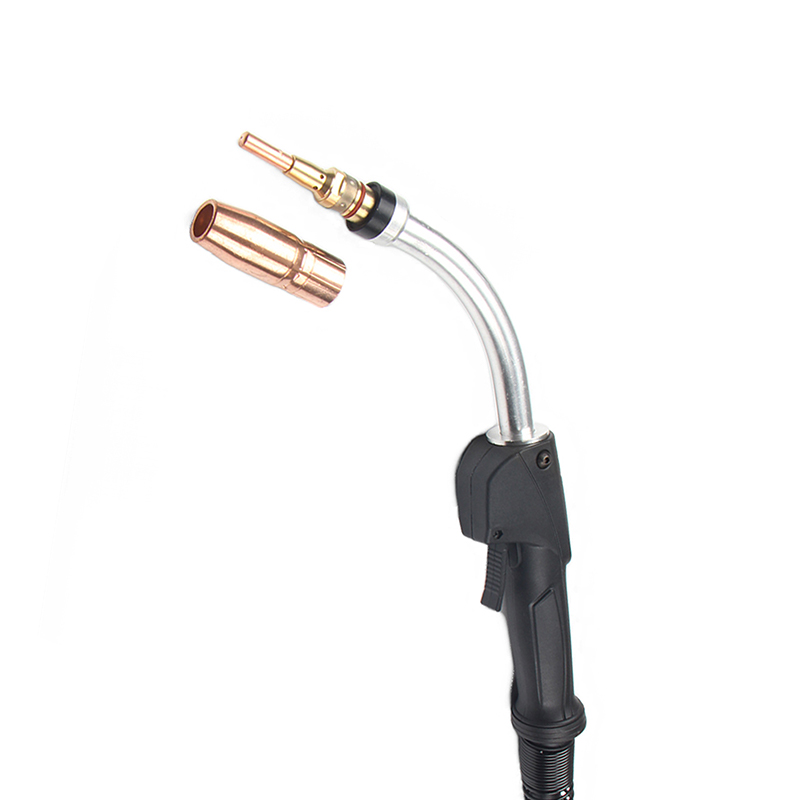
Key components of a MIG gun include the handle (ergonomic grip), trigger (controls the arc and wire feed), nozzle (directs shielding gas), contact tip (transmits electrical current to the wire), liner (guides the wire from the feeder to the contact tip), and cable assembly (houses the wire, gas line, and electrical conductors). Each component plays a critical role in the gun’s performance, and variations in design cater to different welding scenarios.
MIG guns are not one-size-fits-all. The right gun for a hobbyist welding thin sheet metal will differ drastically from one used for heavy-duty industrial applications, such as welding thick steel beams or large machinery components. By understanding your application’s unique requirements, you can narrow down the options and select a gun that optimizes performance and minimizes downtime.
Key Factors to Consider When Choosing a MIG Gun
Selecting a MIG gun requires a systematic approach, focusing on factors that directly relate to your welding application. Below are the most critical considerations to guide your decision, organized by priority.
1. Welding Application Requirements
Your specific welding application is the foundation of your MIG gun selection. Start by defining the details of your project, as this will dictate the gun’s necessary capabilities. Consider the following subfactors:
Material Type and Thickness
The type and thickness of the material you’re welding are the most important determinants of the MIG gun you need. Different materials (e.g., steel, aluminum, stainless steel) and thicknesses require varying levels of heat, wire size, and shielding gas—all of which influence the gun’s design.
For thin materials (0.024” to 1/8” thick), such as sheet metal used in automotive bodywork or hobby projects, a light-duty MIG gun with lower amperage capacity is sufficient. These materials require less heat to avoid warping or burn-through, so a gun rated for 150–200 amps will work well. For example, welding 24-gauge mild steel with 0.023” wire would pair well with a 150-amp gun, as it delivers enough heat to form a strong weld without damaging the material.
For thicker materials (1/8” to 1/2” or more), such as structural steel or heavy machinery parts, a heavy-duty gun with higher amperage is necessary. These applications require more heat to penetrate the material fully, so a gun rated for 250–600 amps is ideal. For instance, welding 3/8” mild steel with 0.035” wire would require a 250–300 amp gun to ensure proper fusion.
Aluminum and stainless steel present unique challenges. Aluminum is a soft, heat-conductive material that requires a push-pull MIG gun (discussed later) to feed the soft wire smoothly, while stainless steel requires a gun compatible with tri-mix shielding gas (90% He/7.5% Ar/2.5% CO₂) to prevent oxidation and maintain corrosion resistance.
Welding Environment
The environment where you’ll be welding also impacts your MIG gun choice. Consider whether you’ll be welding indoors, outdoors, in tight spaces, or in harsh industrial conditions.
Indoor welding (e.g., in a workshop or manufacturing facility) typically allows for more flexibility, as you don’t have to contend with wind or extreme weather. A standard air-cooled gun may be sufficient here, as the controlled environment helps with heat dissipation.
Outdoor welding presents challenges, particularly wind, which can disrupt the shielding gas flow and contaminate the weld. In this case, a gun with a larger nozzle or a gas lens (which improves gas coverage) is recommended. Additionally, if you’re welding in dusty or debris-filled environments (e.g., construction sites), a gun with a protective cover or sealed components will help prevent clogs and damage.
Tight spaces (e.g., inside machinery or confined corners) require a MIG gun with a flexible neck or a small, compact design. Gooseneck necks (available in various angles, such as 45° or 90°) allow for better access to hard-to-reach areas, ensuring you can maintain proper weld position and visibility.
Welding Volume and Duty Cycle
The volume of welding you do (how often and how long you weld continuously) determines the gun’s required duty cycle. The duty cycle is the percentage of time a gun can operate at its maximum amperage without overheating, measured over a 10-minute period. For example, a 60% duty cycle at 200 amps means the gun can weld continuously for 6 minutes out of 10 before needing to cool down.
Hobbyists or occasional welders (who weld for short bursts) can use a gun with a lower duty cycle (30–50%), as they won’t be welding continuously for long periods. Professional welders or those working on high-volume projects (e.g., production lines) need a gun with a higher duty cycle (60% or more) to avoid frequent overheating and downtime.
It’s important to note that duty cycle is directly related to amperage: higher amperage guns typically have lower duty cycles (since more heat is generated), so you’ll need to balance amperage needs with welding volume. For example, a 300-amp gun with a 60% duty cycle is suitable for high-volume welding at moderate amperages, while a 400-amp gun with a 40% duty cycle is better for short bursts of high-heat welding.
2. MIG Gun Type: Air-Cooled vs. Water-Cooled
MIG guns are available in two primary cooling types: air-cooled and water-cooled. The choice between the two depends on your amperage needs, welding volume, and environment.
Air-Cooled MIG Guns
Air-cooled MIG guns are the most common and cost-effective option for most applications. They use ambient air and the flow of shielding gas to dissipate heat generated during welding. These welding guns are simpler in design, lighter (in some cases), and easier to maintain, as they don’t require a separate cooling system.
Air-cooled guns are ideal for:
• Light to medium-duty welding (150–300 amps)
• Occasional or intermittent welding (low to moderate volume)
• Indoor environments where heat dissipation is manageable
• Applications where portability is important (e.g., field repairs)
One drawback of air-cooled guns is that they can become hot during prolonged use, especially at higher amperages. This can lead to operator discomfort or even damage to the gun’s components if used beyond its duty cycle. Additionally, air-cooled guns have thicker cables (to handle heat), which can reduce flexibility in tight spaces.
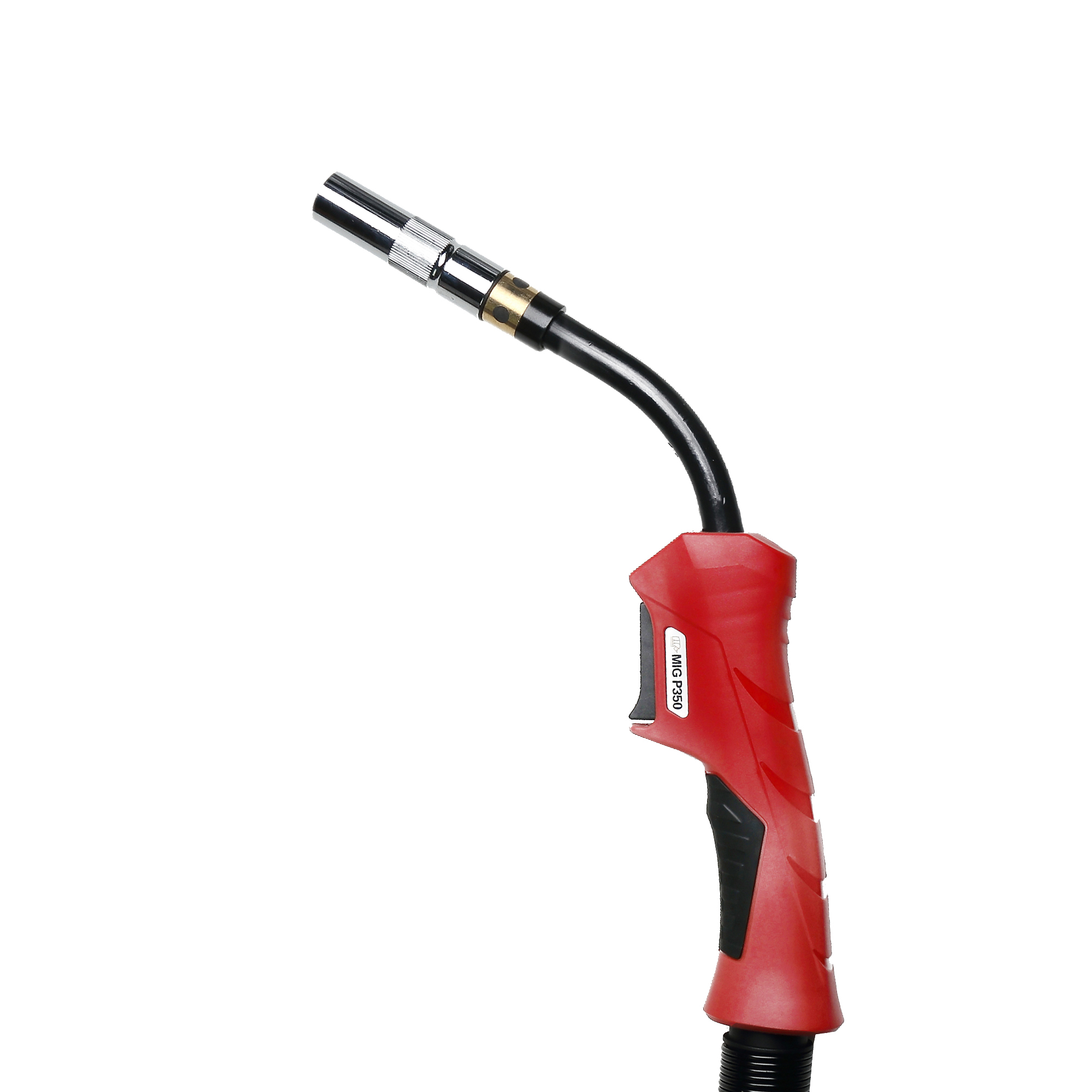
Water-Cooled MIG Guns
Water-cooled MIG guns use a closed-loop cooling system that circulates water (or a water-glycol mixture) through the gun’s neck and handle to dissipate heat. These guns are designed for high-amperage, high-volume welding, where air-cooling would be insufficient to prevent overheating.
Water-cooled guns are ideal for:
• Heavy-duty welding (300–600 amps)
• Continuous, high-volume welding (e.g., production lines)
• Applications where operator comfort is a priority (cooler handle)
• Tight spaces where air circulation is limited (heat buildup is a concern)
The main advantages of water-cooled guns are their ability to handle higher amperages for longer periods (higher duty cycles) and their cooler operation, which reduces operator fatigue. However, they are more expensive, heavier (due to the cooling system and hoses), and require more maintenance (e.g., checking water levels, cleaning the cooling system to prevent clogs). They also require a separate water cooler unit, which adds to the overall setup cost.
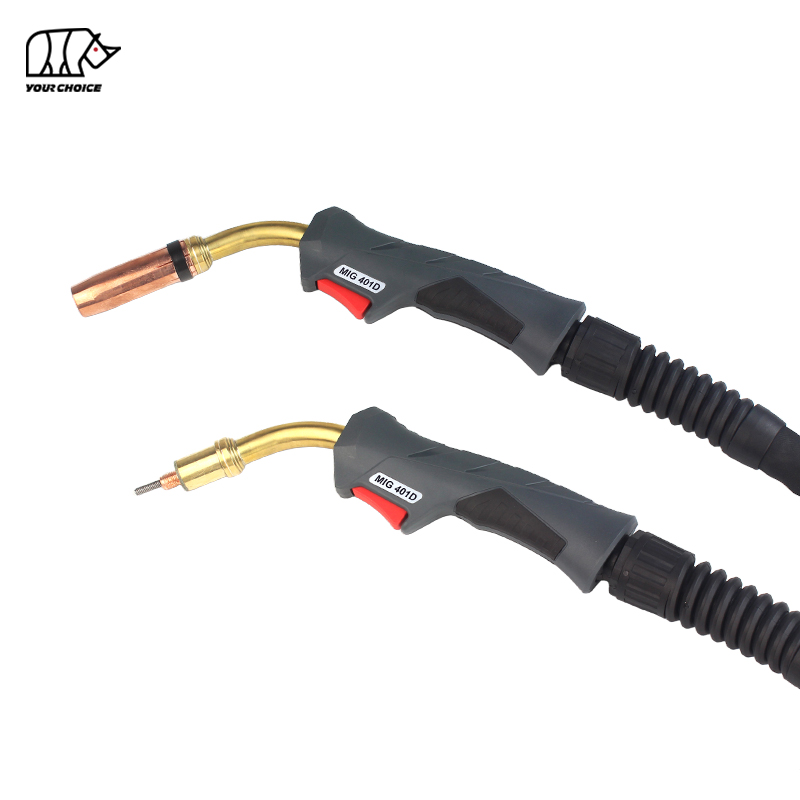
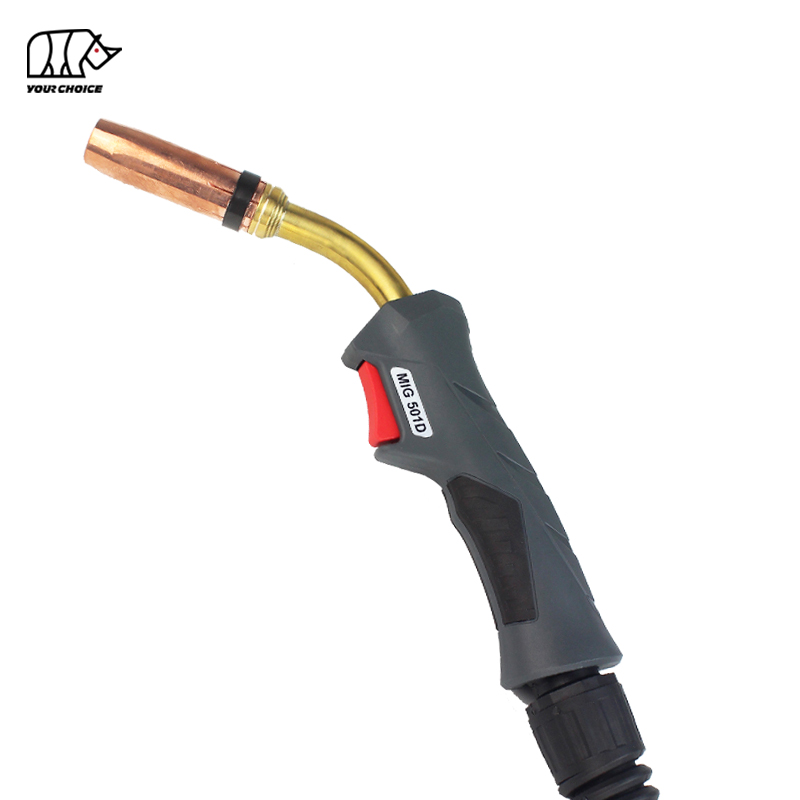
3. Amperage Rating
The amperage rating of a MIG gun is the maximum current it can safely handle without overheating or sustaining damage. This rating directly correlates to the gun’s ability to generate heat for welding—higher amperage means more heat, which is needed for thicker materials.
When selecting a gun based on amperage, it’s important to choose one that matches (or slightly exceeds) the maximum amperage you’ll use. Using a gun with a lower amperage rating than needed can lead to overheating, premature component failure, and poor weld quality. Conversely, using a gun with a higher amperage rating than necessary is unnecessary and can increase costs (higher amperage guns are more expensive).
Here’s a general guide to amperage ratings and their applications:
• 150–200 amps: Light-duty applications (thin sheet metal, hobby projects, small repairs)
• 200–300 amps: Medium-duty applications (mild steel up to 1/2” thick, automotive repairs, general fabrication)
• 300–400 amps: Heavy-duty applications (thick steel, structural welding, industrial fabrication)
• 400–600 amps: Extreme heavy-duty applications (large machinery, pipeline welding, high-volume production)
Remember, amperage rating is closely tied to duty cycle. A 200-amp gun with a 60% duty cycle can weld continuously for 6 minutes at 200 amps, while a 300-amp gun with a 40% duty cycle can only weld for 4 minutes at 300 amps. Be sure to balance amperage and duty cycle based on your welding volume.
4. Wire Size Compatibility
MIG guns are designed to work with specific wire sizes, which are determined by the material thickness and welding amperage. The wire size (measured in inches or millimeters) must match the gun’s contact tip, liner, and nozzle to ensure smooth wire feeding and consistent electrical contact.
Common MIG wire sizes include 0.023”, 0.030”, 0.035”, and 0.045”. Here’s how to match wire size to your application:
• 0.023” wire: Ideal for thin materials (24–20 gauge), low amperage (40–60 amps), and delicate welding (e.g., automotive body panels). Requires a contact tip and liner designed for 0.023” wire.
• 0.030” wire: Versatile for medium-thin materials (20–16 gauge), moderate amperage (50–120 amps), and general fabrication. Works well with most light to medium-duty MIG guns.
• 0.035” wire: The most common size for general-purpose welding, suitable for materials up to 3/8” thick, moderate to high amperage (90–250 amps), and applications like structural steel and machinery repair.
• 0.045” wire: Designed for thick materials (1/4” and above), high amperage (170–285 amps), and heavy-duty applications. Requires a larger contact tip, liner, and nozzle to accommodate the thicker wire.
Using the wrong wire size can lead to issues like wire jamming (too large wire for the liner), poor electrical contact (too small wire for the contact tip), or inconsistent arc performance. Always check the gun’s specifications to ensure it’s compatible with the wire size you plan to use.
5. Ergonomics and Operator Comfort
Welding is often a physically demanding task, requiring operators to hold the gun for extended periods. An ergonomically designed MIG gun can reduce operator fatigue, improve control, and increase productivity—all of which contribute to better weld quality.
Key ergonomic features to look for include:
Grip Design
The handle should be comfortable to hold, with a non-slip grip that reduces hand strain. Ergonomic handles are often contoured to fit the natural shape of the hand, minimizing pressure points during prolonged use. Some handles also have heat-resistant materials to prevent burns, as the gun can become hot during operation.
Weight and Balance
A well-balanced gun is easier to maneuver, especially for overhead or vertical welding. Air-cooled guns are generally lighter than water-cooled guns (due to the lack of a cooling system), making them better for applications that require mobility. However, some heavy-duty air-cooled guns can be bulky, so it’s important to test the weight and balance before purchasing.
Trigger Design
The trigger should be easy to squeeze, with a smooth action that doesn’t require excessive force. Some triggers have adjustable sensitivity, allowing operators to customize the response to their preference. A durable trigger (made from high-quality materials) is also important, as it can wear out over time with frequent use.
Cable Flexibility
A flexible cable allows for better maneuverability, especially in tight spaces. Cables with stranded copper conductors are more flexible than solid conductors, making them easier to move around the workpiece. Additionally, a cable with a durable outer jacket (e.g., rubber or PVC) can withstand wear and tear from dragging or contact with sharp edges.
6. Consumables and Maintenance
MIG gun consumables—contact tips, nozzles, liners, and diffusers—wear out over time and need to be replaced regularly. The availability and cost of these consumables, as well as the ease of maintenance, should be considered when choosing a MIG gun.
Consumable Availability
Choose a gun with consumables that are readily available from local suppliers or online retailers. Hard-to-find consumables can lead to costly downtime if you run out of replacements. Additionally, generic consumables (compatible with multiple gun models) are often more affordable than brand-specific ones, so look for a gun that uses standard-sized consumables.
Ease of Replacement
Consumables should be easy to replace without the need for specialized tools. Look for a gun with a quick-change design, where contact tips and nozzles can be removed and replaced in seconds. This reduces downtime and allows operators to get back to welding quickly.
Liner Maintenance
The liner is a critical component that guides the wire from the feeder to the contact tip. Over time, liners can become clogged with dirt, debris, or wire shavings, leading to wire jamming. Choose a gun with a liner that is easy to remove and clean or replace. Some liners are made from Teflon or other low-friction materials, which reduce wire drag and require less maintenance.
7. Compatibility with Existing Equipment
If you already have a MIG welding power source and wire feeder, it’s essential to choose a MIG gun that is compatible with your existing equipment. MIG guns use different types of connectors (e.g., Euro connectors, DIN connectors) to attach to the power source and feeder. Using an incompatible gun can lead to poor electrical connection, inconsistent wire feeding, or damage to your equipment.
Check the specifications of your power source and feeder to determine the type of connector required. Most standard MIG guns use Euro connectors, which are compatible with most modern welding equipment. However, some specialized equipment may require a specific connector type, so it’s important to verify compatibility before purchasing.
Additionally, ensure the gun’s voltage and amperage range match the capabilities of your power source. A gun with a higher amperage rating than your power source can’t be used to its full potential, while a gun with a lower rating may not be able to handle the power source’s output.
Specialized MIG Gun Types for Unique Applications
In addition to standard air-cooled and water-cooled MIG guns, there are specialized gun types designed for specific applications. Understanding these can help you choose the right tool for unique welding needs.
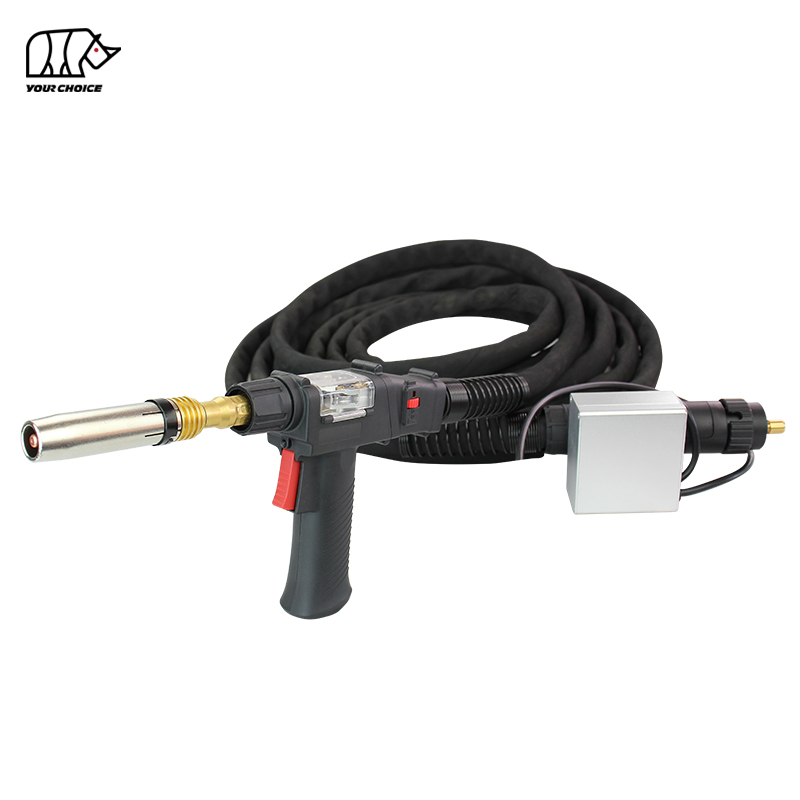
Push-Pull MIG Guns
Push-pull MIG guns are designed for welding soft, easily deformed wires—such as aluminum or stainless steel. These wires can jam or kink in standard guns (which use a “push” system to feed the wire), so push-pull guns use a combination of a push motor (in the feeder) and a pull motor (in the gun) to feed the wire smoothly.
Push-pull guns are ideal for:
• Welding aluminum (soft wire that requires consistent feeding)
• Welding at long distances from the feeder (some models can reach up to 50 feet)
• Applications where wire feeding consistency is critical (e.g., precision welding)
These guns are available in both air-cooled and water-cooled designs, making them suitable for a range of amperage needs. However, they are more expensive than standard guns and require more maintenance (due to the pull motor).
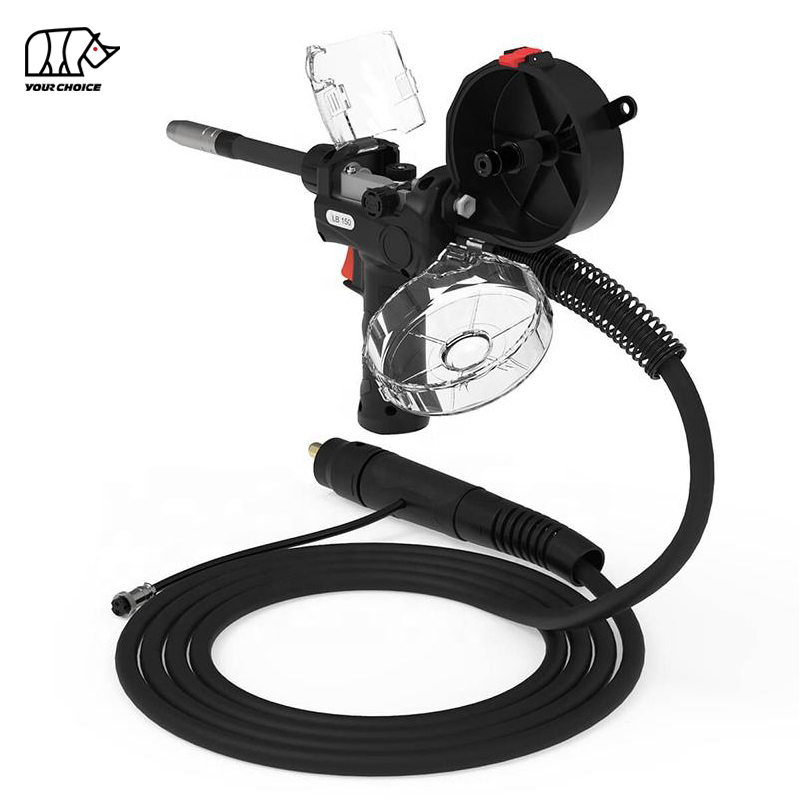
Spool Gun MIG Guns
Spool guns are a type of push-pull gun where the wire spool is mounted directly on the gun itself. This eliminates the need for a long wire feeder cable, making the gun more portable and reducing wire drag. Spool guns are ideal for welding aluminum, as they allow for short wire paths (reducing jamming) and are easy to maneuver in tight spaces.
Spool guns are commonly used in automotive repair, boat building, and other applications where portability and wire feeding consistency are important. They are available in small, lightweight models for hobbyists and larger, heavy-duty models for industrial use.
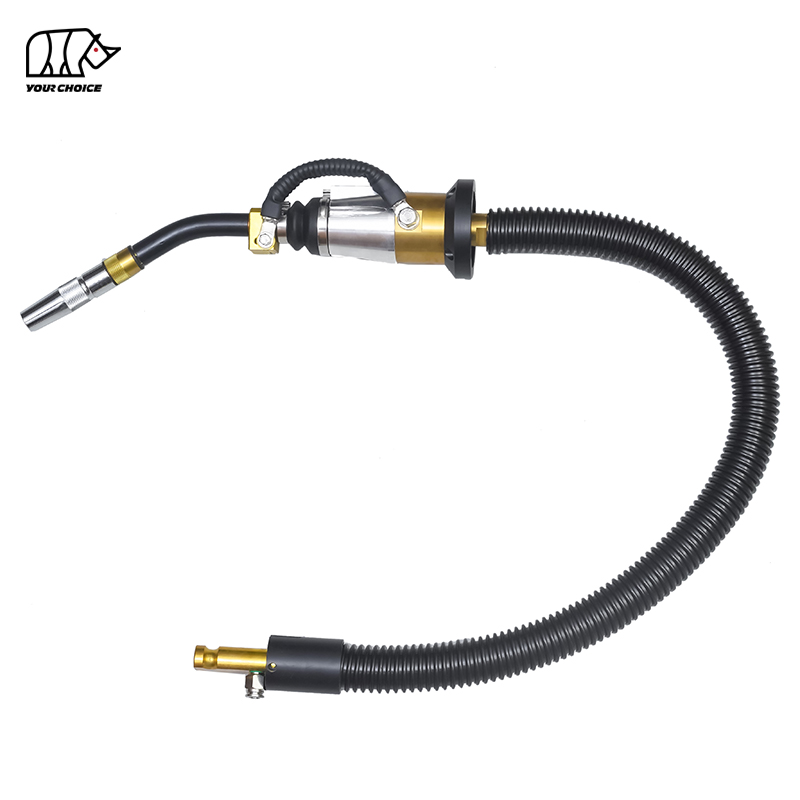
Robotic MIG Guns
Robotic MIG guns are designed for automated welding systems (robotic arms). These guns are built to withstand the repetitive motion of robotic welding and are often water-cooled (for high-volume, continuous operation). They feature durable components, precise wire feeding, and compatibility with robotic control systems.
Robotic MIG guns are used in manufacturing facilities for high-volume, consistent welding—such as automotive production lines or appliance manufacturing. They are not suitable for manual welding and require specialized setup and maintenance.
Common Mistakes to Avoid When Choosing a MIG Gun
Even with careful consideration, it’s easy to make mistakes when selecting a MIG gun. Below are the most common pitfalls and how to avoid them:
1. Choosing the Wrong Amperage Rating
One of the most common mistakes is selecting a gun with an amperage rating that doesn’t match your application. Using a low-amperage gun for thick materials will result in poor penetration and weak welds, while using a high-amperage gun for thin materials will cause burn-through and warping. Always match the gun’s amperage to the material thickness and welding volume.
2. Ignoring Duty Cycle
Many welders focus solely on amperage and overlook duty cycle. A gun with a high amperage rating but a low duty cycle will overheat quickly during continuous welding, leading to downtime and component damage. Be sure to choose a gun with a duty cycle that matches your welding volume (how long you weld continuously).
3. Neglecting Ergonomics
Ergonomics is often an afterthought, but a poorly designed gun can lead to operator fatigue, reduced control, and even injury. Investing in an ergonomic gun will improve productivity and weld quality in the long run. Test the gun’s grip, weight, and balance before purchasing to ensure it’s comfortable for extended use.
4. Overlooking Compatibility
Assuming all MIG guns are compatible with all welding equipment is a costly mistake. Always check the connector type, voltage, and amperage compatibility with your existing power source and feeder. Using an incompatible gun can damage your equipment and result in poor performance.
5. Choosing Based on Price Alone
While budget is an important consideration, choosing the cheapest MIG gun can lead to higher costs in the long run. Low-quality guns are more likely to break down, require frequent consumable replacements, and produce poor welds. Invest in a high-quality gun that meets your application’s needs—this will save you money on maintenance and replacements over time.
Step-by-Step Guide to Choosing the Right MIG Gun
To summarize, here’s a step-by-step process to help you select the perfect MIG gun for your application:
Step 1: Define Your Application
Start by outlining the details of your welding project: material type and thickness, welding environment (indoor/outdoor, tight spaces), welding volume (occasional vs. continuous), and desired weld quality. This will help you narrow down the key requirements for your gun.
Step 2: Determine Amperage and Duty Cycle Needs
Based on your material thickness and welding volume, select an amperage rating and duty cycle that align with your needs. For thin materials and occasional welding, a 150–200 amp gun with a 30–50% duty cycle is sufficient. For thick materials and continuous welding, a 300+ amp gun with a 60%+ duty cycle is better.
Step 3: Choose Between Air-Cooled and Water-Cooled
Select air-cooled if you’re doing light to medium-duty welding, need portability, or have a limited budget. Choose water-cooled if you’re doing heavy-duty, high-volume welding or need a cooler, more comfortable gun.
Step 4: Ensure Wire Size Compatibility
Match the gun’s contact tip, liner, and nozzle to the wire size you plan to use. Common wire sizes are 0.023”, 0.030”, 0.035”, and 0.045”—choose the size that best fits your material thickness and amperage.
Step 5: Prioritize Ergonomics
Test the gun’s grip, weight, balance, and trigger design to ensure it’s comfortable for extended use. Look for features like non-slip grips, heat-resistant handles, and flexible cables.
Step 6: Check Compatibility with Existing Equipment
Verify that the gun’s connector type, voltage, and amperage range are compatible with your power source and feeder. This will prevent damage and ensure optimal performance.
Step 7: Consider Consumables and Maintenance
Choose a gun with readily available, affordable consumables and easy maintenance (quick-change contact tips, removable liners). This will reduce downtime and long-term costs.
Step 8: Evaluate Specialized Options (If Needed)
If you’re welding aluminum, stainless steel, or working in tight spaces, consider specialized guns like push-pull or spool guns. For automated welding, choose a robotic MIG gun.
Conclusion
Choosing the right MIG gun is a critical decision that impacts weld quality, productivity, and cost efficiency. By focusing on your application’s unique requirements—material type and thickness, welding volume, environment, and existing equipment—you can narrow down the options and select a gun that meets your needs. Remember to prioritize amperage, duty cycle, cooling type, wire size compatibility, and ergonomics, and avoid common mistakes like choosing based on price alone or ignoring compatibility.
A high-quality MIG gun is an investment that will pay off in the long run, reducing downtime, improving weld consistency, and making the welding process more efficient and comfortable. By following the steps outlined in this guide, you can confidently select the right MIG gun for your application and achieve professional results every time.
 English
 简体中文
简体中文 العربية
 Français
 Русский
 Español
 Português
 Deutsch
 italiano
 日本語
日本語 한국어
한국어 Nederlands
 Tiếng Việt
 ไทย
ไทย Polski
 Türkçe
 ភាសាខ្មែរ
 Bahasa Melayu
 Filipino
 Bahasa Indonesia
 magyar
 Română
 Čeština
 Монгол
 қазақ
қазақ Српски
 हिन्दी
 فارسی
فارسی Slovenčina
 Slovenščina
 Norsk
Norsk Svenska
 українська
 Ελληνικά
 Suomi
Suomi Latine
 Dansk
Dansk বাংলা
বাংলা Hrvatski
 Afrikaans
 Gaeilge
 Eesti keel
 नेपाली
 Oʻzbekcha
 latviešu
 Azərbaycan dili
 Беларуская мова
 Bosanski
 Български
 ქართული
 Lietuvių