If you’ve ever shopped for a TIG torch or tried to swap parts between models, you’ve likely stared at the numbers: 9, 17, 18, 20, 26. What do they mean? Can you use a 17 torch on a machine meant for a 26? Are consumables like collets and cups interchangeable across series? This guide breaks down every critical detail of the 17/18/26 and 9/20 TIG torch families—their specs, cooling systems, applications, and exactly when you can (and cannot) swap them. By the end, you’ll know exactly which torch fits your project and avoid costly mistakes with incompatible gear.
Understanding TIG Torch Series Nomenclature
Before diving into comparisons, it’s essential to decode the industry-standard numbering system for TIG torches. This system, rooted in legacy designs from Linde (now ESAB), categorizes torches by cooling type, amperage capacity, and physical size—two core series define the market:
Series 2: Compact, mid-range torches → 9 (air-cooled) and 20 (water-cooled)
Series 3: Larger, high-capacity torches → 17 (air-cooled), 26 (air-cooled), and 18 (water-cooled)
Prefixes like WP (Weldcraft), SR, or PTA are brand-specific; the core number (9,17,18,20,26) dictates compatibility and performance across manufacturers. This standardization is why a WP-17 and an SR-17 share identical core design and interchangeable parts—critical for welders who mix-and-match gear.
Air-Cooled TIG Torches: 9, 17, 26 Series
Air-cooled TIG torches rely on ambient air and shielding gas flow to dissipate heat, making them lightweight, portable, and ideal for short-to-medium weld cycles. They require no external cooling system, simplifying setup for on-site or mobile welding.
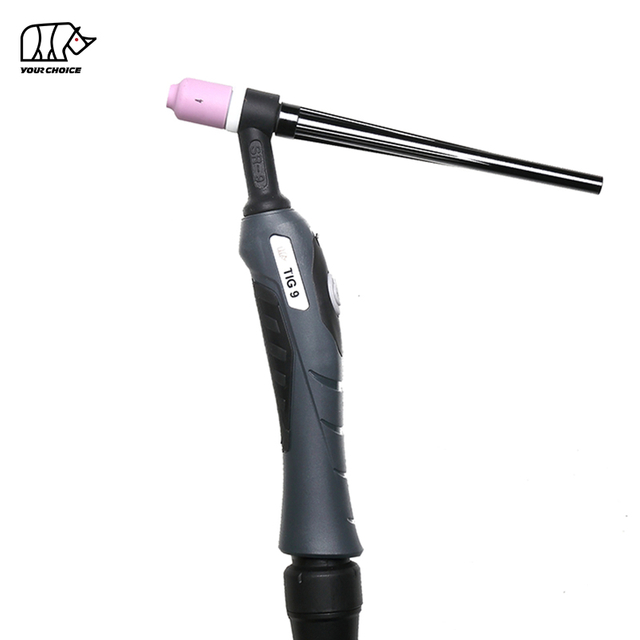
9 Series TIG Torch (WP-9, SR-9)
The 9 series is the smallest, lightest air-cooled TIG torch in common use—designed for precision, low-amperage work in tight spaces.
Amperage Rating: 125A DC @ 60% duty cycle; 100A AC @ 60% duty cycle
Cooling: Air-cooled (no water lines)
Size/Weight: Compact pencil-style handle, thin power cable (1/4" diameter), total weight ~1.5 lbs (0.7 kg)
Key Features: Flexible neck (9F) option for hard-to-reach joints; gas valve (9V) for on-torch flow control
Best For: Thin sheet metal (16 gauge and thinner), jewelry welding, aerospace precision work, small automotive repairs, and low-amperage AC aluminum welding
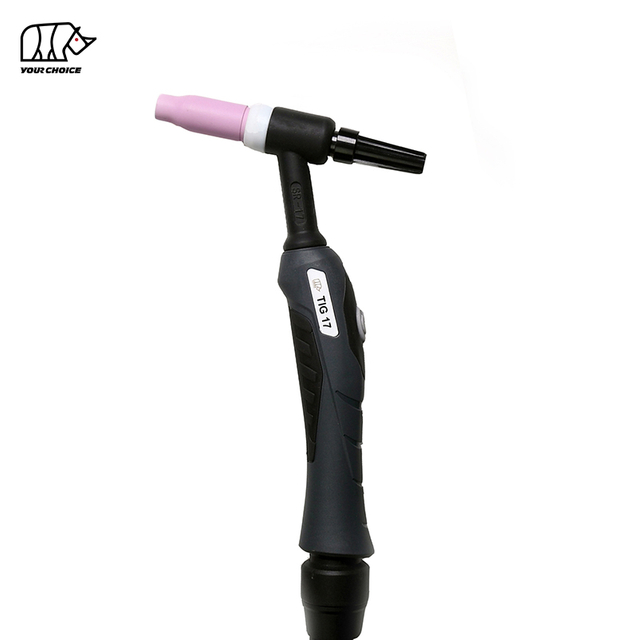
17 Series TIG Torch (WP-17, SR-17)
The 17 series is the most versatile air-cooled TIG torch—a middle ground between the compact 9 and heavy-duty 26, balancing maneuverability and power.
Amperage Rating: 150A DC @ 60% duty cycle; 125A AC @ 60% duty cycle
Cooling: Air-cooled
Size/Weight: Medium handle, slightly thicker power cable than 9 series, total weight ~2 lbs (0.9 kg)
Key Features: Flexible neck (26F) for heavy-duty maneuvering; gas valve (26V); reinforced cable for durability
Best For: Heavy fabrication, structural steel welding, thick plate (1/4"–1/2"), longer weld cycles, and industrial production
Water-Cooled TIG Torches: 18, 20 Series
Water-cooled TIG torches use a closed-loop water system to circulate coolant through the torch head and cable, enabling 100% duty cycle at high amperages—critical for industrial, heavy-duty welding where heat buildup is a constant issue. They are heavier and require a separate water cooler but deliver unmatched performance for prolonged use.
20 Series TIG Torch (WP-20, SR-20)
The 20 series is the compact water-cooled counterpart to the 9 series—offering high amperage in a small, maneuverable package.
Amperage Rating: 250A DC @ 100% duty cycle; 180A AC @ 100% duty cycle
Cooling: Water-cooled (integrated water lines in cable)
Size/Weight: Compact handle (same as 9 series), thick dual-line cable (power + water), total weight ~3 lbs (1.4 kg)
Key Features: Flexible neck (20F); gas valve (20V); compatible with 9 series consumables
Best For: High-precision industrial welding, aerospace component repair, thick aluminum welding, and prolonged low-to-medium amperage work where air cooling fails
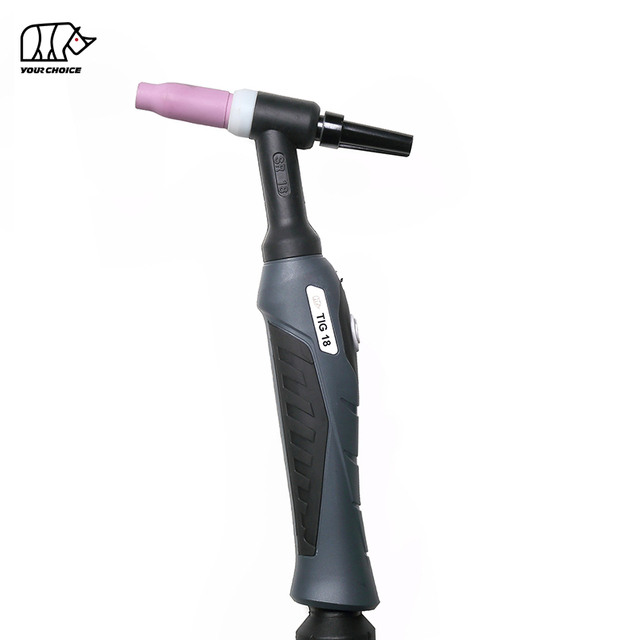
18 Series TIG Torch (WP-18, SR-18)
The 18 series is the heavy-duty water-cooled counterpart to the 26 series—the most powerful standard TIG torch on the market.
Amperage Rating: 350A DC @ 100% duty cycle; 250A AC @ 100% duty cycle
Cooling: Water-cooled (heavy-duty water lines for maximum heat transfer)
Size/Weight: Large handle (same as 26 series), ultra-thick dual-line cable, total weight ~4 lbs (1.8 kg)
Key Features: Rigid or flexible neck (18F); gas valve (18V); reinforced construction for industrial abuse
Best For: Heavy industrial fabrication, shipbuilding, pressure vessel welding, thick steel/aluminum (1/2"+), and 24/7 production environments
Head-to-Head Comparison: 17/18/26 vs. 9/20 TIG Torches
Torch Series
Cooling Type
Amperage (DC @ Duty Cycle)
Handle Size
Cable Type
Tungsten Range
Key Use Case
9
Air-Cooled
110A @ 35%
Compact
Thin Single
0.5–1.6mm
Precision Thin Metal
17
Air-Cooled
140A @ 35%
Medium
Medium Single
0.5–2.4mm
General Fabrication
26
Air-Cooled
180A @ 35%
Large
Thick Single
0.5–4.0mm
Heavy Air-Cooled Work
20
Water-Cooled
250A @ 100%
Compact
Thick Dual
0.5–3.2mm
High-Precision Water-Cooled
18
Water-Cooled
320A @ 100%
Large
Ultra-Thick Dual
0.5–4.0mm
Industrial Heavy-Duty
Visual Design Differences
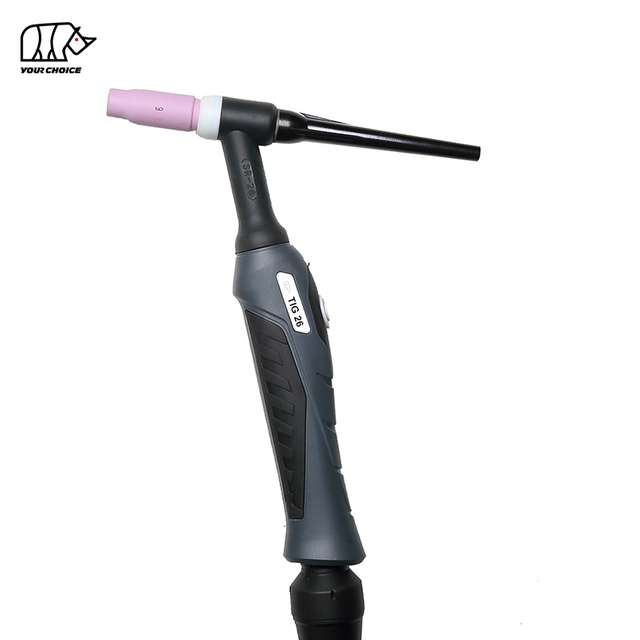
Handle & Neck: 9/20 series have slim, pencil-style handles for tight spaces; 17/18/26 have larger, ergonomic handles for better grip during heavy use. 9/20 necks are shorter and more flexible, while 17/18/26 necks are longer for extended reach.
Cable Construction: Air-cooled torches (9,17,26) use a single power/gas cable; water-cooled torches (20,18) use a dual-line cable (power + water lines) that is thicker and less flexible but critical for cooling.
Torch Head: 9/20 heads are smaller and lighter, ideal for low-amperage precision; 17/18/26 heads are larger with more mass to dissipate heat, supporting higher amperages.
Are TIG Torches Interchangeable? The Definitive Guide
Interchangeability depends on three factors: series compatibility, cooling type, and connection interface. Below is a clear breakdown of what works—and what doesn’t.
1. Same-Series Interchangeability (Series 2 vs. Series 3)
Series 2 (9 ↔ 20): Fully interchangeable in terms of consumables and torch head design. 9 (air-cooled) and 20 (water-cooled) share identical collets, collet bodies, ceramic cups, and gas lenses—only the cable and cooling system differ. You can swap a 9 torch head onto a 20 cable (and vice versa) if you adapt the cooling lines, but this is not recommended for safety.
Series 3 (17 ↔ 18 ↔ 26): 17 and 26 (air-cooled) are fully interchangeable—they share all consumables, torch head threads, and handle design; the only difference is size and amperage capacity. 18 (water-cooled) shares consumables with 17/26 but has a different cable interface (dual water lines) and cannot be directly swapped with air-cooled 17/26 without adapter modifications.
2. Cross-Series Interchangeability (Series 2 ↔ Series 3)
Air-Cooled Cross-Series (9 ↔ 17/26): Partial interchangeability. 9 and 17 share the same torch head thread size (7/8"-14 RH) and small handle design, so you can swap torch heads between 9 and 17 torches (and their consumables). However, 9 and 26 are not directly interchangeable: 26 has a larger handle, thicker cable, and different power connection—swapping a 26 head onto a 9 cable will cause overheating and cable damage, as the 9 cable is not rated for 200A amperage.
Water-Cooled Cross-Series (20 ↔ 18): No direct interchangeability. 20 (compact water-cooled) and 18 (large water-cooled) have different handle sizes, cable diameters, and cooling line capacities. Swapping heads will result in poor cooling, leaks, and amperage mismatches—never attempt this without professional modification.
Air-Cooled ↔ Water-Cooled (Any Series): Never interchangeable without specialized adapters. Air-cooled torches lack water lines, and water-cooled torches require a closed-loop cooling system. Adapters exist but are not recommended, as they bypass safety ratings and can cause torch overheating, cable failure, or weld quality issues.
3. Machine Connection Compatibility
Most TIG welders use a 3/8" BSP or metric threaded connection at the machine end, which is standard across all series. This means you can connect any TIG torch (9,17,18,20,26) to most TIG machines—but you must match the torch’s amperage rating to the machine’s output. For example:
A 200A TIG machine can safely use a 9,17, or 26 air-cooled torch (but 26 is optimal for full amperage).
A 350A TIG machine requires an 18 water-cooled torch to handle full amperage at 100% duty cycle—using a 26 air-cooled torch will overheat and fail.
4. Consumable Interchangeability Cheat Sheet
Consumables (collets, cups, gas lenses) are the most commonly swapped parts—here’s what works:
9 & 20 Series: All consumables are 100% interchangeable (same size and thread).
17 & 26 Series: All consumables are 100% interchangeable (same size and thread).
9/20 ↔ 17/26: Smaller consumables (0.5mm–2.4mm tungsten) are interchangeable; larger 3.2mm–4.0mm consumables for 17/26 do not fit 9/20 torches (due to smaller head size).
Practical Implications for Welders
When to Choose 9/20 Series Torches
You need maximum maneuverability for tight, precision joints (e.g., aerospace, jewelry).
You weld thin materials (16 gauge and thinner) at low-to-medium amperages.
You want a compact water-cooled option (20 series) for prolonged precision work without the bulk of an 18 series.
You need to swap consumables quickly between air and water-cooled setups (9 ↔ 20).
When to Choose 17/18/26 Series Torches
You weld medium-to-heavy materials (10 gauge and thicker) at higher amperages.
You need a versatile air-cooled option (17/26) for general fabrication with no cooling system.
You require 100% duty cycle at high amperages (18 series) for industrial production.
You need extended reach and a larger grip for heavy, prolonged welding sessions.
Safety & Performance Best Practices
Never exceed amperage ratings: Using a 9 series torch at 200A will melt the cable and cause burns—always match torch rating to machine output.
Avoid cross-series cable swaps: 9 series cables are not rated for 26 series amperage; 20 series water lines cannot handle 18 series cooling demands.
Use genuine consumables: Generic consumables may fit but can cause poor gas flow, arc instability, or overheating—stick to industry-standard parts.
Inspect connections: Ensure torch heads, cables, and machine connections are tight to prevent gas leaks, power loss, or cooling failures.
Final Verdict: Interchangeability Recap
Same-series, same cooling: 9↔20 and 17↔26 are fully interchangeable (consumables and heads).
Same-series, different cooling: 9↔20 and 17↔18 share consumables but require cooling system modifications for head swaps (not recommended).
Cross-series, air-cooled: 9↔17 are partially interchangeable; 9↔26 are not (cable/amperage mismatch).
Cross-series, water-cooled: 20↔18 are not interchangeable (size/cooling mismatch).
Air↔water-cooled (any series): Not interchangeable without unsafe adapters.
Choosing the right TIG torch series boils down to your amperage needs, material thickness, and workspace constraints. By understanding the differences between 9/20 and 17/18/26 series—and their interchangeability limits—you can select gear that maximizes weld quality, safety, and efficiency. Whether you’re a hobbyist or industrial welder, matching your torch to your project is the first step to perfect TIG welds every time.
This website uses cookies and similar technologies (“cookies”). Subject to your consent, will use analytical cookies to track which content interests you, and marketing cookies to display interest-based advertising. We use third-party providers for these measures, who may also use the data for their own purposes.
You give your consent by clicking "Accept all" or by applying your individual settings. Your data may then also be processed in third countries outside the EU, such as the US, which do not have a corresponding level of data protection and where, in particular, access by local authorities may not be effectively prevented. You can revoke your consent with immediate effect at any time. If you click on "Reject all", only strictly necessary cookies will be used.
 English
 简体中文
简体中文 العربية
 Français
 Русский
 Español
 Português
 Deutsch
 italiano
 日本語
日本語 한국어
한국어 Nederlands
 Tiếng Việt
 ไทย
ไทย Polski
 Türkçe
 ភាសាខ្មែរ
 Bahasa Melayu
 Filipino
 Bahasa Indonesia
 magyar
 Română
 Čeština
 Монгол
 қазақ
қазақ Српски
 हिन्दी
 فارسی
فارسی Slovenčina
 Slovenščina
 Norsk
Norsk Svenska
 українська
 Ελληνικά
 Suomi
Suomi Latine
 Dansk
Dansk বাংলা
বাংলা Hrvatski
 Afrikaans
 Gaeilge
 Eesti keel
 नेपाली
 Oʻzbekcha
 latviešu
 Azərbaycan dili
 Беларуская мова
 Bosanski
 Български
 ქართული
 Lietuvių