What Is a MIG Welding Torch? Definition, Function, and Working Principle
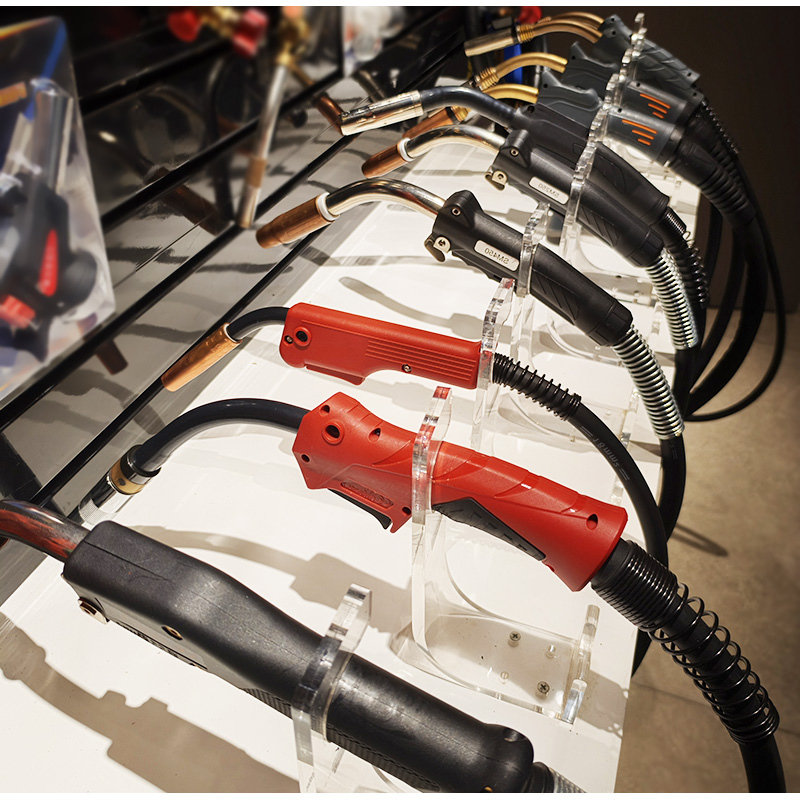
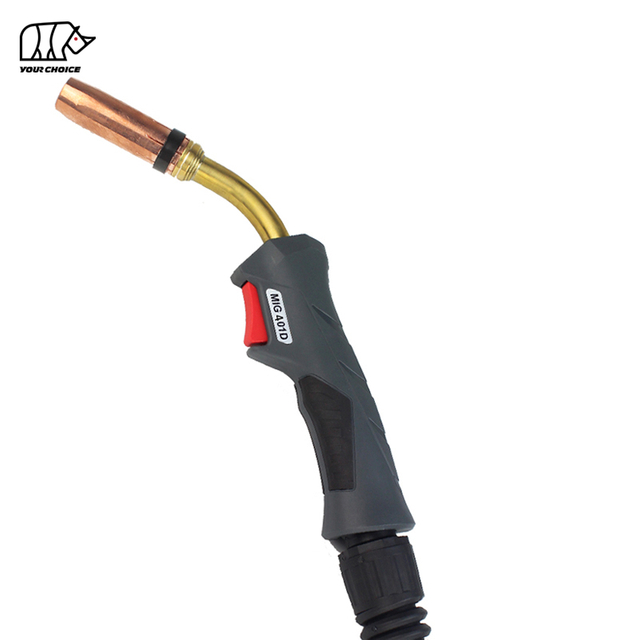
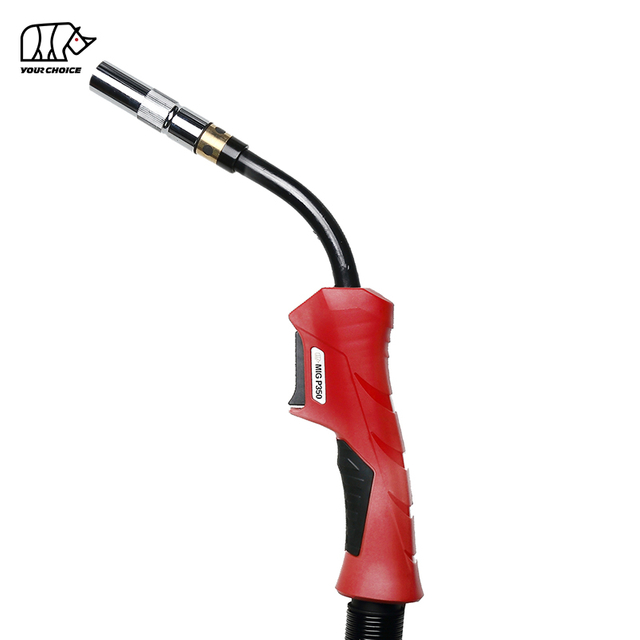
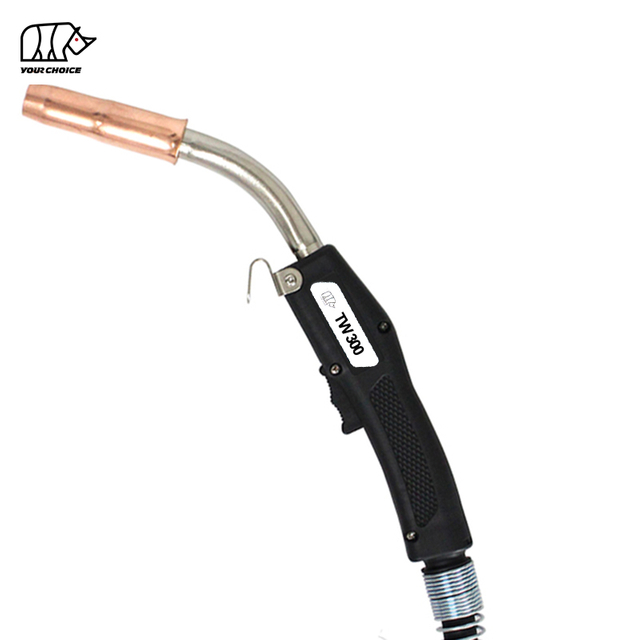
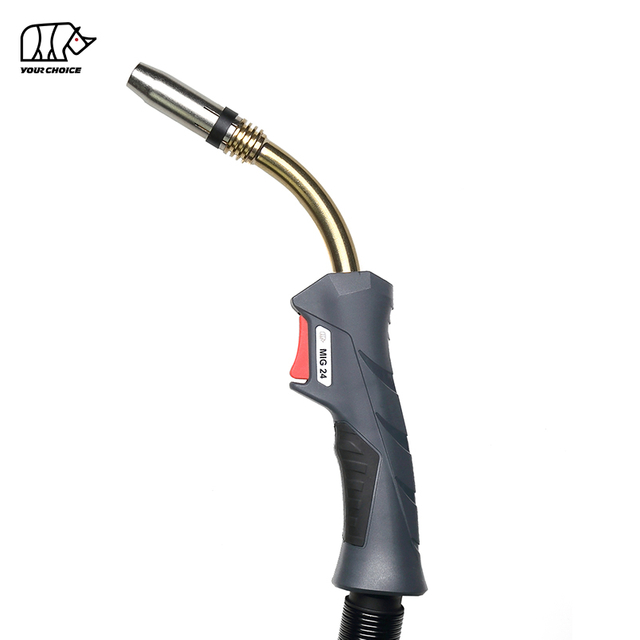
A MIG welding torch, also called a MIG welding gun or GMAW torch, is the handheld component that delivers welding wire, shielding gas, and electrical current to create a stable welding arc during Metal Inert Gas (MIG) welding. It connects the welding machine to the workpiece and plays a critical role in controlling weld quality, operator comfort, and production efficiency.
In simple terms, a MIG torch is like the “control center” between the welding machine and the weld joint. While the power source provides electrical energy, the MIG welding torch controls how the consumable wire reaches the welding area, how shielding gas protects the molten weld pool, and how efficiently heat is managed during continuous welding.
MIG welding, technically known as Gas Metal Arc Welding (GMAW), is one of the most widely used welding processes in manufacturing because it provides high productivity, easy operation, and excellent adaptability. According to OSHA, GMAW/MIG welding is one of the most common arc welding methods used across industrial applications. Welding processes generate metal fumes and gases, making proper equipment selection and workplace controls essential.
For professional welders, fabrication companies, and welding equipment distributors, choosing the right MIG welding torch directly influences welding speed, consumable costs, downtime, and overall production efficiency.
How Does a MIG Welding Torch Work in GMAW Welding?
The working process of a MIG torch is based on four coordinated functions:
Function
Role in MIG Welding
Wire feeding
Delivers continuous welding wire to the arc
Electrical conduction
Transfers welding current to the contact tip
Shielding gas delivery
Protects molten metal from contamination
Heat management
Controls temperature during welding
During welding, the welding wire travels through the MIG torch liner and exits through the contact tip. When the trigger is pressed, the welding machine supplies power and shielding gas while the wire continuously melts into the weld pool.
A well-designed MIG torch ensures smooth wire feeding, stable arc characteristics, and consistent weld penetration.
This is why industrial users often consider the MIG torch as a productivity-critical component rather than simply an accessory.
Why Is the MIG Torch One of the Most Important Components in MIG Welding?
Many welding operators focus mainly on choosing the welding machine, but the MIG torch has a direct impact on daily welding performance.
A poor-quality MIG gun may cause:
Problem
Possible Result
Poor wire feeding
Welding interruption
Excessive heat
Shorter torch lifespan
Poor gas coverage
Weld defects
Uncomfortable design
Operator fatigue
A professional MIG welding torch helps reduce downtime and improves welding consistency, especially during long production shifts.
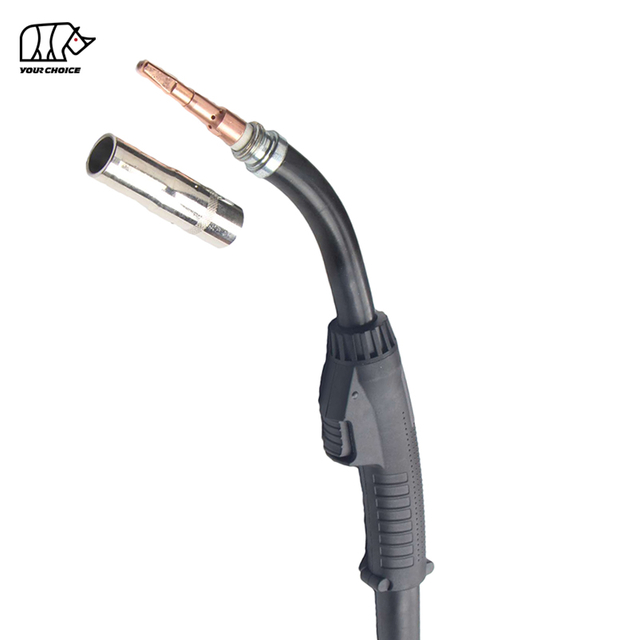
What Are the Main Parts of a MIG Welding Torch?
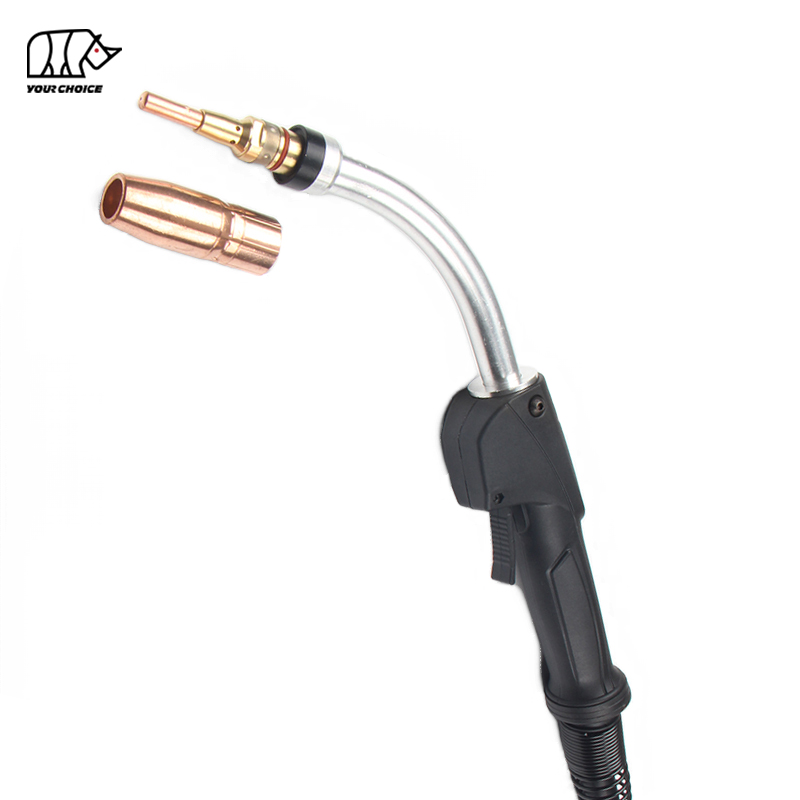
Understanding MIG torch components helps users select the correct replacement parts and improve maintenance efficiency.
MIG Torch Part
Function
Contact tip
Transfers welding current to wire
Nozzle
Directs shielding gas flow
Liner
Guides welding wire smoothly
Torch neck
Provides welding angle flexibility
Cable assembly
Transfers power, gas, and wire
Handle
Provides operator control
Each component affects welding performance.
For example, a worn contact tip may create unstable arcs, while a damaged liner can increase wire feeding resistance.
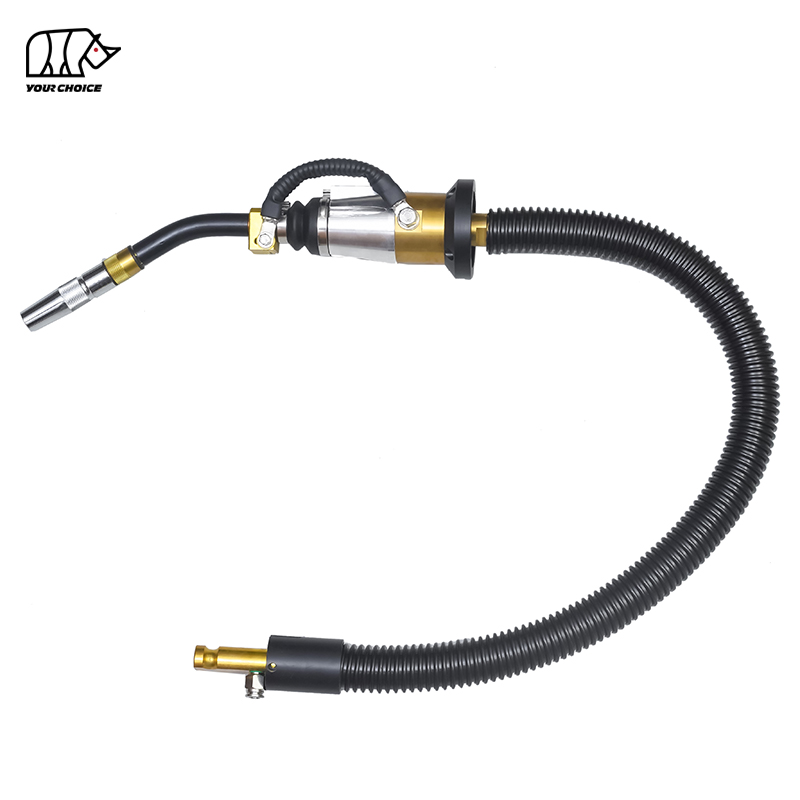
What Are the Different Types of MIG Welding Torches?
Customized solutions are especially valuable for welding equipment distributors, machine manufacturers, and industrial automation companies.
Frequently Asked Questions About MIG Welding Torches
What is a MIG welding torch used for?
A MIG welding torch delivers welding wire, shielding gas, and electrical current during MIG/GMAW welding. It controls arc stability and welding performance.
What is the difference between a MIG torch and a MIG gun?
A MIG torch and MIG gun describe the same welding component. Different regions use different terminology.
How long does a MIG welding torch last?
Service life depends on welding conditions, maintenance, duty cycle, and consumable replacement frequency.
Which MIG torch is better, air-cooled or water-cooled?
Air-cooled MIG torches are suitable for general welding, while water-cooled MIG torches are better for high-current and continuous welding applications.
How do I choose the correct MIG welding torch?
Choose based on welding current, duty cycle, material type, welding environment, and compatibility with your welding machine.
Conclusion: Choosing the Right MIG Welding Torch Improves Welding Performance
A MIG welding torch is one of the most important components in modern welding systems. From manual fabrication workshops to automated manufacturing lines, the right MIG gun improves welding quality, reduces downtime, and increases operator efficiency.
Understanding MIG torch types, components, cooling methods, and selection criteria helps welders and purchasing teams make better equipment decisions.
Whether you need an air-cooled MIG torch, water-cooled MIG gun, robotic MIG torch, or customized OEM solution, selecting a reliable MIG welding torch manufacturer is essential for achieving consistent welding performance.
For professional welding applications, the MIG torch is not just a tool—it is the connection between technology, productivity, and weld quality.
This website uses cookies and similar technologies (“cookies”). Subject to your consent, will use analytical cookies to track which content interests you, and marketing cookies to display interest-based advertising. We use third-party providers for these measures, who may also use the data for their own purposes.
You give your consent by clicking "Accept all" or by applying your individual settings. Your data may then also be processed in third countries outside the EU, such as the US, which do not have a corresponding level of data protection and where, in particular, access by local authorities may not be effectively prevented. You can revoke your consent with immediate effect at any time. If you click on "Reject all", only strictly necessary cookies will be used.
 English
 简体中文
简体中文 العربية
 Français
 Русский
 Español
 Português
 Deutsch
 italiano
 日本語
日本語 한국어
한국어 Nederlands
 Tiếng Việt
 ไทย
ไทย Polski
 Türkçe
 ភាសាខ្មែរ
 Bahasa Melayu
 Filipino
 Bahasa Indonesia
 magyar
 Română
 Čeština
 Монгол
 қазақ
қазақ Српски
 हिन्दी
 فارسی
فارسی Slovenčina
 Slovenščina
 Norsk
Norsk Svenska
 українська
 Ελληνικά
 Suomi
Suomi Latine
 Dansk
Dansk বাংলা
বাংলা Hrvatski
 Afrikaans
 Gaeilge
 Eesti keel
 नेपाली
 Oʻzbekcha
 latviešu
 Azərbaycan dili
 Беларуская мова
 Bosanski
 Български
 ქართული
 Lietuvių