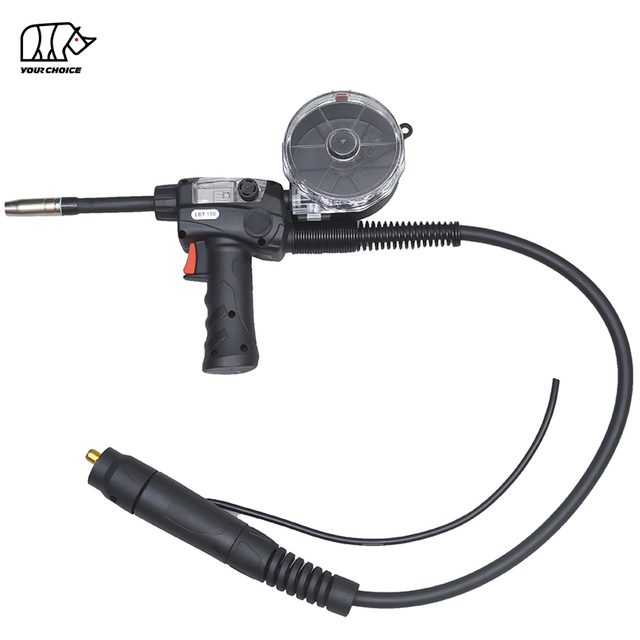
Aluminum welding is a technical challenge—especially when working with thin aluminum plates (typically 1–3mm thick). The material’s high thermal conductivity, soft wire composition, and tendency to form oxide layers make wire blockage a common and frustrating issue that ruins weld quality, wastes time, and increases material costs. For fabricators, hobbyists, and industrial welders alike, choosing the right MIG welding gun is the single most important step to eliminate wire blockage and achieve clean, consistent welds on thin aluminum.
In this comprehensive guide, we’ll break down the key design features that prevent wire blockage in aluminum MIG welding, review the best MIG gun types for thin aluminum plates, highlight top industry models, and share expert tips for setup and maintenance. By the end, you’ll have all the knowledge to select a MIG welding gun that delivers smooth wire feeding, zero blockage, and professional results for thin aluminum applications.
Why Thin Aluminum Welding Causes Wire Blockage (And What to Avoid)
Before diving into gun selection, it’s critical to understand why wire blockage is so prevalent in thin aluminum MIG welding. Unlike steel, aluminum has unique properties that put extra stress on the welding gun and wire feeding system—ignoring these properties guarantees frequent clogs, birdnesting, and poor welds.
The Core Culprits of Wire Blockage in Aluminum Welding
Soft Aluminum Wire Composition
Aluminum welding wire (e.g., 4043, 5356) is significantly softer than steel wire. When fed through a rigid, high-friction liner, it easily deforms, shaves off material, or kinks—creating debris that accumulates and blocks the wire path. Even minor friction can cause the wire to “bind” mid-feed, leading to sudden blockages.
Mismatched Liner Material/Size
A steel liner (designed for steel welding) is a disaster for aluminum. Steel liners have sharp internal edges that scrape the soft aluminum wire, producing metal shavings that clog the liner and contact tip. Additionally, a liner with an incorrect diameter—either too large (allowing wire wobble) or too small (pinching the wire)—creates excessive resistance and blockages.
Poor Wire Feeding Mechanics
Standard MIG guns use a “push-only” feeding system that works for steel but fails for aluminum. Push-only systems rely on force to move the wire through the gun, which bends or buckles soft aluminum wire—especially in longer gun cables (6ft+). This buckling leads to birdnesting at the wire feeder and blockages at the tip.
Improper Gun Setup for Thin Plates
Thin aluminum requires low heat input and precise wire speed/voltage settings. A gun with bulky components, inflexible necks, or non-adjustable drive rolls forces welders into awkward positions, leading to inconsistent wire feeding and blockages. Overly high amperage also melts the wire prematurely, causing it to ball up at the tip and block the feed path.
-
Common Mistakes to Avoid When Choosing a MIG Gun for Thin Aluminum
Using a standard steel MIG gun: Never repurpose a steel welding gun for aluminum—its liner, drive rolls, and feeding system are not designed for soft wire.
Opting for a long, rigid gun cable: Cables longer than 10ft increase wire friction, even in high-quality guns.
Ignoring drive roll design: V-groove drive rolls (for steel) dig into aluminum wire; aluminum requires U-groove or knurled drive rolls with minimal pressure.
Skimping on consumables: Low-quality contact tips and nozzles with uneven bores create extra resistance for aluminum wire.
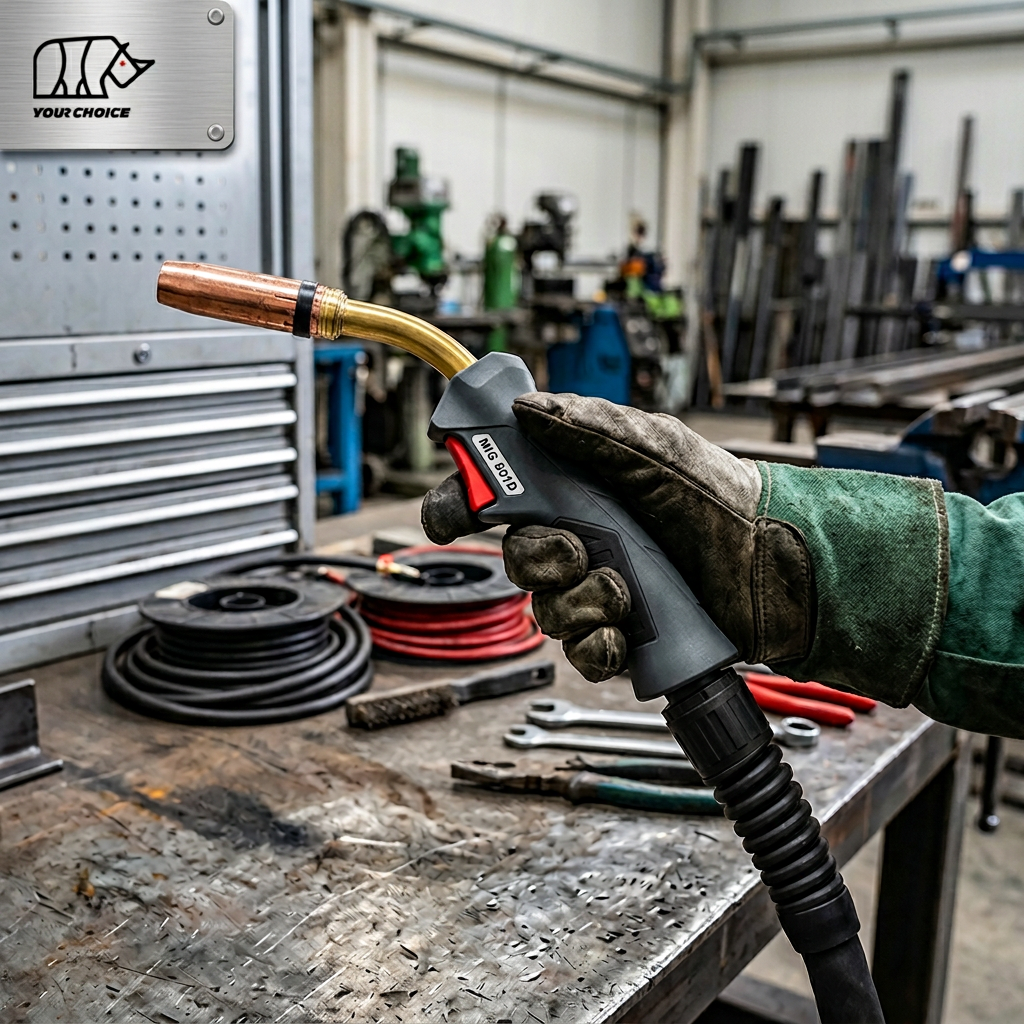
Key Design Features of a Wire Blockage-Proof MIG Gun for Thin Aluminum
The best MIG welding guns for thin aluminum share a set of non-negotiable design features that address the material’s unique challenges. These features prioritize low friction, smooth wire feeding, and precision control—the three pillars of blockage-free aluminum welding. When evaluating guns, always check for the following:
Teflon/PTFE Liners (Non-Steel, Low-Friction)
The liner is the most critical component for preventing wire blockage. For aluminum, Teflon (PTFE) or high-quality plastic liners are mandatory. These liners have a smooth, non-abrasive internal surface that eliminates wire shaving and reduces friction by up to 80% compared to steel liners. Look for liners with a tight, precise diameter match to your aluminum wire (e.g., 0.9mm liner for 0.9mm wire) to prevent wobble and kinking. Many premium guns also offer quick-change liners for easy replacement—no more time-consuming disassembly when a clog does occur (a rare event with Teflon liners).
Push-Pull Wire Feeding Technology
Push-pull feeding is the gold standard for aluminum MIG welding, especially for thin plates. Unlike push-only systems, push-pull guns integrate a small motor in the gun handle that pulls the wire through the liner while the main feeder pushes it—creating a smooth, consistent feed with zero buckling or birdnesting. This technology is essential for gun cables longer than 6ft and ensures the soft aluminum wire moves through the gun without deformation. For thin aluminum (1–3mm), push-pull feeding also allows for precise control of wire speed—critical for avoiding overheating and burn-through.
U-Groove/Insulated Drive Rolls
Drive rolls grip the wire and feed it into the gun—their design directly impacts wire integrity. For aluminum, U-groove or knurled drive rolls with insulated components are a must. U-grooves distribute pressure evenly across the soft wire, preventing indentations and deformation, while insulation eliminates electrical arcing that can melt the wire at the feeder. Avoid V-groove drive rolls (for steel) at all costs—they dig into aluminum wire, causing shavings and blockages. Top guns also feature adjustable drive roll pressure to fine-tune grip for different wire diameters (0.9–1.6mm, the most common for thin aluminum).
Ergonomic, Lightweight Design for Precision Control
Thin aluminum welding requires close, precise movement—bulky, heavy guns cause fatigue and inconsistent feeding. The best aluminum MIG guns are lightweight (under 5lbs) with balanced weight distribution between the handle and gun neck. Look for rotatable or flexible necks (15°–45° angle options) that allow you to reach tight spaces and maintain a consistent gun angle—this reduces wire friction and prevents the wire from kinking at the neck joint. An external, recessed wire speed/voltage dial is also a bonus: it lets you adjust settings mid-weld without disrupting the wire feed path.
High-Quality, Aluminum-Specific Consumables
Consumables (contact tips, nozzles, gas diffusers) are often overlooked but play a big role in preventing blockage. For thin aluminum:
Contact tips: Choose copper tips with a smooth, unobstructed bore and a diameter matching your wire. Oversized tips cause wire wobble; undersized tips pinch the wire.
Nozzles: Opt for short, tapered nozzles (1/2”–3/4” bore) that deliver a concentrated shielding gas flow—this prevents oxide formation and ensures the wire feeds straight to the weld pool.
Gas diffusers: Look for diffusers with large gas ports that distribute argon (the standard shielding gas for aluminum) evenly—poor gas flow causes porosity and wire melting at the tip.
Many premium guns offer interchangeable consumables that work with multiple wire diameters, reducing inventory costs and ensuring you always have the right part for thin aluminum.
Compatibility with Low-Heat Welding Parameters
Thin aluminum (1–3mm) requires low amperage (100–225A), low voltage (17–22V), and high wire speed (300–450 IPM). The best MIG guns for thin aluminum are rated for 60% duty cycle at 225A or lower (air-cooled) and are compatible with pulsed MIG welding— a technique that reduces heat input and prevents burn-through. Avoid heavy-duty water-cooled guns (rated for 400A+) for thin aluminum: they’re overkill, add weight, and can’t be adjusted for the low heat required.
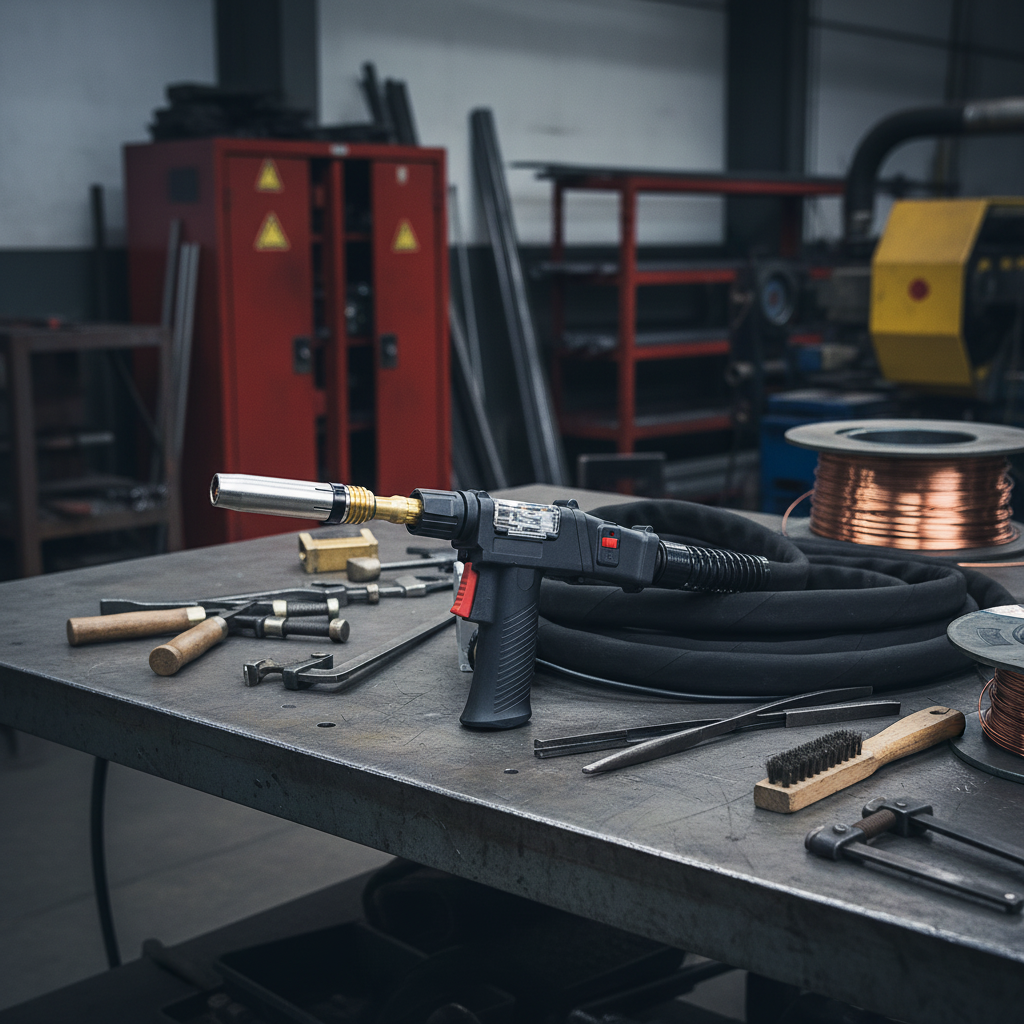
The Best MIG Welding Gun Types for Thin Aluminum Plates
Not all MIG guns are created equal—some types are far better suited for thin aluminum than others. Based on the design features above, the push-pull MIG gun and spool gun are the two top choices for blockage-free thin aluminum welding. We’ll compare their pros, cons, and ideal use cases to help you decide.
Push-Pull MIG Guns (Best for Most Thin Aluminum Applications)
Push-pull MIG guns are the most versatile and practical choice for welding thin aluminum plates (1–3mm) in industrial, automotive, and fabrication settings. They combine the precision of a spool gun with the flexibility of a standard MIG gun, making them ideal for both small projects and large-scale production.
Key Advantages
Zero wire blockage: Push-pull feeding eliminates buckling and birdnesting, even with 6–10ft gun cables.
High precision: Lightweight design and adjustable necks allow for tight control—perfect for thin aluminum’s low-heat requirements.
Wide wire compatibility: Handles all common aluminum wire diameters (0.9–1.6mm) for thin plates.
Interchangeable parts: Quick-change liners and consumables reduce downtime and maintenance costs.
Pulsed MIG compatibility: Works with pulsed MIG welders to minimize heat input and prevent burn-through.
Top Industry Model: Lincoln Electric Magnum® PRO AL Push-Pull Gun
The Lincoln Electric Magnum® PRO AL is the gold standard for push-pull aluminum MIG welding—and for good reason. Designed specifically for aluminum (MIG and pulsed MIG), it checks all the boxes for blockage-free thin plate welding:
Teflon quick-change liner: Removable with a single set screw for easy replacement—no disassembly required.
Superior push-pull feeding: Reduces friction in the wire path, preventing wire deformation and shavings.
Insulated U-groove drive rolls: Handles 0.9–1.6mm aluminum wire with consistent grip and zero arcing.
Lightweight ergonomic handle: Balanced weight distribution for fatigue-free welding and a recessed adjustment dial to prevent accidental setting changes.
Air-cooled 225A rating (60% duty cycle): Perfect for low-heat thin aluminum welding; water-cooled 450A option available for thicker aluminum.
EZ-Lock™ barrel system: Rotate or change barrels in seconds for optimal access to tight welds.
The Magnum® PRO AL is compatible with Lincoln’s Power MIG® and Power Wave® welders—top choices for aluminum welding—and uses common Magnum PRO consumables, reducing inventory costs. It’s the ideal gun for fabricators who weld thin aluminum regularly and need a reliable, blockage-free solution.
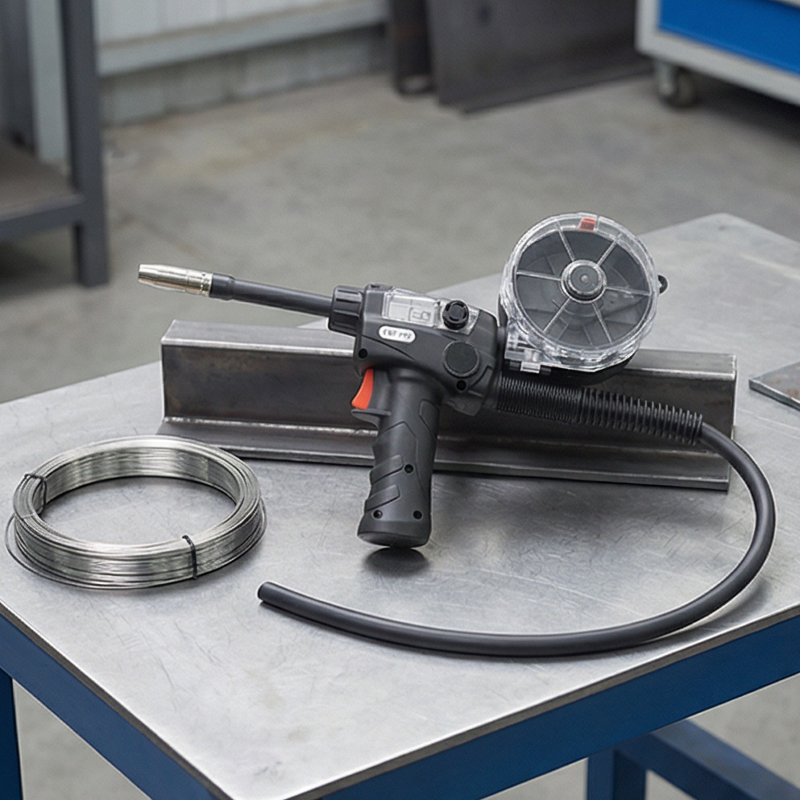
Spool Guns (Best for Small-Scale/Portable Thin Aluminum Welding)
Spool guns are compact MIG guns with a small wire spool (1–4lb) built into the handle. They eliminate the need for a separate wire feeder, feeding the wire directly from the spool to the tip—this virtually eliminates wire friction and blockage. Spool guns are a great choice for hobbyists, DIYers, and portable welding (e.g., boat repair, automotive body work) where space is limited and thin aluminum (1–2mm) is the primary material.
Key Advantages
Ultimate wire feeding precision: The spool is inches from the tip, so there’s no wire buckling or kinking—100% blockage-free.
Portability: Lightweight and compact (no separate feeder), perfect for on-site welding or tight spaces.
Easy setup: No liner or drive roll adjustments needed—simply load the spool and start welding.
Key Limitations
Limited wire capacity: 1–4lb spools mean frequent reloading for large projects.
Less versatility: Most spool guns only handle small wire diameters (0.9–1.2mm), making them unsuitable for thicker aluminum.
Bulky handle: The built-in spool adds weight to the handle, causing fatigue during long welding sessions.
Top Industry Model: INWELT® 300A Spool Gun
The INWELT® 300A is a top-rated spool gun for thin aluminum welding, beloved by hobbyists and small-shop fabricators. It features a Teflon liner, U-groove drive rolls, and a 0.9–1.2mm wire capacity—perfect for 1–2mm thin aluminum plates. It’s compatible with Miller® welders (entry-level to professional) and offers a lightweight design (3.5lbs) for easy control.
Push-Only MIG Guns (Avoid for Thin Aluminum!)
Push-only MIG guns are the standard for steel welding—but they should be avoided for thin aluminum (unless modified with a Teflon liner and U-groove drive rolls). Even with modifications, push-only systems struggle with soft aluminum wire, especially in cables longer than 4ft. They’re prone to birdnesting, wire deformation, and frequent blockages—making them a poor choice for the precision required for thin aluminum plates.
Top MIG Welding Gun Recommendations for Thin Aluminum (No Wire Blockage)
Based on design, performance, and industry reputation, we’ve curated a list of the best MIG welding guns for thin aluminum plates (1–3mm) across different use cases and budgets. All these guns feature Teflon liners, smooth wire feeding, and aluminum-specific design—guaranteeing zero wire blockage when set up correctly.
Professional/Industrial Use (Best Overall)
INWELT WELDING® AL Push-Pull Gun (Air-Cooled 300A): As highlighted earlier, this is the top choice for industrial fabricators, automotive shops, and professional welders. It’s durable, versatile, and designed for daily use with thin aluminum.
INWELT Push-Pull Gun with Consumables: INWELT’s push-pull gun features a flexible neck, quick-change Teflon liner, and consumables that deliver consistent arc starts and minimal spatter. It’s compatible with Miller and Fronius welders, making it a great cross-brand option.
Hobbyist/DIY Use (Best Value)
INWELT® 200A Spool Gun: Compact, easy to use, and 100% blockage-free for 1–2mm thin aluminum. Perfect for boat repair, RV fabrication, and automotive body work.
INWELT 150A Spool Gun: A budget-friendly spool gun with a Teflon liner and 0.9–1.2mm wire capacity. Compatible with Hobart’s welders and ideal for hobbyists new to aluminum welding.
Portable/On-Site Welding
INWELT Push-Pull Gun: Lightweight (4lbs), compact, and designed for portable welding. It features a battery-powered push-pull motor and Teflon liner—perfect for on-site thin aluminum repairs (e.g., construction, marine).
INWELT Push-Pull Gun: A rugged, portable push-pull gun with a flexible neck and quick-change consumables. It’s weather-resistant and ideal for outdoor thin aluminum welding.
-
Expert Tips to Prevent Wire Blockage (Even with the Best MIG Gun)
A high-quality MIG gun is the foundation of blockage-free thin aluminum welding—but proper setup, maintenance, and welding technique are just as important. Even the best gun will experience clogs if misused. Follow these expert tips to ensure zero wire blockage and perfect welds every time:
Optimize Your Welding Parameters for Thin Aluminum
Thin aluminum (1–3mm) requires precise heat input—too much heat melts the wire and causes blockages at the tip. Use this parameter guide as a starting point (adjust based on your gun and welder):
Wire diameter: 0.9mm (for 1–2mm plates) or 1.2mm (for 2–3mm plates)
Wire speed: 300–400 IPM (0.9mm wire) or 350–450 IPM (1.2mm wire)
Voltage: 17–20V (0.9mm wire) or 18–22V (1.2mm wire)
Amperage: 100–180A (0.9mm wire) or 150–225A (1.2mm wire)
Shielding gas: 100% argon (flow rate: 15–20 CFH) – never use mixed gas (e.g., argon/CO2) for aluminum; it causes oxide formation and wire blockage.
Pro tip: Use pulsed MIG welding if your welder supports it. Pulsed MIG delivers short, controlled heat bursts that prevent wire melting and burn-through—eliminating a common cause of tip blockage.
Maintain Your MIG Gun for Long-Term Blockage-Free Performance
Regular maintenance keeps your gun’s wire feed path clean and smooth—here’s a simple weekly routine:
Clean the liner: Use a liner cleaning brush to remove any aluminum shavings or debris (even Teflon liners need occasional cleaning).
Inspect consumables: Replace worn contact tips/nozzles—cracked or deformed parts create resistance and blockages.
Lubricate the wire feed path: Apply a small amount of aluminum wire lubricant (e.g., anti-seize) to the drive rolls and liner entrance—this reduces friction and prevents wire shaving.
Check drive roll pressure: Loosen pressure if the wire is being indented; tighten only enough to grip the wire without deformation.
Store the gun properly: Hang the gun vertically to prevent wire kinking in the cable—never leave it on the floor or bent at sharp angles.
Master Welding Technique for Thin Aluminum
Even the best gun can’t compensate for poor technique—follow these rules to avoid wire blockage and burn-through:
Maintain a short arc length: 1/8”–1/4” from the tip to the weld pool—this prevents wire melting and balling at the tip.
Use a drag technique: Drag the nozzle along the weld joint (no gap) to maintain consistent gun angle and heat input.
Travel at a steady speed: Slow travel causes overheating; fast travel leads to poor fusion—find a medium pace for smooth wire feeding.
Clean the aluminum first: Remove the oxide layer with a wire brush (stainless steel) or chemical cleaner—oxide buildup causes porosity and wire melting at the tip.
Avoid weaving: Weaving increases heat input and wire feed inconsistency—use a straight stringer bead for thin aluminum.
Choose the Right Aluminum Wire
The wire itself impacts blockage risk—always use high-quality, soft aluminum wire (4043 for general thin aluminum welding; 5356 for marine/structural thin aluminum). Avoid cheap, low-quality wire: it has inconsistent diameter and hard spots that cause blockages. Store wire in a dry, airtight container to prevent moisture buildup—moisture causes porosity and wire corrosion, which leads to clogs.
Final Verdict: The Best MIG Welding Gun for Thin Aluminum Plates
For 90% of welders (professional fabricators, hobbyists, and small-shop owners), the INWELT® AL Push-Pull Gun (225A Air-Cooled) is the ultimate choice for thin aluminum plates (1–3mm). It delivers zero wire blockage, precise control, and durability—all while being compatible with most top-of-the-line welders. Its push-pull feeding technology, Teflon quick-change liner, and ergonomic design make it the gold standard for aluminum welding, and it’s built to handle daily use without maintenance issues.
If you’re a hobbyist or DIYer focused on small-scale thin aluminum projects (1–2mm), the INWELT® Spool Gun is the best value. It’s easy to set up, 100% blockage-free, and affordable—perfect for learning aluminum welding without frustration.
For portable/on-site welding, the Fronius TransSteel Push-Pull Gun is the top pick: it’s rugged, lightweight, and designed for outdoor use, making it ideal for on-site thin aluminum repairs.
Frequently Asked Questions (FAQs)
Can I use a standard steel MIG gun for thin aluminum if I replace the liner with Teflon?
While a Teflon liner upgrade will reduce blockage risk, a standard steel MIG gun is still not recommended. Steel guns lack aluminum-specific drive rolls, ergonomic design, and push-pull feeding—you’ll still experience occasional wire deformation and clogs. It’s a temporary fix, not a long-term solution.
What wire diameter is best for 1mm thin aluminum plates?
0.9mm (0.035”) aluminum wire is the best choice for 1mm plates. It delivers low heat input and precise feeding—1.2mm wire is too thick and causes burn-through and blockages.
How often should I replace the Teflon liner in my aluminum MIG gun?
For regular use (4–6 hours per day), replace the Teflon liner every 3–6 months. For light use (1–2 hours per week), replace it every 12 months. If you notice wire feeding issues or shavings, replace it immediately.
Do I need a water-cooled MIG gun for thin aluminum?
No—water-cooled guns are rated for high amperage (400A+) and are overkill for thin aluminum’s low-heat requirements. Air-cooled guns (225A or lower) are lighter, more affordable, and perfect for 1–3mm thin plates.
Can I weld thin aluminum with a flux-core MIG gun?
No—flux-core welding is not recommended for aluminum, especially thin plates. Flux-core wire creates a slag layer that’s hard to remove from thin aluminum, and the feeding system is not designed for soft aluminum wire—blockages are guaranteed.
Conclusion
Welding thin aluminum plates without wire blockage is not a matter of luck—it’s a matter of choosing the right MIG gun and following proper setup/technique. The key is to prioritize low-friction design (Teflon liners, U-groove drive rolls) and smooth wire feeding (push-pull or spool gun technology)—these features eliminate the core causes of blockage in aluminum welding.
Whether you’re a professional fabricator or a hobbyist, investing in an aluminum-specific MIG gun will save you hours of downtime, reduce material waste, and help you achieve clean, consistent welds on thin aluminum every time. The INWELT® AL Push-Pull Gun stands out as the best all-around option. By combining a high-quality aluminum MIG gun with the right parameters, maintenance, and technique, you’ll turn thin aluminum welding from a frustrating challenge into a seamless process—with zero wire blockage and professional results.
 English
 简体中文
简体中文 العربية
 Français
 Русский
 Español
 Português
 Deutsch
 italiano
 日本語
日本語 한국어
한국어 Nederlands
 Tiếng Việt
 ไทย
ไทย Polski
 Türkçe
 ភាសាខ្មែរ
 Bahasa Melayu
 Filipino
 Bahasa Indonesia
 magyar
 Română
 Čeština
 Монгол
 қазақ
қазақ Српски
 हिन्दी
 فارسی
فارسی Slovenčina
 Slovenščina
 Norsk
Norsk Svenska
 українська
 Ελληνικά
 Suomi
Suomi Latine
 Dansk
Dansk বাংলা
বাংলা Hrvatski
 Afrikaans
 Gaeilge
 Eesti keel
 नेपाली
 Oʻzbekcha
 latviešu
 Azərbaycan dili
 Беларуская мова
 Bosanski
 Български
 ქართული
 Lietuvių