Why MIG Torch Consumables Matter More Than Most Welders Think
Many welders focus almost entirely on choosing a quality welding machine while overlooking the components that actually touch the welding wire and control the arc. In reality, MIG torch consumables play a decisive role in weld quality, productivity, operating costs, and equipment lifespan. According to recent industry guidance, consumables such as contact tips, nozzles, and liners represent only a small percentage of total welding costs, yet they have a disproportionate impact on production efficiency because labor remains the largest cost in welding operations.
A worn contact tip can cause unstable arc characteristics, excessive spatter, wire burnback, poor penetration, and frequent downtime. Likewise, an incorrect nozzle size may reduce shielding gas coverage, resulting in porosity and oxidation. Modern fabrication companies increasingly recognize that choosing the correct consumables is one of the simplest ways to improve welding consistency without investing in expensive new equipment.
Today's buyers also search for long-tail keywords such as best MIG contact tips, how to choose MIG torch consumables, MIG nozzle sizes, MIG torch liner guide, and industrial MIG consumables supplier. This guide answers those questions using practical engineering knowledge while following Google's latest SEO and AI search optimization practices.
What Are MIG Torch Consumables?
MIG torch consumables are the replaceable parts installed on a welding torch that transfer current, guide welding wire, and deliver shielding gas. These components experience continuous wear due to heat, electrical current, friction, and molten metal spatter.
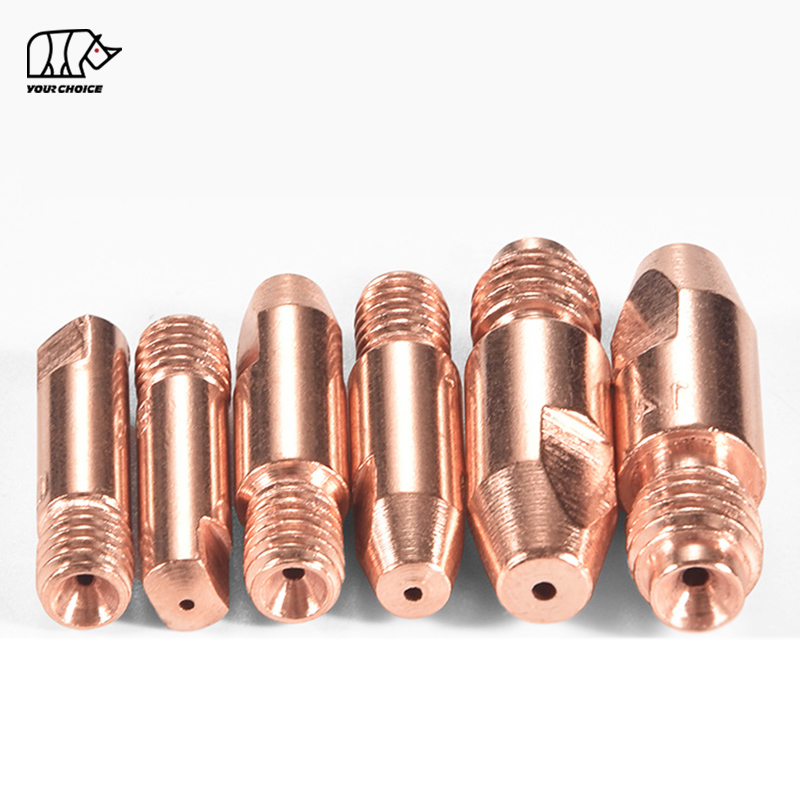
Contact Tips
The contact tip transfers welding current to the filler wire. Selecting the correct bore size is essential because the wire must move smoothly while maintaining reliable electrical conductivity. Using the wrong tip diameter often causes feeding problems, burnback, or unstable arcs.
Gas Nozzles
The nozzle directs shielding gas around the weld pool. Different shapes—including straight, tapered, and conical designs—provide varying gas coverage and access to tight joints. Proper nozzle selection reduces porosity and improves weld appearance.
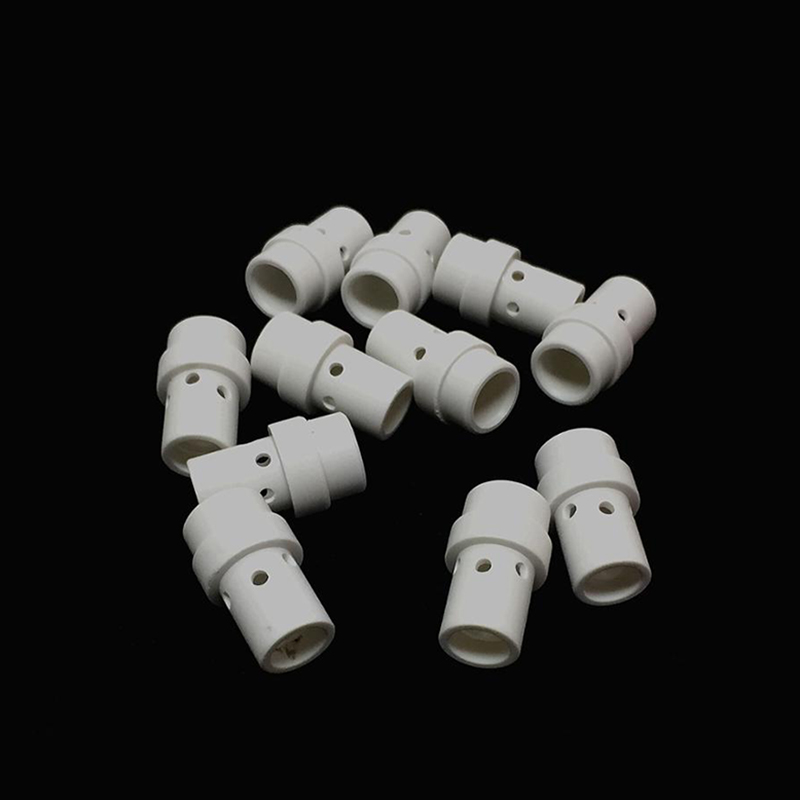
Gas Diffusers
Gas diffusers distribute shielding gas evenly while supporting the contact tip. High-quality diffusers improve gas flow consistency and reduce overheating.
Torch Liners
The liner guides the welding wire from the feeder to the contact tip. The correct liner minimizes feeding resistance and prevents bird-nesting, especially when welding aluminum or soft wires.
Tip Holders and Neck Insulators
These components maintain electrical insulation and mechanical stability, helping the torch operate safely under continuous production conditions.
How Consumables Affect Weld Quality and Productivity
Every consumable inside a MIG torch contributes to arc stability, wire feeding consistency, and heat management. Poor-quality or incompatible components increase rework, machine downtime, and labor costs.
Industry experts emphasize that labor often accounts for nearly 85% of the total welding cost, making productivity improvements far more valuable than saving a few dollars on cheaper consumables. Selecting durable consumables reduces replacement frequency, minimizes production interruptions, and improves first-pass weld acceptance.
A high-quality contact tip maintains consistent electrical conductivity even during prolonged welding. Premium liners reduce wire drag, enabling smoother feeding at higher speeds. Properly designed nozzles provide uniform shielding gas coverage, minimizing weld defects.
For manufacturers operating robotic welding systems, automated production lines, or heavy fabrication workshops, these seemingly small improvements accumulate into significant cost savings over thousands of welding hours.
Key Factors to Consider Before Choosing MIG Torch Consumables
Wire Diameter Compatibility
Always match the contact tip to the welding wire diameter. Typical industrial wire sizes include:
Wire Diameter
Typical Application
0.6 mm
Thin sheet metal
0.8 mm
Automotive fabrication
1.0 mm
General manufacturing
1.2 mm
Structural steel
1.6 mm
Heavy industrial welding
An oversized tip causes poor electrical contact, while an undersized tip increases friction and burnback.
Welding Current and Duty Cycle
Higher amperage generates greater heat. Heavy-duty production environments require consumables capable of maintaining dimensional stability under continuous operation. Water-cooled torches generally provide longer consumable life at higher amperages because operating temperatures remain lower.
Base Material Type
Different materials require different welding characteristics:
Mild steel
Stainless steel
Aluminum
High-strength steel
Galvanized steel
Soft aluminum wire typically benefits from specialized liners that reduce feeding resistance.
Shielding Gas Selection
Shielding gas influences nozzle design and gas flow requirements. Common industrial gases include:
100% CO₂
Argon/CO₂ mixtures
Argon-rich blends
Correct gas coverage helps eliminate oxidation and porosity.
Choosing the Right Contact Tip Material
Copper Contact Tips
Copper provides excellent electrical conductivity and is suitable for general fabrication work. These tips are widely used because they offer an economical balance between performance and cost.
Copper-Chromium-Zirconium Contact Tips
Copper-Chromium-Zirconium (CuCrZr) contact tips exhibit greater hardness and improved heat resistance. They maintain dimensional stability during prolonged high-current welding, making them ideal for robotic welding, heavy fabrication, and high-duty-cycle production.
Selecting the Best Nozzle for Your Application
The nozzle should be selected based on accessibility, shielding gas coverage, and welding position rather than appearance alone.
Straight nozzles offer excellent gas protection for general fabrication. Conical designs improve access in narrow joints. Tapered nozzles help welders reach confined areas without sacrificing shielding effectiveness. Regular cleaning also prevents spatter buildup that disrupts gas flow.
How to Choose the Right Torch Liner
Torch liners directly affect wire feeding performance. Steel liners remain the preferred option for carbon steel applications, while specialized liners reduce friction for aluminum wires.
When selecting a liner, verify:
Wire diameter compatibility
Torch cable length
Feeding system configuration
Application duty cycle
Replacing worn liners before severe contamination develops prevents unnecessary downtime and protects other consumables.
Common Mistakes When Buying MIG Consumables
Many buyers unknowingly reduce welding efficiency by making avoidable purchasing mistakes.
The most common errors include:
Buying solely based on price
Mixing incompatible consumable systems
Ignoring wire diameter
Reusing worn contact tips
Operating beyond rated duty cycle
Neglecting liner replacement
Using damaged nozzles with excessive spatter buildup
These mistakes often result in unstable arcs, poor weld appearance, excessive rework, and increased operating costs.
Maintenance Tips to Extend Consumable Life
Proper maintenance often doubles consumable service life.
Good maintenance practices include:
Clean nozzles daily.
Inspect contact tips for wear.
Replace liners periodically.
Verify shielding gas flow.
Keep welding wire clean and dry.
Remove spatter before buildup becomes excessive.
Store consumables in a dry environment.
Routine inspections take only a few minutes but significantly reduce unexpected production interruptions.
OEM vs Aftermarket MIG Torch Consumables
Industrial buyers frequently compare OEM-compatible consumables with generic aftermarket alternatives.
High-quality OEM-compatible consumables manufactured to precise tolerances can deliver reliable performance while offering cost advantages for distributors, wholesalers, and equipment manufacturers. The key considerations include:
Manufacturing precision
Material quality
Dimensional consistency
Stable electrical conductivity
Long service life
Quality control processes
Supply chain reliability
Custom OEM and private-label capabilities
Rather than focusing solely on unit price, buyers should evaluate the total cost of ownership, including replacement frequency, downtime, and weld quality.
Future Trends in MIG Torch Consumables
The welding industry continues to evolve with automation and intelligent manufacturing.
Current trends include:
Longer-life CuCrZr contact tips
Improved anti-spatter nozzle coatings
High-performance robotic welding consumables
Precision-machined consumables for automated production
Sustainable manufacturing processes
Smart inventory management for welding consumables
As robotic welding adoption increases worldwide, demand for durable, high-consistency consumables is expected to continue growing. Manufacturers are placing greater emphasis on reducing downtime and improving repeatability through optimized consumable design.
Conclusion
Choosing the right MIG torch consumables is one of the most effective ways to improve welding quality, productivity, and long-term operating costs. Contact tips, nozzles, diffusers, liners, and related components work together as an integrated system, and selecting them based on wire diameter, amperage, material type, shielding gas, and duty cycle delivers better arc stability and longer service life. For distributors, OEM buyers, and industrial fabricators, investing in precision-manufactured consumables helps reduce downtime, minimize rework, and maximize return on investment. By combining proper product selection with regular maintenance, companies can achieve more consistent welding performance while meeting the increasing demands of modern manufacturing.
FAQs
1. How often should MIG torch consumables be replaced?
Replace consumables when you notice excessive wear, unstable arc performance, poor wire feeding, or reduced shielding gas coverage. Replacement intervals depend on amperage, duty cycle, and welding environment.
2. What is the most important MIG torch consumable?
The contact tip is often considered the most critical because it directly transfers electrical current to the welding wire and significantly affects arc stability.
3. Can I use the same consumables for different wire sizes?
No. Contact tips and liners should always match the welding wire diameter to ensure smooth feeding and proper electrical contact.
4. Which contact tip material lasts longer?
Copper-Chromium-Zirconium (CuCrZr) contact tips generally offer better wear resistance and longer service life than standard copper tips, particularly in high-duty-cycle applications.
5. How do I improve the life of MIG torch consumables?
Use the correct consumables for your application, maintain proper welding parameters, clean nozzles regularly, replace worn liners promptly, and keep shielding gas flow and welding wire in optimal condition.
This website uses cookies and similar technologies (“cookies”). Subject to your consent, will use analytical cookies to track which content interests you, and marketing cookies to display interest-based advertising. We use third-party providers for these measures, who may also use the data for their own purposes.
You give your consent by clicking "Accept all" or by applying your individual settings. Your data may then also be processed in third countries outside the EU, such as the US, which do not have a corresponding level of data protection and where, in particular, access by local authorities may not be effectively prevented. You can revoke your consent with immediate effect at any time. If you click on "Reject all", only strictly necessary cookies will be used.
 English
 简体中文
简体中文 العربية
 Français
 Русский
 Español
 Português
 Deutsch
 italiano
 日本語
日本語 한국어
한국어 Nederlands
 Tiếng Việt
 ไทย
ไทย Polski
 Türkçe
 ភាសាខ្មែរ
 Bahasa Melayu
 Filipino
 Bahasa Indonesia
 magyar
 Română
 Čeština
 Монгол
 қазақ
қазақ Српски
 हिन्दी
 فارسی
فارسی Slovenčina
 Slovenščina
 Norsk
Norsk Svenska
 українська
 Ελληνικά
 Suomi
Suomi Latine
 Dansk
Dansk বাংলা
বাংলা Hrvatski
 Afrikaans
 Gaeilge
 Eesti keel
 नेपाली
 Oʻzbekcha
 latviešu
 Azərbaycan dili
 Беларуская мова
 Bosanski
 Български
 ქართული
 Lietuvių