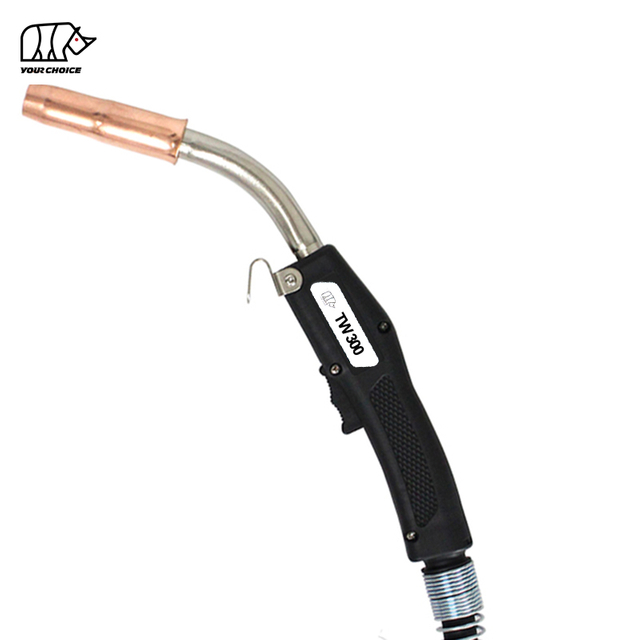
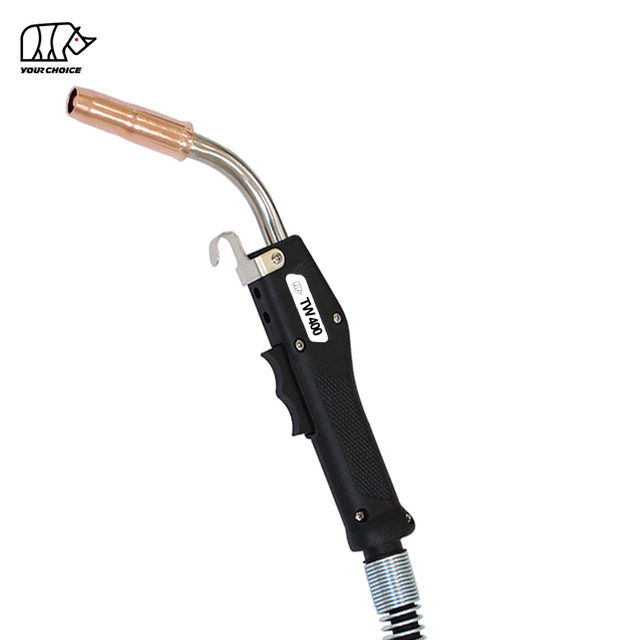
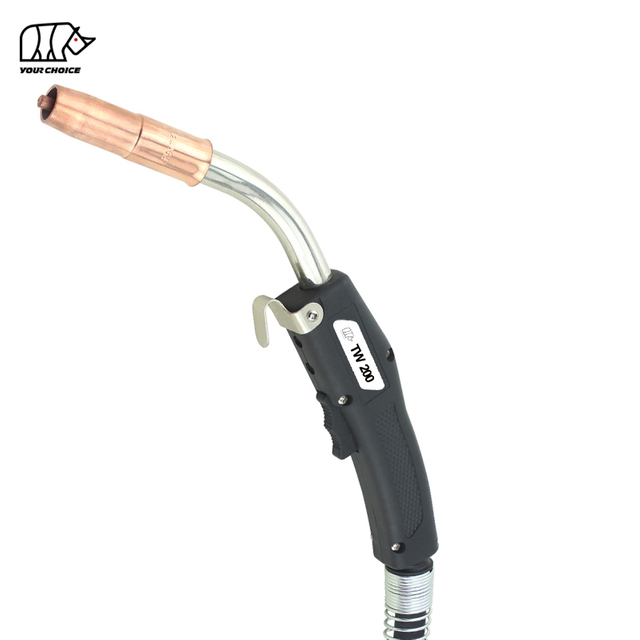
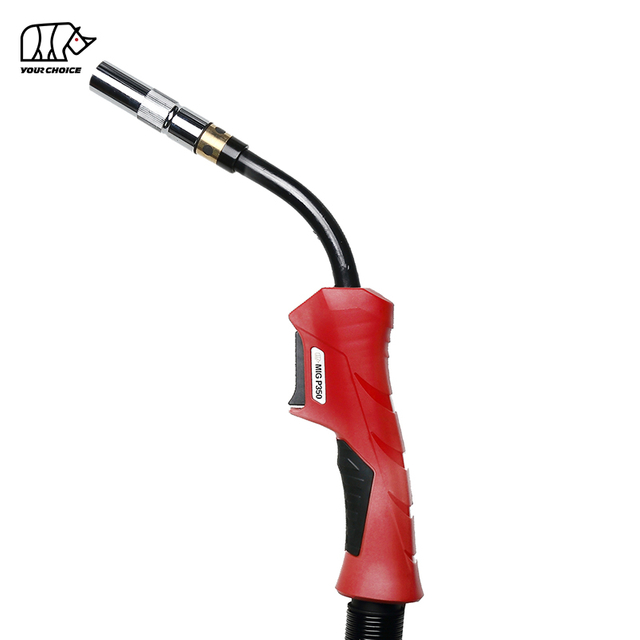
The MIG welding nozzle is one of the most deceptively simple yet functionally critical components in the entire torch assembly. It is the final physical part that shielding gas passes through before enveloping the weld pool, and its condition directly determines whether that gas arrives as a smooth, laminar protective column or as a turbulent, contaminated stream that lets atmospheric oxygen, nitrogen, and moisture attack the molten metal. The INWELT Pana MIG nozzle range is built for the P180, P350, and P500 torch platforms, the workhorse systems found in fabrication shops, manufacturing lines, and heavy industrial operations across global markets. Crafted from durable, heat-resistant metal, these nozzles provide precise gas flow to protect the weld pool, reduce spatter, and support clean, high-quality welds across the full range of MIG and MAG applications.

Understanding what the nozzle does and how it does it is the first step toward recognizing when it needs attention — and toward appreciating why nozzle quality matters more than many welders assume.
The nozzle in a MIG welding gun serves a crucial role in directing the shielding gas to the weld pool, ensuring the weld's integrity and quality. All shielding gas that protects the weld pool must pass through the nozzle bore after exiting the gas diffuser ports. Once inside the nozzle, the gas must develop into a smooth, even column with no turbulence, dead zones, or recirculation eddies. Any irregularity in the bore — spatter buildup, deformation from heat, or poor machining — disrupts this laminar flow. The result is atmospheric contamination reaching the molten metal, producing porosity, oxidation, and structurally weakened joints. The Pana style nozzle ensures that gas coverage remains consistent, even during extended production runs.
Beyond gas delivery, the nozzle serves as a structural barrier that shields the contact tip and gas diffuser from the intense radiant heat of the arc and from the relentless bombardment of weld spatter. A durable, well-machined nozzle extends the service life of those more expensive internal parts. When a nozzle is neglected — left clogged with spatter or run well past its service interval — the contact tip and diffuser bear the consequences.
One of the most common questions in MIG consumables selection is whether to choose brass or copper nozzles. The answer depends on the welding amperage, duty cycle, and production environment. INWELT manufactures Pana MIG nozzles in both materials so that every application gets the right thermal performance and spatter resistance.
Brass is one of the most widely used materials for MIG welding nozzles. Brass is ideal for lower amperage applications between 100 and 300 amps, where its natural spatter resistance keeps the bore cleaner for longer between maintenance intervals. Brass nozzles tend to resist spatter well at moderate temperatures and provide excellent dimensional stability under typical light to medium-duty production conditions. For workshops running the P180 torch platform or P350 torches at moderate duty cycles, brass nozzles represent a practical and cost-effective choice.
Copper alloy is better for applications above 300 amps or those with longer arc-on times. Copper absorbs and dissipates heat more efficiently than brass, preventing the softening, bore distortion, and premature failure that high-amperage welding can cause in lower-grade materials. The P500 torch platform — rated for 500 amps at 60% duty cycle — demands the thermal headroom that copper alloy delivers. For heavy structural fabrication, shipbuilding, and continuous production welding where arc-on time is measured in hours per shift, copper alloy nozzles provide longer service life and more consistent gas coverage throughout that extended duty.
There is no universally correct answer — each material has its place. Brass nozzles offer better spatter resistance in lower amperage applications but lose that advantage when temperatures climb. Copper nozzles handle sustained heat better but require more attentive spatter management. The key is matching the nozzle material to the amperage range and duty cycle of the specific welding operation. INWELT provides both options, with part numbers clearly stamped on every nozzle body for easy identification during inventory management and routine replacement.

The Pana MIG torch family covers a broad spectrum of welding requirements, from light fabrication to the heaviest structural work. INWELT Pana-style nozzles are manufactured to strict dimensional standards for direct compatibility across all three platforms.
The P180 is an air-cooled MIG torch rated at 200 amps with a 60% duty cycle. It is widely deployed in light fabrication shops, automotive repair, maintenance operations, and general workshop environments where portability and ease of handling are priorities. INWELT P180-compatible nozzles are available in conical, cylindrical, and tapered geometries, each suited to different joint configurations and operator preferences.
The P350 steps up to 340 amps at 60% duty cycle, making it the standard workhorse for medium to heavy fabrication, structural steel, and production MIG welding where higher deposition rates and longer arc-on times are required. Both brass and copper alloy INWELT nozzles are available for the P350 platform, giving shops the flexibility to select the material that best matches their specific amperage range and spatter management practices.
The P500 is rated at 500 amps at 60% duty cycle — the top of the Pana air-cooled range. It handles the heaviest fabrication, structural steel erection, shipbuilding, and high-deposition welding applications. For P500 torches, copper alloy nozzles are generally recommended due to the sustained high temperatures these applications generate. The 500-amp rating places thermal demands on consumables that only high-conductivity copper alloy can reliably withstand over extended production periods.

MIG welding applications demand different nozzle shapes, and having the right geometry for the joint is often the difference between clean access and constant frustration. INWELT manufactures Pana-style nozzles in all three standard geometries.
Conical nozzles feature a traditional tapered profile that provides a balance of gas coverage area and visibility of the weld pool. This shape is the most widely used in general fabrication and manufacturing environments, where welders need clear sight lines to the arc without sacrificing shielding gas coverage. The conical geometry suits a wide range of joint configurations including butt welds, lap joints, and open fillets.
Cylindrical nozzles feature a wide, straight bore profile that delivers the largest shielding gas coverage area. For high-deposition spray transfer welding at elevated amperages — common on the P350 and P500 platforms — the cylindrical nozzle's broad gas column ensures complete atmospheric protection across the entire weld pool. This shape is preferred in structural steel fabrication, heavy equipment manufacturing, and any application where deposition rate and gas coverage are the top priorities.
Tapered nozzles narrow toward the tip, providing improved access into tight weld joints where a cylindrical or conical body would physically collide with surrounding material. Deep groove welds, inside corners, fillet welds in confined spaces, and structural joints with limited torch clearance all benefit from the tapered geometry. Having tapered nozzles available in your consumables inventory ensures that when that tight-access job arrives, the right tool is on hand.
Spatter buildup inside the nozzle bore is the single most common preventable cause of shielding gas disruption in MIG welding. Managing spatter actively — rather than reacting to it after porosity appears — is a hallmark of a well-organized welding operation.
Nozzles should be cleaned as often as possible — at least every other welding cycle in a robotic welding operation — to prevent spatter buildup that can lead to poor gas shielding or cause short-circuiting between the contact tip and nozzle. Spatter accumulation inside the bore narrows the gas passage, creating turbulence that draws atmospheric air into the arc zone. The resulting porosity often appears intermittent, making it harder to diagnose — and the first question in troubleshooting should always be when the nozzle was last cleaned or replaced.
Always use a properly designed nozzle reamer or dedicated cutting blade to remove spatter. Avoid hardened steel tools that can scratch the inner bore surface or distort the nozzle opening — a damaged bore creates permanent turbulence that no amount of cleaning will fix. A purpose-built nozzle reamer makes it easy to keep tips and nozzles clean. For routine maintenance between deep cleaning cycles, apply a quality ceramic-based anti-spatter spray or nozzle dipping gel to the inner bore — these products make spatter removal significantly easier and extend the interval between cleanings. In production environments, some welders ream nozzles every few hours of arc time, or more frequently when running high-amperage passes that generate heavy spatter.
Even with diligent maintenance, every MIG nozzle eventually reaches the end of its service life. Replace the nozzle immediately when any of the following conditions are present: spatter is permanently embedded and cannot be removed mechanically, obstructing the gas annulus between the contact tip and the nozzle bore; the nozzle body shows visible deformation, cracking, or erosion from heat; the threads are stripped and the nozzle no longer tightens securely; the nozzle has suffered burn-back damage, welding itself to the contact tip; or part of the nozzle body has melted, indicating the amperage rating has been exceeded. A worn or damaged nozzle is not a minor inconvenience — it is a direct cause of weld defects that lead to costly rework.

INWELT Pana MIG nozzles are deployed daily across industries where weld quality, production uptime, and consumable reliability directly affect both profitability and structural integrity.
Structural Steel Fabrication: P350 and P500 torches with copper alloy nozzles support continuous high-deposition welding of bridge beams, columns, and heavy structural assemblies where gas coverage consistency is essential for radiographic-quality welds.
Heavy Equipment and Machinery Manufacturing: High-duty-cycle welding of excavator booms, crane structures, mining equipment frames, and agricultural machinery places sustained thermal demands on consumables. Copper alloy Pana nozzles deliver the heat dissipation these applications require.
Shipbuilding and Marine Repair: P500 torches fitted with INWELT nozzles handle hull plate welding and stiffener installation in shipyard environments where shielding gas must maintain integrity against humid, windy dock conditions.
Automotive and Light Fabrication: P180 torches with brass nozzles provide the precise gas coverage and spatter resistance needed for sheet metal welding, exhaust system fabrication, and repair work where weld appearance matters.
Automated and Robotic Welding Cells: The dimensional consistency of INWELT nozzles supports automated MIG applications where torch cleaning stations operate on programmed cycles and nozzle geometry must remain predictable across replacement cycles.
As a certified ISO 9001 manufacturer and global supplier, INWELT TECH delivers ISO-compliant welding torches and consumables with over 15 years of production experience. The company controls every stage of the manufacturing process — from raw material selection through CNC machining to final dimensional inspection and packaging — ensuring batch-to-batch consistency that trading intermediaries cannot provide.
All INWELT Pana nozzles are manufactured under documented quality management systems with CE and RoHS compliance as standard. Every production batch undergoes bore diameter verification, thread-fit testing, and surface quality inspection before release. Consistent product quality is maintained through rigorous process controls and traceable material sourcing across every production run.
By purchasing directly from the manufacturer, fabrication shops and welding distributors receive competitive factory-direct pricing on both sample and volume orders. Full OEM and ODM customization options are available, including private-label packaging, custom laser engraving, and tailored configurations for specialized torch platforms.
Evaluating nozzle quality requires hands-on testing: thread engagement, bore accuracy, spatter resistance, and thermal durability under real welding conditions. Product samples are available for evaluation before committing to volume orders, so the INWELT Pana nozzle can be tested in your own workshop alongside your existing consumables inventory.
With a customer base spanning more than 30 countries, INWELT has built a reputation for consistent product quality, responsive technical consultation, and reliable delivery timelines across independent fabrication shops and large-scale industrial procurement operations alike.

Q: What is the function of a MIG welding nozzle?
A: The nozzle directs shielding gas from the gas diffuser to the weld pool, creating a protective gas column that prevents atmospheric contamination of the molten metal. It also provides physical protection for the contact tip and gas diffuser against weld spatter, and serves as electrical insulation between the electrically live contact tip and the workpiece. The MIG gun operates as a complete system — the nozzle, contact tip, gas diffuser, conductor tube, and gun liner must all function together for consistent weld quality.
Q: Should I choose a brass or copper Pana MIG nozzle?
A: The choice depends on your welding amperage and duty cycle. Brass nozzles tend to resist spatter well at lower amperages and are ideal for applications between 100 and 300 amps. Copper nozzles absorb more heat and are better for applications above 300 amps or those with longer arc-on times. For P180 torches and light-duty P350 work, brass performs well. For heavy-duty P350 applications and the P500 platform, copper alloy is generally recommended. Having both materials in your consumables inventory provides flexibility across different welding conditions.
Q: Which Pana torch models are INWELT nozzles compatible with?
A: INWELT Pana-style nozzles are manufactured to standard industry dimensions and are compatible with P180 (200A), P350 (340A), and P500 (500A) air-cooled MIG torch platforms. These torches are widely deployed across fabrication, manufacturing, and industrial welding environments. Specific nozzle dimensions and thread specifications can be verified against your torch model designation, which is typically marked on the torch handle or neck.
Q: Which nozzle geometry should I choose — conical, cylindrical, or tapered?
A: Conical nozzles provide balanced gas coverage and arc visibility for general fabrication work. Cylindrical nozzles deliver the largest gas coverage area for high-deposition spray transfer welding at elevated amperages. Tapered nozzles narrow toward the tip for improved access into tight weld joints — deep grooves, inside corners, and confined structural connections. Many shops keep all three geometries in inventory and select based on the specific joint configuration of each job.
Q: How often should MIG nozzles be cleaned and replaced?
A: Nozzles should be cleaned frequently — at least every other welding cycle in automated operations and at each contact tip change or wire spool replacement in manual production. Replace the nozzle immediately if spatter is permanently embedded and obstructs gas flow, the nozzle body shows deformation or cracking, threads are stripped, or burn-back damage has occurred. In high-duty-cycle production, maintaining spare nozzles for quick swap-out minimizes downtime and prevents the temptation to continue welding with a compromised nozzle.
Q: Can a clogged or damaged nozzle cause weld porosity?
A: Absolutely. A partially or fully clogged nozzle disrupts the shielding gas column, creating turbulence that draws atmospheric air into the weld zone. The resulting porosity, surface pitting, and oxidation may appear intermittent, making diagnosis more difficult. When troubleshooting sudden or unexplained porosity in MIG welding, inspecting the nozzle for spatter buildup and cleaning or replacing it should be one of the very first diagnostic steps — even before adjusting gas flow or welding parameters.
Q: Are INWELT Pana nozzles compatible with original Panasonic torches?
A: Yes. INWELT Pana-style nozzles are manufactured to standard industry dimensions and are compatible with original P180, P350, and P500 MIG torch systems, as well as aftermarket equivalents from major manufacturers that follow the same dimensional standard. These nozzles are designed for use in MIG and MAG welding processes with standard shielding gas mixtures including CO₂, argon/CO₂ blends, and mixed gases.
| Specification | Detail |
|---|---|
| Product Name | MIG Welding Gas Nozzle |
| Style | Pana (Panasonic-compatible) |
| Brand | INWELT |
| Material Options | Brass, copper alloy |
| Nozzle Geometries | Conical, cylindrical, tapered |
| Compatible Torch Series | P180 (200A), P350 (340A), P500 (500A) |
| Duty Cycle Rating | 60% DC (all platforms) |
| Cooling Type | Air-cooled |
| Welding Process | MIG/MAG (GMAW) |
| Compatible Shielding Gases | CO₂, Ar/CO₂ blends, mixed gases |
| Certifications | ISO 9001, CE, RoHS |
| Supply Mode | OEM / ODM manufacturing available |
| Sample Availability | Free evaluation samples available |
| Warranty | 1 year |
| Manufacturer | Changzhou INWELT Welding Technology Co., Ltd. |
| Country of Origin | China |
| Industry Experience | 15+ years, serving 30+ countries |