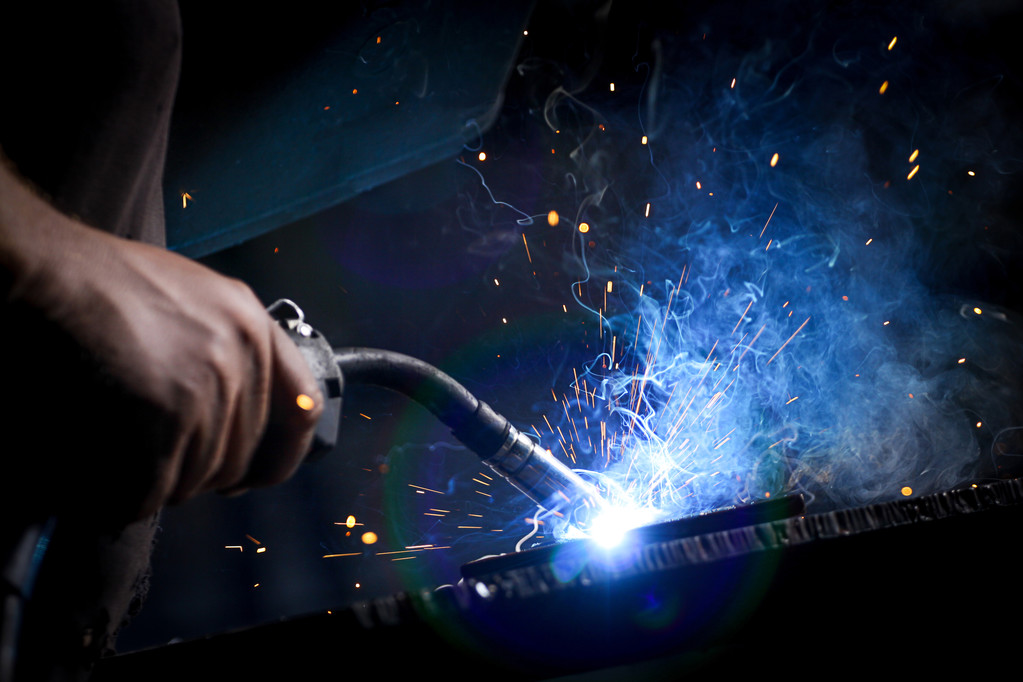
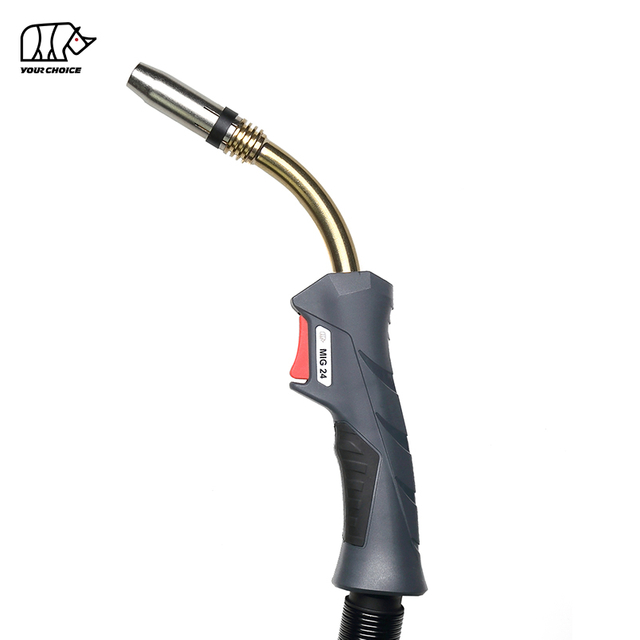
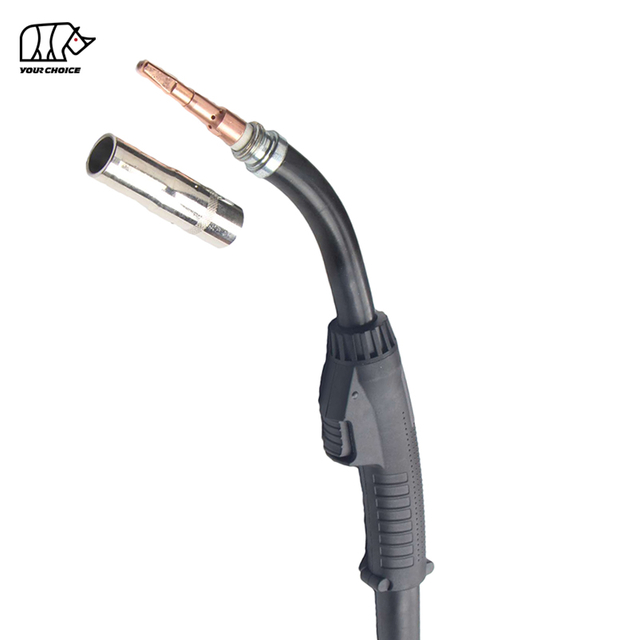
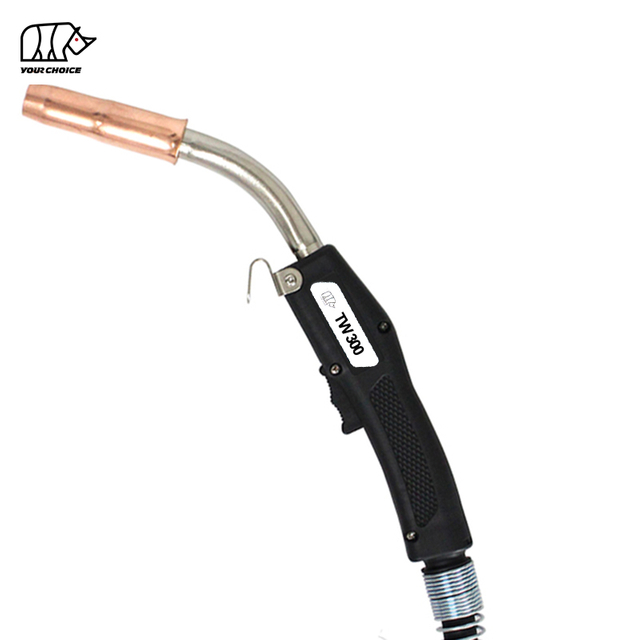
A MIG torch delivers the welding wire, shielding gas, and welding current to the joint, making it the most important hand-held part of any MIG welding system. When it is set up correctly and well maintained, you get smooth wire feed, a stable arc, and clean welds. When it is neglected, you get birdnesting, burnback, spatter, and downtime. This guide walks through how a MIG torch works, how to set it up, and how to fix the problems welders most often run into.
What a MIG Torch Does
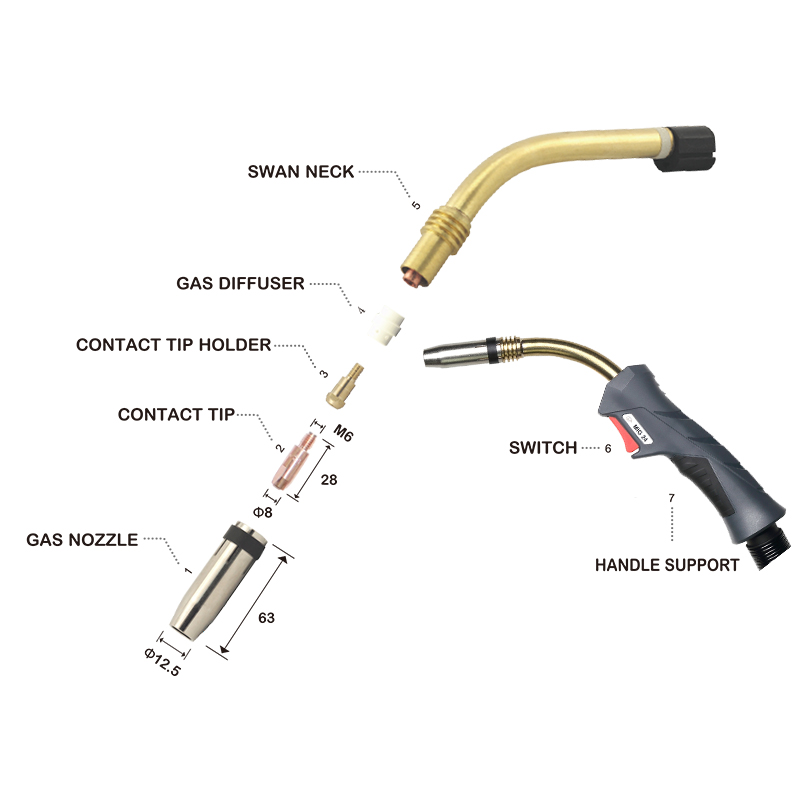
A MIG torch performs three jobs at once. It feeds the welding wire through a liner to the contact tip, carries the welding current to that wire, and channels shielding gas through the nozzle to protect the molten weld pool from the air. Each consumable — the contact tip, nozzle, gas diffuser, and liner — plays a direct role in weld quality, so understanding how they work together is the first step to better results.
How to Set Up a MIG Torch
A correct setup prevents most welding problems before they start. Follow these steps:
Match the liner to the wire size. The liner must be sized for the exact wire diameter you are running, and it must be clean and properly trimmed.
Install the correct contact tip. The contact tip must match the wire diameter marked on it — for example, a 0.035 in tip for 0.035 in wire.
Set drive-roll tension correctly. Too tight shaves the wire; too loose lets it slip. Set just enough tension to feed the wire smoothly without deforming it.
Check the nozzle and tip recess. The contact-tip-to-nozzle relationship affects gas coverage and stickout. Follow the recommended recess for your application.
Keep the gun cable as straight as possible. Tight coils and kinks cause feeding resistance and birdnesting.
Common MIG Torch Problems and How to Fix Them
Birdnesting (Wire Tangling at the Feeder)
Birdnesting happens when the wire jams downstream and piles up at the drive rolls. The usual causes are incorrect drive-roll tension, a wrong-sized or dirty liner, the wrong drive rolls, or a blocked contact tip. Fix it by setting correct tension, cleaning or replacing the liner, matching the rolls to the wire, and replacing a clogged tip.
Burnback (Wire Fusing to the Contact Tip)
Burnback occurs when the arc burns back up the wire into the contact tip. It is most often caused by wire feed speed set too low, the contact tip sitting too close to the work, or a worn tip. Increase the wire feed speed, set the correct stickout, and replace a worn tip to stop it.
Erratic Wire Feeding
Stuttering or inconsistent feed usually traces back to a dirty or worn liner, incorrect tension, or a kinked cable. Debris in the liner is one of the most common causes. Clean or replace the liner, reset the tension, and straighten the cable.
Excessive Spatter
Too much spatter usually means the voltage and wire feed speed are out of balance, the shielding gas or flow rate is wrong, or the contact tip is worn. Re-balance your settings, verify gas type and flow, replace worn consumables, and confirm a clean ground connection.
Choosing the Right MIG Torch Consumables
Contact tip: Match it exactly to the wire diameter. Replace it when the bore becomes oblong or oversized. Nozzle: Keep it clean and free of spatter buildup, which restricts gas flow. Liner: Size it to the wire and replace it when feeding becomes rough or you switch wire types. Gas diffuser: Inspect it for blockages that disrupt even gas coverage.
MIG Torch Maintenance Tips
A few simple habits keep a MIG torch performing and extend its life:
Blow out the liner regularly with clean, dry compressed air.
Tighten the contact tip properly — hand-tightening alone causes high resistance and heat.
Clean spatter from the nozzle and remove buildup before it restricts gas.
Inspect the cable and connections for wear and damage.
Stay within the gun's rated amperage and duty cycle to avoid overheating.
Final Thoughts
A MIG torch only performs as well as its setup and maintenance allow. By matching consumables to your wire size, setting correct drive-roll tension, keeping the liner clean, and balancing your voltage and wire feed speed, you eliminate the root causes of birdnesting, burnback, and spatter. Treat the MIG gun as a precision tool, give it regular care, and it will reward you with consistent, clean welds and far less downtime.
This website uses cookies and similar technologies (“cookies”). Subject to your consent, will use analytical cookies to track which content interests you, and marketing cookies to display interest-based advertising. We use third-party providers for these measures, who may also use the data for their own purposes.
You give your consent by clicking "Accept all" or by applying your individual settings. Your data may then also be processed in third countries outside the EU, such as the US, which do not have a corresponding level of data protection and where, in particular, access by local authorities may not be effectively prevented. You can revoke your consent with immediate effect at any time. If you click on "Reject all", only strictly necessary cookies will be used.
 English
 简体中文
简体中文 العربية
 Français
 Русский
 Español
 Português
 Deutsch
 italiano
 日本語
日本語 한국어
한국어 Nederlands
 Tiếng Việt
 ไทย
ไทย Polski
 Türkçe
 ភាសាខ្មែរ
 Bahasa Melayu
 Filipino
 Bahasa Indonesia
 magyar
 Română
 Čeština
 Монгол
 қазақ
қазақ Српски
 हिन्दी
 فارسی
فارسی Slovenčina
 Slovenščina
 Norsk
Norsk Svenska
 українська
 Ελληνικά
 Suomi
Suomi Latine
 Dansk
Dansk বাংলা
বাংলা Hrvatski
 Afrikaans
 Gaeilge
 Eesti keel
 नेपाली
 Oʻzbekcha
 latviešu
 Azərbaycan dili
 Беларуская мова
 Bosanski
 Български
 ქართული
 Lietuvių